
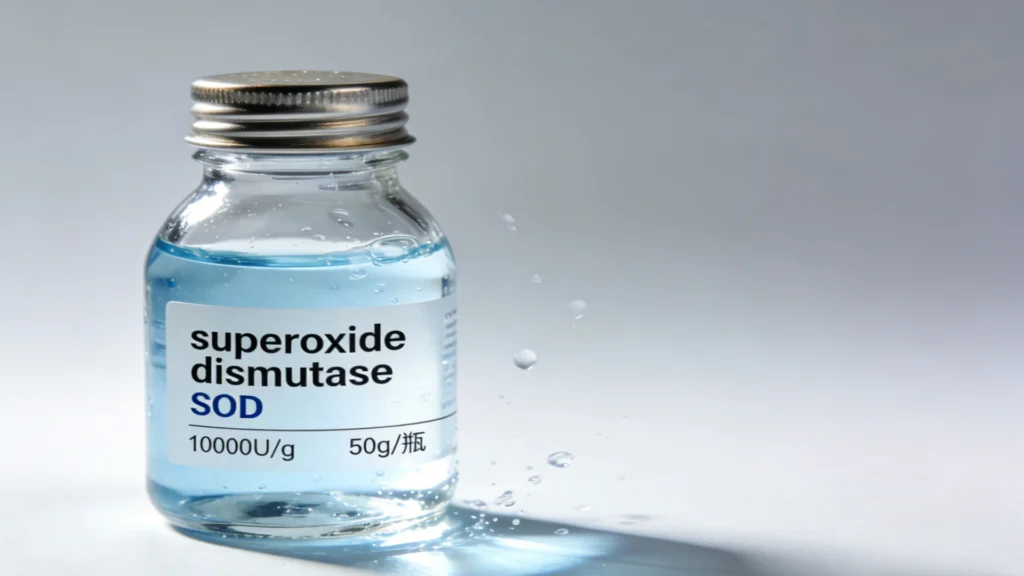
In the field of pet health care, oxidative stress is one of the core causes leading to pet aging, organ dysfunction, and various diseases. Superoxide dismutase (abbreviated as SOD), a crucial antioxidant enzyme in organisms, is the “invisible guardian” that resists oxidative damage and protects pets’ longevity and health. To truly manage pets’ longevity well, understanding the function and mechanism of action of defined superoxide dismutase, as well as its application in pet care, is a necessary lesson for every pet owner and pet health practitioner.
I. Clarify, Define Superoxide Dismutase: Core Definition and Essence
First of all, we formally define superoxide dismutase: it is a type of metalloenzyme widely existing in microorganisms, plants, and animals. Its core function is to catalyze the dismutation reaction of superoxide anion free radicals (a highly toxic reactive oxygen free radical), convert them into non-toxic molecular oxygen (O₂) and hydrogen peroxide (H₂O₂), and then decompose them into water and oxygen through the action of catalase, ultimately blocking the oxidative damage of free radicals to cells and maintaining the dynamic balance of the body’s oxidation and antioxidant system.
Simply put, superoxide dismutase is like a “free radical cleaner” in pets’ bodies. It can accurately identify and remove harmful free radicals produced in the metabolic process, avoid free radicals attacking cells, damaging DNA and cell membranes, and reduce various injuries caused by oxidative stress from the root. It is worth noting that superoxide dismutase is an enzyme that pets can synthesize themselves. However, with the increase of pets’ age and the deterioration of living environment (such as environmental pollution, improper diet, stress response), the synthesis amount of defined superoxide dismutase in their bodies will gradually decrease. At this time, external supplementation is needed to maintain their antioxidant capacity and protect pets’ health.
II. Define Superoxide Dismutase and Pet Health: Analysis of Core Correlations
The health and longevity of pets essentially lie in the normal operation of various organ functions and the continuous stability of cell vitality. Superoxide dismutase, by removing free radicals and resists oxidative stress, runs through the whole cycle of pet health, and is closely related to the core indicators of pets’ lifespan, organ health, and immune function. It can be specifically divided into the following three aspects.
(1) Delay Pet Aging and Extend Healthy Lifespan
One of the core signs of pet aging is the excessive accumulation of free radicals in the body, leading to cell aging and organ function decline. Loose skin, gray and dry hair, slow movement, and decreased energy are essentially external manifestations of cell damage caused by free radicals. Superoxide dismutase can efficiently remove excess free radicals in the body, reduce the damage of free radicals to skin cells, muscle cells, and nerve cells, and delay the process of cell aging.
Relevant studies have shown that pets with higher activity of define superoxide dismutase in their bodies have better skin elasticity, lusher and shinier hair, longer joint flexibility and energy maintenance time, and the appearance of aging symptoms can be delayed by 2-3 years; on the contrary, pets with insufficient activity of define superoxide dismutase are more likely to show signs of premature aging, and their healthy lifespan will be correspondingly shortened.
(2) Protect Pets’ Key Organs and Reduce Disease Risks
Pets’ key organs such as the heart, liver, kidneys, and joints, are extremely sensitive to free radical damage. Superoxide dismutase can specifically protect these organs and reduce the probability of related diseases.
1. Liver Protection: The liver is the core organ for pets to metabolize toxins. A large number of free radicals are produced during the metabolic process. Long-term accumulation will lead to fatty liver, hepatitis, cirrhosis, and other diseases. Superoxide dismutase can remove free radicals in liver cells, reduce the damage of toxins to liver cells, promote the repair of liver cells, and maintain the normal metabolic function of the liver. It is especially suitable for pets that eat high-fat food for a long time and take drugs frequently.
2. Heart and Blood Vessel Protection: Free radicals will damage the vascular endothelial cells of pets, leading to arteriosclerosis, increased blood pressure, and increased risk of heart disease. Superoxide dismutase can remove free radicals in blood vessels, protect vascular elasticity, reduce lipid deposition, and reduce the incidence of pet heart disease and hypertension. It is especially crucial for the heart health of elderly pets.
3. Joint Protection: One of the core incentives for pet joint damage and arthritis is the excessive free radicals in joint fluid, leading to chondrocyte damage and cartilage degradation. Superoxide dismutase can remove free radicals in joint fluid, protect chondrocytes, reduce inflammatory reactions, relieve joint pain and swelling, and improve pet mobility. It is suitable for pets prone to joint problems, such as large dogs and elderly dogs, and is often used in combination with other joint supplements.
4. Kidney Protection: The kidney is an important organ for pets to excrete waste. Free radical damage will lead to decreased renal function and even renal failure. Superoxide dismutase can remove free radicals in kidney cells, reduce the metabolic burden of the kidneys, protect renal function, and reduce the risk of pet renal failure.
The following table summarizes the protective effects of defined superoxide dismutase on pets’ key organs and the corresponding beneficiary groups:
| Large dogs, elderly dogs, and pets with joint damage | Core Functions | Beneficiary Pet Groups |
| Liver | Remove free radicals, reduce toxin damage, and repair liver cells | Pets with high-fat diet, frequent medication and obesity |
| Heart and Blood Vessels | Protect vascular elasticity, reduce lipid deposition, and prevent heart disease | Elderly pets, small dogs and obese pets |
| Joints | Protect chondrocytes, relieve inflammation, and reduce joint pain | Large dogs, elderly dogs and pets with joint damage |
| Kidneys | Reduce renal burden, protect renal function, and prevent renal failure | Elderly pets and pets at high risk of kidney disease |
(3) Enhance Pet Immunity and Improve Stress Resistance
The pets’ immune system is composed of immune cells, and free radicals will damage immune cells, leading to decreased activity of immune cells, weakened resistance of pets, easy infection with bacteria and viruses, and the occurrence of colds, skin diseases, gastrointestinal diseases, and other problems. Superoxide dismutase can remove free radicals in immune cells, protect the activity of immune cells, enhance the defense ability of the pets’ immune system, and make pets less likely to get sick.
At the same time, when pets experience stress reactions such as environmental changes, transportation, surgery, and estrus, a large number of free radicals will be produced in their bodies, leading to aggravated stress reactions, such as loss of appetite, listlessness, and diarrhea. Supplementing define superoxide dismutase can quickly remove excess free radicals produced under stress, alleviate stress reactions, help pets adapt to environmental changes quickly, and reduce health damage caused by stress.
III. Practical Application of Defining Superoxide Dismutase in Pet Care
Based on the important role of defined superoxide dismutase in pet health, it has been widely used in the field of pet care at present, mainly divided into two ways: “self-synthesis improvement” and “external supplementation”. Among them, external supplementation is the most direct and effective way, suitable for most pets.
(1) External Supplementation: Mainstream Application Method
1. Pet Health Products: At present, there are a large number of pet health products containing defined superoxide dismutase on the market, such as SOD capsules, SOD oral liquids, SOD pet food additives, etc. They have high purity and good absorption, and can directly supplement the required defined superoxide dismutase for pets. They are suitable for elderly pets, sub-healthy pets, post-operative recovery pets, etc. When supplementing, follow the instructions or the advice of veterinarians, adjust the dosage according to the pet’s weight and age, avoid excess, and pay attention to avoiding concurrent use with drugs that affect blood coagulation function.
2. Functional Pet Food: Some high-end pet foods will add defined superoxide dismutase, combined with other antioxidant components such as vitamin C and vitamin E, to form a “synergistic antioxidant” effect. Long-term consumption can continuously supplement defined superoxide dismutase for pets, prevent oxidative stress, and is suitable for long-term care, especially for families that pay attention to pet longevity management.
(2) Self-Synthesis Improvement: Auxiliary Method
Pets can synthesize superoxide dismutase themselves. By adjusting diet and improving the living environment, their self-synthesis amount can be increased:
1. Diet Adjustment: Feeding pets with food rich in high-quality protein, vitamins and minerals, such as fresh meat, eggs and vegetables, can provide raw materials for the synthesis of define superoxide dismutase and improve its synthesis activity; avoid long-term feeding of high-fat, high-sugar and high-salt food, reduce the production of free radicals, and reduce the metabolic burden of define superoxide dismutase.
2. Environmental Improvement: Keep the pet’s living environment clean and ventilated, avoid pets from contacting heavy metals, chemical toxins, etc., and reduce the production of free radicals; at the same time, avoid pets from being in a state of stress for a long time, exercise reasonably and work and rest regularly, promote the body’s metabolism, and improve the synthesis efficiency of define superoxide dismutase.
IV. Conclusion: Define Superoxide Dismutase——The “Essential Factor” for Pets’ Longevity and Health
In summary, as the core antioxidant enzyme in pets’ bodies, the core value of defining superoxide dismutase lies in removing free radicals, resisting oxidative stress, delaying pet aging, protecting key organs, and enhancing immunity from the root, making it the “guardian god” of pets’ longevity and health. For pet owners, understanding the function of define superoxide dismutase and reasonably supplementing or increasing the content of define superoxide dismutase in pets’ bodies can effectively extend the healthy lifespan of pets, reduce the pain caused by diseases, and let pets accompany us longer.
In the future, with the continuous development of the pet health field, the application of defined superoxide dismutase will be more extensive, and its purity and absorption efficiency will continue to improve, providing a stronger guarantee for the longevity and health of pets, so that every pet can have a healthy and long-term companionship.