
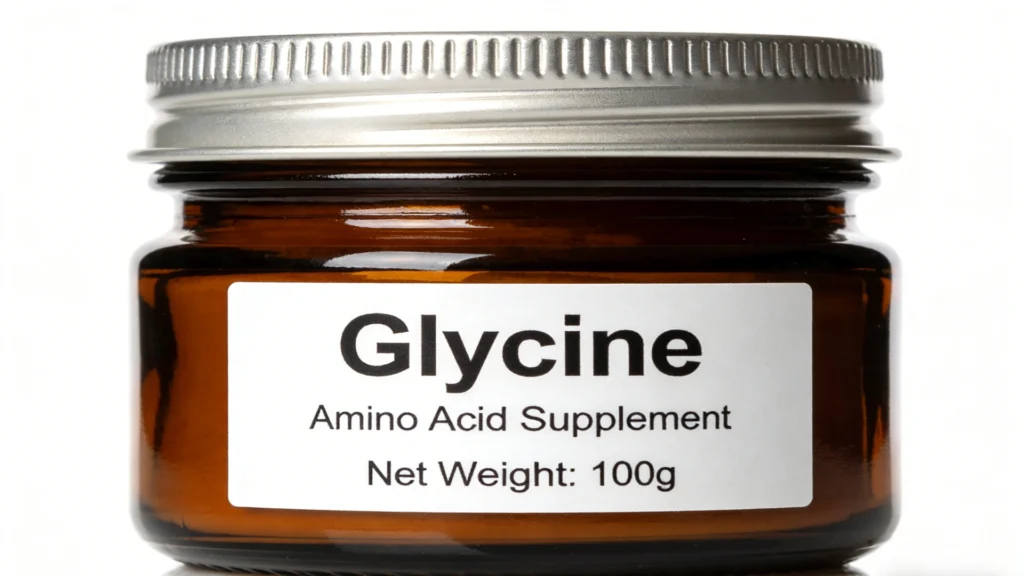
Introduction: Glycine for Sleep – A New Choice for Natural Sleep Aid
In the fast-paced modern life, insomnia and poor sleep quality have become common problems plaguing many people. From melatonin to sleep-aid tea, people are constantly looking for safe and effective ways to improve sleep. As a naturally occurring amino acid in the human body, glycine has gradually become a research focus in the field of “natural sleep aid” due to its mild and non-dependent characteristics. Glycine for sleep is not only a key research topic in nutrition and sleep medicine in recent years, but also a new choice for more and more people with insomnia. Its underlying scientific principles and practical value are worth exploring in depth.
Understanding Glycine: More Than an Amino Acid, a Great Helper for Sleep
First of all, we need to clarify: what is glycine? Glycine is a non-essential amino acid that the human body can synthesize on its own, and it is also widely present in daily diets, especially in seafood, meat, beans, and other foods. It is not only an important component of human proteins (such as collagen), but also plays a key role in many physiological processes, such as nervous system regulation and metabolism. Its connection with sleep lies in its multiple regulatory effects on the human sleep mechanism, rather than simple “sedative and hypnotic effects”, which is the core advantage that distinguishes it from traditional sleep-aid products.
Glycine for Sleep: Six Core Mechanisms for Scientific Sleep Improvement
The core mechanism of Glycine for sleep is mainly reflected in six key aspects, each supported by solid scientific research.
First, lowering core body temperature initiates sleep signals. Glycine can promote peripheral blood circulation, helping the body release heat and thereby lowering core body temperature—a drop in core temperature is an important signal for the human body to enter a sleep state, which is consistent with the body’s natural circadian rhythm. Studies have shown that taking 3 grams of glycine before bed can effectively shorten the time to fall asleep, increase the duration of deep sleep, and allow the body to enter a resting state faster.
Second, acting as an inhibitory neurotransmitter to soothe the nervous system. Glycine exerts a similar effect to gamma-aminobutyric acid (GABA) in the brainstem and spinal cord, which can inhibit the overexcitement of neurons, relieve brain tension, help calm thoughts, and reduce anxiety, especially suitable for people with insomnia caused by excessive stress and messy thoughts.
Third, promoting melatonin production to regulate sleep rhythm. Glycine can promote the secretion of serotonin, which is a precursor of melatonin (the key hormone that regulates the human sleep-wake cycle). By increasing serotonin levels, glycine indirectly increases melatonin production, helping to restore the disrupted sleep rhythm, especially suitable for people adjusting to sleep after jet lag or staying up late.
Fourth, improving sleep structure and enhancing sleep quality. Clinical studies have found that glycine supplements can improve the quality of slow-wave sleep (deep sleep) and rapid eye movement (REM) sleep, reduce the number of nighttime awakenings, and make sleep more restorative. More importantly, it can improve morning alertness and avoid the morning grogginess that may be caused by traditional sleep-aid products.
Fifth, activating the vagus nerve to promote a relaxed state. Glycine can inhibit the “fight-or-flight” response of the sympathetic nervous system, enhance the “rest-and-digest” function of the parasympathetic nervous system, and help the body switch from a tense state to a relaxed state, which is particularly beneficial for people with insomnia related to autonomic disorders and stress. Sixth, regulating cortisol levels to relieve nighttime stress. Glycine can inhibit the nighttime surge of cortisol (a stress hormone), avoiding early awakening and restless sleep caused by excessive stress hormones, making sleep more stable.
Scientific Evidence: Multiple Studies Confirm the Effectiveness of Glycine for Sleep
Numerous scientific studies have further confirmed the effectiveness of Glycine for sleep. A 2007 study in Neuropsychopharmacology found that taking 3 grams of glycine before bed significantly improved sleep quality, shortened sleep latency, and increased deep sleep duration; a 2012 study in Sleep and Biological Rhythms showed that glycine could improve sleep efficiency and reduce sleep fragmentation; a 2015 study in Frontiers in Neurology even found that glycine supplements could reduce morning grogginess and improve cognitive function even when sleep-deprived. In addition, research by the Ajinomoto Group showed that people who took glycine before bed had lower fatigue after waking up, a better mental state, and higher work efficiency during the day.
Practical Guide: Correct Usage of Glycine for Sleep
For people who want to try Glycine for sleep, mastering the correct usage method is crucial. First, the dosage: the most commonly used and effective dosage in current studies is 3 grams (3000 mg) taken 30-60 minutes before bed. This dosage can not only exert the sleep-aid effect but also be safe enough. Second, the form of administration: glycine is commonly available in powder and capsule forms. The powder has a light taste, is slightly sweet, dissolves easily in water, and is more convenient to take; some sleep-aid products also combine glycine with other ingredients (such as N-acetylcysteine, NAC) to synergistically enhance the sleep-aid effect and overall health benefits. In terms of administration time, it is recommended to take it 30-60 minutes before bed. If taken on an empty stomach, the absorption speed will be faster, but taking it with food will not affect its effect, which can be adjusted according to personal conditions.
Precautions: People Who Need to Use Glycine Cautiously
It should be noted that although glycine is relatively safe, it is not suitable for everyone. Common mild side effects include nausea, vomiting, stomach discomfort, and diarrhea, which usually occur when the dosage is too high or taken for the first time, and can be relieved by reducing the dosage; severe allergic reactions (such as rash and difficulty breathing) are rare, but people allergic to glycine or its components should avoid using it completely. In addition, glycine may interact with certain drugs, such as enhancing the effect of antipsychotics and sedatives, and taking it with blood pressure-lowering drugs may further lower blood pressure. Therefore, people taking relevant drugs must consult a doctor or nutritionist before use. At the same time, there is insufficient research data for children, pregnant women, and lactating women, so it is not recommended to use it casually.
Comparative Advantages: Glycine for Sleep vs Traditional Sleep-Aid Products
Compared with common sleep-aid products such as melatonin, Glycine for sleep has more prominent advantages. Melatonin mainly focuses on regulating sleep rhythm, has limited effect on improving difficulty falling asleep and poor sleep quality, and long-term high-dose use may lead to inhibition of endogenous melatonin secretion, psychological dependence, and side effects such as daytime sleepiness and dizziness; while glycine regulates sleep through multiple mechanisms, which can not only help fall asleep but also improve sleep quality, without dependence and no morning grogginess, suitable for long-term conditioning. In addition, glycine also has other health benefits, such as promoting collagen synthesis, protecting skin and joints, regulating metabolism, and relieving oxidative stress, truly achieving the dual effect of “sleep aid + health preservation”.
Warm Reminder: Glycine is an Auxiliary. Healthy Habits Are Fundamental
Finally, it should be emphasized that glycine is only an auxiliary method to improve sleep and cannot replace healthy sleep habits. To obtain long-term and stable good sleep, it is also necessary to cooperate with regular work and rest, a comfortable sleep environment, moderate exercise, and a healthy diet. People with long-term severe insomnia should first seek medical advice to clarify the root cause of insomnia, and then combine auxiliary methods such as glycine for conditioning to avoid blind dependence on supplements.
Conclusion: Glycine for Sleep, Unlock Natural Sound Sleep
In conclusion, Glycine for sleep is a scientific, mild, and safe natural sleep-aid method. Through multiple mechanisms such as regulating core body temperature, soothing the nervous system, and promoting melatonin production, it helps people improve sleep quality, shorten the time to fall asleep, and reduce nighttime awakenings, with no dependence and mild side effects. Whether it is occasional insomnia or long-term poor sleep quality, glycine can be a reliable auxiliary choice to help us regain sound sleep and face daily life with a more energetic state.