
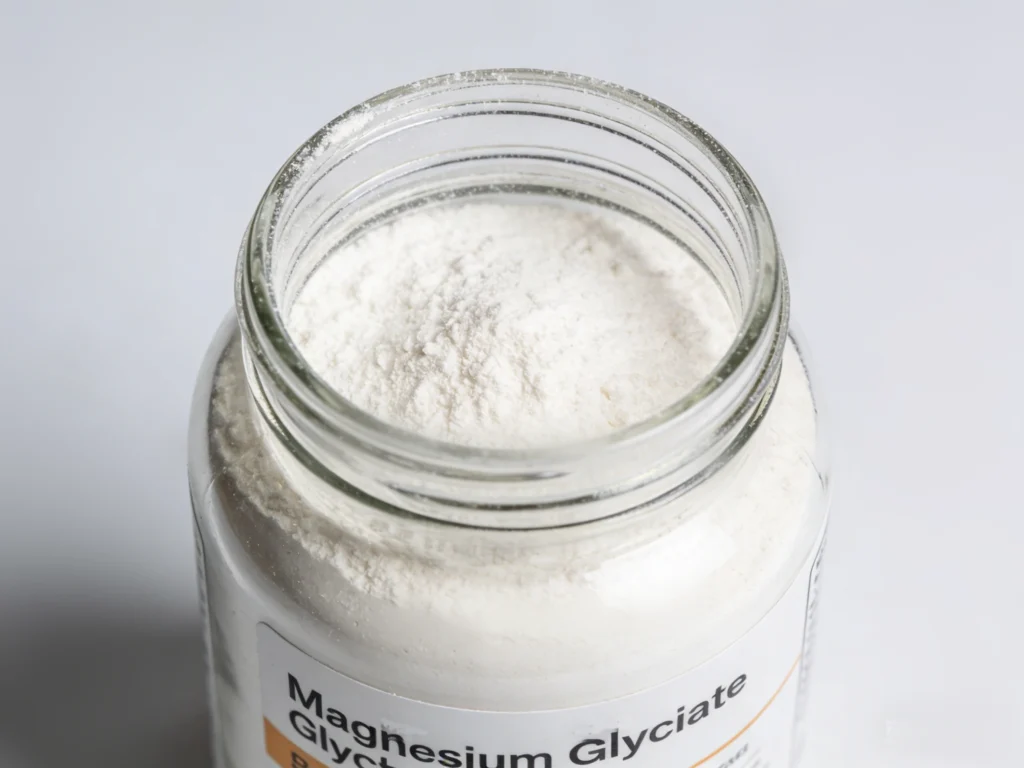
In the field of mineral supplements, magnesium glycinate is a highly advantageous organic form of magnesium. It is formed by the chelation reaction of magnesium ions and glycine (a non-essential amino acid necessary for the human body). With its high absorption rate, low irritation, and multiple health benefits, it has become a highly respected dietary supplement in recent years, widely used in healthcare, medicine, food, and other fields. Magnesium glycinate, also known as magnesium glycinate chelate, has a chemical formula of C4H8MgN2O4 and a molecular weight of about 174.41 g/mol. Its unique chelate structure makes magnesium ions easier for the human body to absorb and use, while avoiding the gastrointestinal irritation associated with traditional inorganic magnesium supplements, making it suitable for long-term supplementation by various groups of people.
In terms of physical and chemical properties, magnesium glycinate usually appears as a white to off-white crystalline powder, odorless and tasteless, easily soluble in water, slightly soluble in ethanol, insoluble in organic solvents such as ether, with strong stability, which can be stored for a long time in a normal temperature and dry environment and is not easy to oxidize and deteriorate. Compared with ordinary inorganic magnesium (such as magnesium oxide and magnesium sulfate), the core advantage of magnesium glycinate lies in its “chelate structure” — glycine molecules act as “carriers” to wrap magnesium ions, reducing the formation of insoluble precipitates by magnesium ions combining with other substances (such as oxalic acid and phosphoric acid) in the intestinal tract, thus greatly improving the bioavailability of magnesium, with an absorption rate 2-3 times that of inorganic magnesium. In industrial production, magnesium glycinate is produced through precise chelation technology, with purity typically above 98% and strict control of heavy metals, impurities, and microorganisms. It meets food-grade and pharmaceutical-grade quality standards and provides a safety guarantee for its wide application.
As a high-quality magnesium supplement, magnesium glycinate has comprehensive and mild health effects. Its core effects center on magnesium’s physiological functions, and, through the synergistic effect of glycine, it exerts dual health benefits. Firstly, in terms of nerve and mood regulation, magnesium glycinate plays a key role — magnesium is an important regulator of the central nervous system, which can inhibit nerve excitability, relieve nervous tension, anxiety, and irritability. As an inhibitory neurotransmitter, glycine can help magnesium stabilize nerve function, improve sleep quality, shorten time to fall asleep, reduce nighttime awakenings, and is especially suitable for people with insomnia caused by high stress and nerve sensitivity. Long-term supplementation can effectively improve sleep depth and quality.
Secondly, the protective effect of magnesium glycinate on bone health is particularly prominent. Magnesium is an important component of human bones, accounting for about 60%-65% of the total magnesium in the human body. It participates in bone formation and metabolism, promotes calcium absorption and deposition, prevents calcium loss, and reduces the risk of osteoporosis and fractures. Compared with simple calcium supplementation, supplementing magnesium glycinate can regulate calcium and phosphorus metabolism, avoid calcium deposition in blood vessels, joints, and other places, and at the same time relieve bone pain and muscle spasms, which is especially suitable for the elderly, pregnant women, lactating women, and people with long-term calcium deficiency. In addition, magnesium glycinate can help improve muscle function, relieve post-exercise muscle soreness and fatigue, promote muscle repair, and is an ideal supplement for athletes.
In terms of cardiovascular health and metabolic regulation, magnesium glycinate also plays an important role. Magnesium participates in the regulation of the activity of various enzymes in the human body, can promote blood circulation, dilate blood vessels, help lower blood pressure, and has a certain auxiliary regulatory effect on people with hypertension; at the same time, it can regulate blood glucose metabolism, promote insulin secretion and utilization, help stabilize postprandial blood glucose, and assist in improving blood glucose control in diabetic patients. The synergistic effect of glycine can also reduce magnesium’s irritation of the gastrointestinal tract, help prevent discomfort such as bloating and diarrhea, and is suitable for long-term supplementation for people with weak gastrointestinal function. In addition, magnesium glycinate can help relieve migraines and premenstrual symptoms (such as dysmenorrhea and mood swings), regulate electrolyte balance, and maintain a normal heart rhythm.
Magnesium glycinate has a wide range of applications across healthcare, medicine, food, and other fields. In the field of health care, it is a mainstream magnesium supplement dosage form, commonly found in capsules, tablets, powders, and other products, adapting to the supplementary needs of different groups of people, such as bone protection for the elderly, stress relief and sleep improvement for office workers, and muscle repair for athletes. In the pharmaceutical field, magnesium glycinate can be used as a medicinal raw material to prepare drugs for the treatment of magnesium deficiency, osteoporosis, hypertension, insomnia, and other diseases. It can also serve as a buffer to adjust drug pH and improve drug stability.
In the food industry, magnesium glycinate can be used as a nutritional fortifier in infant formula, dairy products, cereal products, sports drinks, and other products to supplement the magnesium and glycine needed by the human body and improve their nutritional value. In addition, it can also be used as a food additive to improve the taste and stability of food, and is widely used in various functional foods. In the cosmetics field, with its mild characteristics, magnesium glycinate can be added to skin care products to regulate the electrolyte balance of the skin, enhance the skin’s water-locking capacity, relieve skin dryness and sensitivity, and at the same time assist in improving skin metabolism and enhancing skin condition.
When using magnesium glycinate, it is necessary to follow the requirements of reasonable dosage and applicable population to ensure safety and effectiveness. The recommended daily supplement dosage for healthy adults is 100-300 milligrams (calculated as magnesium element), which can be adjusted according to their own needs, age and health status; pregnant women, lactating women, people with renal insufficiency, and those taking antihypertensive drugs, hypoglycemic drugs and other drugs are advised to use it under the guidance of a doctor or nutritionist to avoid excessive supplementation or interaction with drugs. In general, as an organic magnesium supplement with a high absorption rate and low irritation, the health value and application potential of magnesium glycinate are constantly recognized. It can not only meet the human body’s demand for magnesium but also provide various guarantees for human health with the synergistic effect of glycine, becoming an indispensable health supplement choice for modern people.