
Definition and Basic Properties
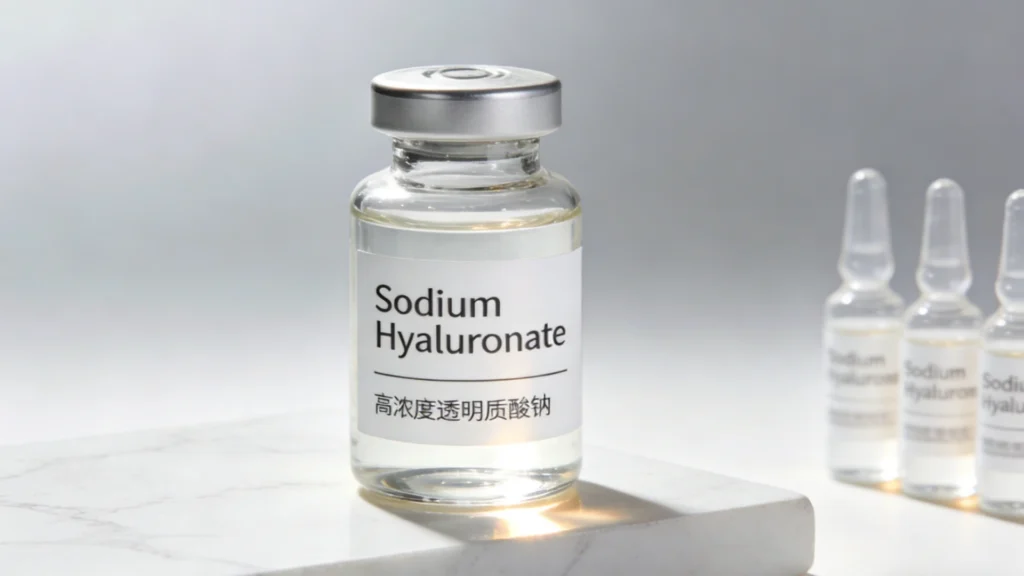
Sodium hyaluronate, also known as hyaluronic acid sodium, is the sodium salt form of hyaluronic acid (HA), a naturally occurring glycosaminoglycan that plays an indispensable role in the human body and various biological systems. As a linear polysaccharide composed of repeating disaccharide units of D-glucuronic acid and N-acetyl-D-glucosamine, it possesses unique physicochemical properties that make it versatile in medical, cosmetic, and even pharmaceutical applications. Unlike its parent compound, hyaluronic acid, sodium hyaluronate has higher water solubility and stability, making it easier to incorporate into various formulations and more effective in delivering its beneficial effects.
Natural Distribution and Physiological Functions
Naturally, sodium hyaluronate is widely distributed in the extracellular matrix of mammalian connective, epithelial, and neural tissues, including the skin, joint synovial fluid, vitreous humor of the eye, corneal endothelium, and even the umbilical cord. In these natural locations, it fulfills critical physiological functions: it acts as a tissue lubricant, maintains tissue moisture, provides mechanical protection, and supports cell adhesion and tissue repair. For instance, in the joints, it is a key component of synovial fluid, where its high viscosity acts as a shock absorber and lubricant, reducing friction between joint surfaces and protecting articular cartilage from wear and tear. In the eyes, it is present in the aqueous and vitreous humor, coating the corneal endothelium to protect delicate eye tissues and maintain ocular moisture.
Mechanism of Action
The unique mechanism of action of sodium hyaluronate stems from its exceptional hydrophilicity—it can bind up to 1,800 times its own weight in water, forming a viscoelastic solution that retains moisture and provides a protective barrier for tissues. This viscoelasticity also allows it to absorb mechanical stress, making it an ideal substance for cushioning and protecting fragile tissues like the iris, retina, and corneal layers. Additionally, sodium hyaluronate plays a crucial role in wound healing by acting as a protective transport vehicle, delivering peptide growth factors and structural proteins to the site of injury, where it is enzymatically degraded to release these active substances and promote tissue repair.
Applications in Medicine
Due to its biocompatibility, low antigenicity, and unique properties, sodium hyaluronate has been widely applied in various fields. In medicine, it is commonly used as an intra-articular injection to treat knee pain in patients with osteoarthritis who have not responded to other treatments; by increasing the viscosity of synovial fluid, it restores joint lubrication, reduces pain, and improves mobility, often serving as a last resort before joint replacement surgery. In ophthalmology, it has become an indispensable viscoelastic substance in intraocular surgeries such as cataract, glaucoma, and corneal transplantation, where it maintains the shape of the eye, protects corneal tissues, and ensures a clear surgical field. It is also used in artificial tears to relieve dry eye symptoms by stabilizing the tear film and lubricating the ocular surface.
Applications in Cosmetics
In the cosmetic industry, sodium hyaluronate is a highly sought-after ingredient due to its powerful moisturizing and anti-aging effects. Its smaller molecular weight compared to hyaluronic acid allows it to penetrate the epidermis, delivering deep hydration to skin cells, plumping the skin, and reducing the appearance of fine lines and wrinkles. It is suitable for all skin types, especially dry, sensitive, and aging skin, as it soothes inflammation and supports the skin’s structural integrity without irritating most cases. Common cosmetic products containing sodium hyaluronate include serums, moisturizers, eye creams, and sheet masks, where it enhances skin texture and maintains long-lasting hydration.
Applications in Drug Delivery Systems
Beyond medical and cosmetic uses, sodium hyaluronate is also emerging as a promising biomaterial in drug delivery systems. Its chemical structure, rich in carboxyl and hydroxyl groups, allows for chemical modification, enabling the construction of targeted drug delivery systems that can specifically bind to receptors on tumor cells or inflammatory tissues, reducing side effects and enhancing therapeutic efficacy. It also improves the stability of encapsulated drugs and enables controlled release, making it valuable in the development of sustained-release formulations for proteins and peptides.
Safety and Precautions
While sodium hyaluronate is generally safe and well-tolerated, adverse effects are rare and mostly mild, depending on its application route. For intra-articular injections, possible side effects include temporary pain, swelling, or redness at the injection site; for ophthalmic use, postoperative inflammation, corneal edema, or temporary increased intraocular pressure may occur, but these symptoms usually resolve quickly with proper care. It is contraindicated for individuals with allergies to sodium hyaluronate, and caution is advised for pregnant or breastfeeding women, children, and those with liver or kidney disorders.
Summary
In summary, sodium hyaluronate is a naturally occurring, biocompatible substance with unique viscoelastic and hydrophilic properties that make it invaluable in multiple fields. From its role in maintaining physiological function in the human body to its wide-ranging applications in medicine, cosmetics, and drug delivery, it continues to prove its significance as a versatile and beneficial biomaterial. As research advances, new formulations and applications of sodium hyaluronate are constantly emerging, further expanding its potential to improve human health and well-being.