
1. Introduction
Rosmarinic Acid (RA), a natural polyphenolic compound, is widely present in the Labiatae family and exhibits multiple biological activities, including antioxidant, anti-inflammatory, and immunomodulatory effects. Compared with ordinary rosemary extracts, high-purity rosmarinic acid (purity ≥ 98%) has higher concentrations of active ingredients, greater effects, and more controllable safety. However, its preparation and purification processes are affected by many factors, making process optimization difficult.
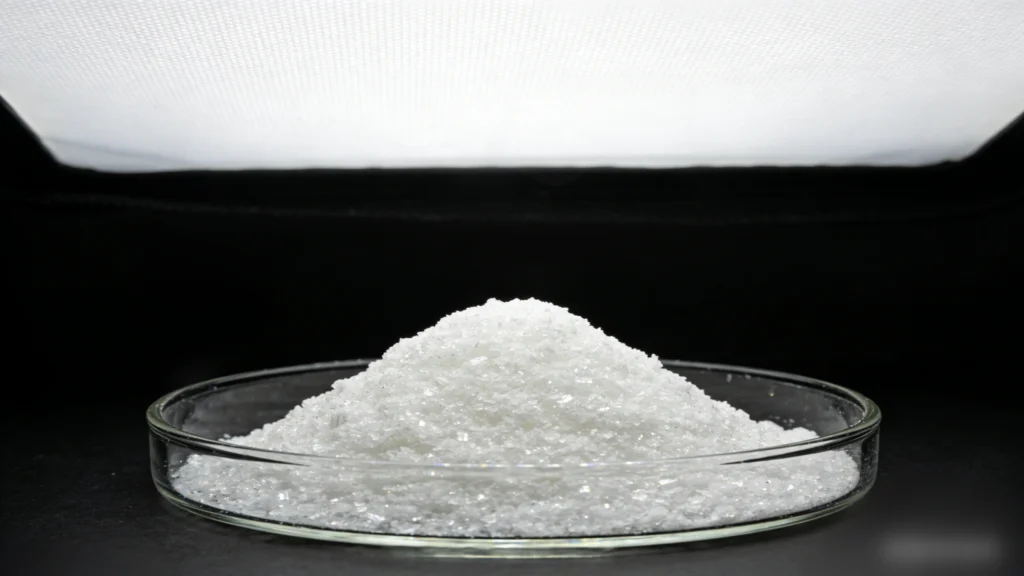
The chemical formula of rosmarinic acid is C₁₈H₁₆O₈, with a molecular weight of 360.31. It appears as a white-to-pale-yellow crystalline powder with a slight aromatic odor, and its CAS numbers are 20283-92-5 and 537-15-5. Its key physical and chemical parameters are as follows: specific rotation of +102~+110° (D/20℃) (c=0.2, C₂H₅OH), melting point of 171-175℃, boiling point of approximately 694.7±55.0℃, density of 1.33, flash point of 254.5℃, and extremely low vapor pressure (2.92E-20 mmHg at 25℃).
High-purity rosmarinic acid (purity ≥ 98%) has obvious selectivity in solubility. It has low solubility in water but is readily soluble in ethanol, DMSO, or dimethylformamide, and can be stored stably at 2-8℃, thereby effectively retaining its biological activity and laying the foundation for subsequent purification and application.
High-purity rosmarinic acid is relatively sensitive to air, heat, and light, and is relatively stable under acidic conditions. It is prone to structural changes under an alkaline environment, leading to reduced activity. High temperature or long-term light exposure can cause oxidative decomposition or structural hydrolysis, which are also key factors to control during purification and storage.
From the perspective of chemical structure, the high-purity rosmarinic acid molecule contains two phenolic hydroxyl groups and one carboxyl group, with the characteristics of both phenolic and carboxylic acid compounds. This unique structure is the basis for its strong antioxidant and anti-inflammatory activities and the key reason for its greater activity compared with ordinary rosemary extracts.
2. Main Sources and Extraction Methods of High-Purity Rosmarinic Acid
2.1 Natural Plant Sources
Rosmarinic acid is mainly derived from natural Labiatae plants, among which rosemary (Rosmarinus officinalis L.) is the main raw material source. Its leaves contain a high level of rosmarinic acid and are easy to grow, harvest, and process on a large scale, making it the preferred raw material for current industrial production.
Rosemary leaves also contain synergistic active ingredients such as carnosic acid and carnosol, which can further enhance the biological activity of rosmarinic acid.
In addition to rosemary, other Labiatae plants such as Salvia miltiorrhiza Bunge, Perilla frutescens (L.) Britt., and Prunella vulgaris L. also contain a certain amount of rosmarinic acid. Rosmarinic acid in Salvia miltiorrhiza is often coexistent with tanshinone, while the content in Perilla frutescens is low, but it has a wide source and low planting cost, which can be used as a supplementary raw material.
The content of rosmarinic acid in different plant sources is strongly influenced by growth environment, harvest time, and processing methods. Among them, the content of rosemary leaves can reach 1.5%-3.0% when harvested around the flowering period, which is the optimal raw material for extracting high-purity rosmarinic acid.
2.2 Comparison between Traditional and New Extraction Technologies
Extraction is the basis for the subsequent purification of high-purity rosmarinic acid, and the extraction efficiency directly determines the output and purity of the final product. Currently, extraction technologies are divided into two categories: traditional and new. There are significant differences between the two in terms of extraction efficiency, cost, and environmental protection. The specific classification and characteristics are as follows.
2.2.1 Traditional Extraction Technologies
Traditional extraction technologies primarily include solvent extraction and steam distillation, with solvent extraction being the most widely used. This method uses the difference in solubility of rosmarinic acid in different solvents, with ethanol and methanol as extractants, and completes the extraction through soaking and reflux.
The solvent extraction method uses simple equipment and is low-cost, making it suitable for small-scale production. However, it has disadvantages, including low extraction efficiency, long extraction time, a high risk of solvent residue, and many impurities, making it difficult to meet the demand for high-purity preparation. The steam distillation method has the problem of low active-ingredient content and broad application limitations.
2.2.2 New Extraction Technologies
New extraction technologies include ultrasonic-assisted extraction, microwave-assisted extraction, supercritical fluid extraction, and enzyme-assisted extraction. Compared with traditional technologies, they offer significant advantages and can better meet the needs of high-purity rosmarinic acid extraction. The specific characteristics and processes of each technology are as follows:
1. Ultrasonic-assisted extraction: It is the most widely used. It accelerates the dissolution of active ingredients by destroying plant cell walls with ultrasonic waves. It offers high efficiency, a short processing time, a low solvent dosage, minimal damage to active ingredients, and a moderate cost, making it suitable for medium- and large-scale production. Its optimal process is: 70%-80% ethanol as the extraction solvent, solid-liquid ratio of 1:20-1:30 (g/mL), ultrasonic power of 300-500W, extraction time of 30-60min, temperature of 40-60℃. Under these conditions, the extraction rate can exceed 85%, and biological activity can be effectively retained, making it the preferred scheme for industrial extraction.
2. Microwave-assisted extraction: It accelerates the dissolution of ingredients by means of thermal effect and non-thermal effect, with higher efficiency and shorter time consumption (10-30min). However, it is necessary to strictly control power (200-400W) and temperature (≤ 60 ℃) to avoid degradation of active ingredients, and it is suitable for small-scale production with high requirements for extraction efficiency.
3. Supercritical fluid extraction: Using CO₂ as the medium, it has no solvent residue, is green and environmentally friendly, and can retain active ingredients to the greatest extent. However, it has high equipment investment, complex operation, and high cost, and is only suitable for small-scale high-end product preparation. During extraction, it is necessary to control the pressure of 30-50MPa and the temperature of 35-45℃.
4. Enzyme-assisted extraction: It degrades plant cell walls through cellulase and pectinase. It has mild extraction conditions, good retention of activity, and a high extraction rate. However, the enzyme is costly, and the cycle is long, making it suitable for small-scale production with high-activity requirements. It can be used in combination with ultrasonic and microwave technologies to improve the effect.
2.2.3 Suggestions for Selection of Extraction Technologies
In summary, ultrasonic-assisted extraction balances efficiency, cost and activity retention, and is the first choice for industrial extraction of high-purity rosmarinic acid; supercritical fluid extraction is suitable for high-end product preparation; microwave and enzyme-assisted extraction can be used alone or in combination with ultrasonic technology according to the production scale and needs, and the appropriate scheme can be flexibly selected in actual production.
3. Purification Technology and High-Purity Preparation Strategy (≥98%)
The crude extract contains many impurities, such as polysaccharides and proteins. It is necessary to adopt a step-by-step strategy of “preliminary purification – fine purification – purity detection” to remove impurities and enrich target components. This strategy can meet the needs of large-scale production while controlling costs, and finally obtain products with purity ≥ 98%.
3.1 Preliminary Purification
The core of preliminary purification is to remove macromolecular impurities and some small-molecular impurities, thereby reducing the difficulty of subsequent purification. The commonly used methods are liquid-liquid extraction and precipitation.
Liquid-liquid extraction uses the difference in the distribution coefficients of components between ethyl acetate and n-butanol to separate rosmarinic acid from water-soluble impurities. This method is simple to operate, low-cost, and effective in removing water-soluble impurities.
Controlling the extractant dosage, extraction time (2-3 times), and pH value (2-3) can improve the extraction rate and reduce impurity residue. After this step, the product purity can be increased to 30%-50%.
The precipitation method is mainly used to remove proteins and polysaccharides, with ethanol precipitation being the most widely used. It uses high-concentration ethanol to reduce the solubility of impurities, causing them to precipitate while having little impact on the activity of rosmarinic acid.
Its optimal conditions are: ethanol concentration of 70%-80%, temperature of 4-8℃, precipitation time of 12-24h. After centrifugation and filtration, a crude product with 40%-60% purity can be obtained.
The two methods can be used in combination. First, macromolecular impurities are removed by precipitation, and then small-molecular impurities are removed by extraction, further improving the purity of the crude product and reducing the pressure on subsequent fine purification.
3.2 Chromatographic Purification
Chromatographic purification is the core link in the preparation of high-purity rosmarinic acid. The commonly used methods are macroporous adsorption resin chromatography and preparative HPLC.
Macroporous adsorption resin chromatography has a large adsorption capacity, good selectivity, and low cost. It realizes enrichment and purification through differences in component adsorption-desorption, and the resin can be reused, making it suitable for industrial production. Among them, AB-8 resin has the best selectivity. The optimal process conditions are: sample loading concentration of 10-15mg/mL, sample loading speed of 2-3BV/h, 70%-80% ethanol elution, elution speed of 1-2BV/h, and elution volume of 3-5BV.
After purification by macroporous adsorption resin chromatography, the product purity can reach 80%-90%. The resin can be reused 5-8 times via alternating acid-base elution, effectively reducing production costs.
Preparative HPLC is the key technology to obtain products with purity ≥ 98%. It achieves precise separation of target components through high separation efficiency and offers controllable purity and good repeatability.
Its optimal process is: using a C18 column (250mm×10mm, 5μm), a mobile phase of methanol-0.1% formic acid aqueous solution (40:60), a flow rate of 2-3mL/min, a column temperature of 30-35℃, a detection wavelength of 330nm, and a sample injection volume of 200-500μL. Under these conditions, the product purity can reach 98%-99.5%, meeting the quality requirements for high-end pet product raw materials.
The combined use of macroporous adsorption resin chromatography and preparative HPLC is the optimal process for current industrial production, effectively improving production efficiency and reducing production costs.
3.3 High-Resolution Separation Technologies
To obtain products with purity ≥ 99%, further purification using high-speed countercurrent chromatography (HSCCC) and molecular imprinting technology (MIT) is required to remove trace impurities.
HSCCC is a stationary-phase-free liquid-liquid partition chromatography method with high separation efficiency and no adsorption loss, enabling effective separation of trace impurities with similar structures. Its optimal solvent system is n-hexane-ethyl acetate-methanol-water (1:4:1:4). After purification, the product purity is ≥99% and the recovery rate is ≥90%.
However, HSCCC has the disadvantages of large solvent dosage, long cycle, and high cost, and is only suitable for small-scale production.
MIT prepares molecularly imprinted polymers using rosmarinic acid as the template, which offers strong specificity and continuous separation. The product’s purity after purification is ≥99%, making it more suitable for large-scale production.
At present, this technology is still in the optimization stage, and the goal is to reduce preparation costs and improve recognition performance. Compared with HSCCC, MIT is more suitable for large-scale production and is an important development direction for the large-scale purification of high-purity rosmarinic acid in the future.
3.4 Purity Analysis and Characterization
Purity analysis and characterization are the key links of product quality control. High-performance liquid chromatography-mass spectrometry (HPLC-MS) and nuclear magnetic resonance (NMR) technologies, combined with other auxiliary detection methods, are preferred to ensure product quality meets standards.
HPLC-MS combines the advantages of chromatographic separation and mass spectrometric detection, enabling both qualitative and quantitative analysis, accurate determination of product purity, and identification of trace impurities. The detection accuracy is 0.1%, and impurities with concentrations below 0.5% can be detected.
Its detection conditions are consistent with preparative HPLC. By comparing the retention time and mass spectral peaks of the standard product, the product purity is ensured to be ≥98%.
NMR is mainly used for product structure characterization. It determines the chemical structure of rosmarinic acid, verifies the product’s authenticity through ¹H-NMR and ¹³C-NMR spectra, and can also detect trace structural impurities.
UV-Vis (characteristic absorption peak at 330 nm) and IR can be used as auxiliary characterization methods for qualitative preliminary quantification and verification of functional groups, respectively. The combined use of multiple methods ensures that the product meets the application requirements in the pet field.
3.5 Cost Control of Purification Process and Challenges in Large-Scale Production
The high cost of the purification process is the main factor restricting the large-scale production of high-purity rosmarinic acid. The core control measures include optimizing the process, reducing solvent consumption, and improving product recovery.
The production steps and solvent energy consumption can be reduced by optimizing the combined process of “preliminary purification – chromatographic purification”; at the same time, the recovery and reuse of common solvents such as ethanol and ethyl acetate can reduce solvent costs by 30%-50%, considering environmental protection and economy.
In addition, optimizing the process parameters, such as elution of macroporous adsorption resin, can increase the product recovery rate to more than 90%, further reducing the unit product cost.
At present, large-scale production faces three core challenges, and the corresponding solutions are as follows: first, high raw material cost and unstable supply, which requires promoting large-scale and standardized planting of rosemary and optimizing planting technology; second, complex purification process and high cost, which requires optimizing the process through technological innovation and developing low-cost industrial technology; third, poor product stability, which requires adopting microencapsulation technology and optimizing storage and transportation conditions.
4. Functions and Applications of High-Purity Rosmarinic Acid in Animal/Pet Health
High-purity rosmarinic acid is natural, safe, and has prominent biological activities. It has been approved by EFSA as an antioxidant feed additive for dogs and cats, and is widely used in pet health products, functional feeds, and toiletries. It has broad application prospects in the fields of antioxidation, anti-inflammation, oral and hair care.
4.1 Antioxidant Effect: Reducing Pet Oxidative Stress and Delaying Aging
The accumulation of free radicals in pets can cause oxidative stress, accelerate aging, and increase the risk of diseases such as skin aging and cognitive impairment. High-purity rosmarinic acid can effectively alleviate this problem.
Its antioxidant capacity is better than that of artificial antioxidants such as BHA and BHT. It can effectively scavenge free radicals, inhibit lipid peroxidation, protect pet cells, delay aging, and can also be used as a natural antioxidant to extend the shelf life of pet food.
Studies have shown that adding 0.05%-0.1% high-purity rosmarinic acid to dog food can significantly increase the activities of SOD and GSH-Px in pets, reduce the contents of MDA and 8-OH-dG, and efficiently scavenge free radicals.
For elderly pets, it can improve skin elasticity, reduce hair whitening, delay cognitive decline, improve the quality of life, and is natural and residue-free, suitable for long-term use.
In addition, it can alleviate oxidative stress and anxiety in caged pets, adapting to the needs of pets in different feeding environments.
4.2 Anti-Inflammatory and Immunomodulatory Effects: Improving Pet Dermatitis, Arthritis, and Intestinal Health
Inflammatory response is closely related to pet diseases such as dermatitis and arthritis. Excessive inflammation can also lead to immune disorders. High-purity rosmarinic acid has significant anti-inflammatory activity and can replace some chemical anti-inflammatory drugs, reducing the risk of drug residues.
Its anti-inflammatory mechanism mainly involves inhibiting the release of inflammatory factors such as TNF-α, blocking inflammatory signaling pathways, and inhibiting the activities of COX and LOX. In addition, it can regulate pets’ immune function and enhance their resistance.
For dermatitis, it can effectively relieve symptoms such as skin itching and redness in pets, especially in cases of allergic dermatitis. It can not only repair the skin barrier but also inhibit harmful skin microorganisms; when added to pet shower gel, it can prevent hair loss and promote hair and fur regeneration without chemical stimulation.
In terms of arthritis, it can reduce joint inflammation and pain, reduce cartilage damage, delay disease progression, and improve joint mobility in elderly pets and large dogs.
In terms of intestinal health, it can regulate intestinal flora, reduce intestinal inflammation, repair the intestinal mucosal barrier, alleviate problems such as diarrhea and constipation, and promote nutrient absorption and improve feed utilization.
4.3 Oral and Hair Health (Natural Additives Replacing Chemical Preservatives)
Chemical preservatives in traditional pet care products have potential hazards. High-purity rosmarinic acid can be used as a natural additive replacement, with both antibacterial and antioxidant effects, aligning with the industry trend toward natural pet care.
Its natural, aromatic odor can improve the oral and hair odor of pets and is non-irritating, suitable for all kinds of pets, especially those with sensitive constitutions.
In terms of oral health, it can inhibit the growth of harmful bacteria such as Streptococcus mutans, reduce dental plaque and tartar formation, and prevent periodontitis. It can be applied to pet toothpaste, oral spray, and other products, and is highly safe and suitable for long-term oral care.
In terms of hair health, it can help address issues such as dryness, split ends, and hair loss, protect hair keratin, and promote hair follicle development. It can be applied to pet shower gel, hair conditioner, and other products, replacing chemical preservatives and softeners, suitable for pets with dry hair and sensitive skin, and the application effect has been verified.
4.4 Potential Intervention in Common Diseases of Dogs and Cats (Such as Cognitive Dysfunction and Chronic Kidney Disease)
With the aging of pets, geriatric diseases such as cognitive dysfunction and chronic kidney disease are becoming more and more common. High-purity rosmarinic acid, with its antioxidant and anti-inflammatory activities, can potentially intervene in such diseases and is natural and side-effect-free, providing a new way to prevent and treat pet diseases.
In terms of cognitive dysfunction, it can scavenge free radicals in the brain, inhibit inflammatory responses, protect nerve cells, improve the memory and reaction abilities of elderly pets, and also protect pet eye health and prevent cataracts.
In terms of chronic kidney disease, oxidative stress and inflammation are the core pathological mechanisms. High-purity rosmarinic acid can reduce renal cell damage, protect renal function, and delay disease progression.
Studies have shown that it can reduce gentamicin-induced nephrotoxicity, has no obvious toxicity at doses ≤ 100 mg/kg, can reduce symptoms such as proteinuria, can assist in the treatment of chronic kidney disease, and has a certain liver-protective effect.
4.5 Enterprise Research Case – JayooBio
JayooBio led research and product development on high-purity rosmarinic acid for the pet industry. Relying on advanced technology and a complete experimental system, it promotes its industrial application. The products comply with cGMP and have passed several international certifications.
Animal experiments have verified the safety and effectiveness of rosmarinic acid with≥98% purity. Experimental data show that the feed added with this component can reduce the incidence of pet skin inflammation by more than 40%, and improve intestinal health and antioxidant capacity by more than 30% and 50%, respectively.
In terms of product development, JayooBio has launched a series of products, including antioxidant chewable tablets, feed additives, and skin care nutrient solutions, all with purity ≥ 98%, to meet the needs of different pets. At the same time, it provides customized solutions, and the products are sold at home and abroad.
In terms of safety and palatability, experiments have verified that it has no acute or long-term cumulative toxicity at the recommended dose, meeting the relevant EFSA requirements. By adding attractant ingredients and using microencapsulation technology, the problems of palatability and stability have been effectively addressed, and the palatability score exceeds 90 points.
5. Industrialization Path and Challenges
High-purity rosmarinic acid has great potential for applications in the pet industry. However, from laboratory technology to terminal product landing, it is necessary to break through multiple links, including raw materials, processes, and product development, and to face many industrialization challenges. It is necessary to promote its development through technological innovation, standard establishment, and other measures.
5.1 Key Nodes from Laboratory High-Purity Preparation to Pet Product Landing
The core key nodes include four aspects, corresponding to different links of industrialization, to ensure the smooth transformation of technology into terminal products.
First, a large-scale supply of raw materials. It is necessary to establish standardized rosemary planting bases, optimize planting, harvesting, and storage processes, expand the use of supplementary raw materials, and ensure a stable supply of raw materials.
Second, the industrialization of purification processes. It is necessary to transform laboratory processes into industrial processes, optimize combined processes, develop solvent recovery technologies, reduce production costs, and improve production efficiency.
Third, product development and adaptation. Combined with the physiological characteristics of pets, solve the problems of product palatability and stability, develop various dosage forms and compound products, and improve market competitiveness.
Fourth, product registration and promotion. Complete product registration and filing, strengthen popular science publicity and channel cooperation, build characteristic brands, and promote large-scale product landing.
5.2 Quality Control System (Exclusive Standards for Animal Raw Materials)
At present, the lack of exclusive quality standards for high-purity rosmarinic acid for pets restricts its industrialization development. It is necessary to establish an exclusive quality control system that aligns with the physiological characteristics of pets, connects with international standards, and promotes industrial standardization.
Quality control needs to cover three core links: raw materials, production, and finished products, forming a full-process quality control.
At the raw material end, it is necessary to clarify the content of rosmarinic acid and impurity limits, establish a complete raw material traceability system, and ensure the stable quality of raw materials; at the production end, it is necessary to formulate standardized production procedures, strengthen intermediate inspection during the production process, and timely investigate production hazards.
At the end of the production process, it is necessary to clarify key indicators such as purity (≥98%), adopt accurate detection methods, standardize product storage and transportation conditions, and formulate scientific safety evaluation standards to ensure that products meet international requirements.
5.3 Research on Synergistic Compound with Other Pet Health Ingredients
The compound of high-purity rosmarinic acid with probiotics, vitamins, and other ingredients can achieve a synergistic effect, enhance product functional diversity, effectively compensate for the functional limitations of a single component, and is an important direction for its industrial development.
Its synergistic effect is significant: compound with probiotics can synergistically regulate pet intestinal health; compound with vitamins E and C can enhance antioxidant effect; compound with glucosamine can improve joint health; compound with licorice extract can enhance anti-inflammatory and antibacterial ability.
Enterprises such as JayooBio have carried out relevant compound research, providing technical support for product development.
In the future, it is necessary to further explore the synergistic mechanism, optimize the compound ratio, and develop more targeted, personalized compound products tailored to pet breeds, ages, and health conditions to further expand its application scope.
5.4 Current Industrialization Bottlenecks and Solutions
At present, its industrialization development still faces four major bottlenecks. It is necessary to put forward targeted solutions to promote the broad adoption of high-purity rosmarinic acid in the pet industry and help the pet health industry develop in a natural direction.
The first bottleneck is the raw material supply bottleneck. It is necessary to establish standardized planting bases, promote high-quality varieties, optimize planting technologies, expand raw material sources, improve raw material utilization rate, and solve the problems of unstable raw materials and high costs.
The second industrialization bottleneck is the purification process bottleneck. It is necessary to strengthen technological innovation, optimize extraction and purification processes, develop low-cost, efficient industrial technologies, promote the integrated application of various technologies, and reduce equipment investment and energy consumption.
The third industrialization bottleneck is the standard lack bottleneck. Enterprises, scientific research institutions, and industry associations need to work together to formulate exclusive quality and dosage standards, connect with international standards, strengthen market supervision, and standardize market order.
The fourth industrialization bottleneck is the market cognition bottleneck. It is necessary to strengthen popular science publicity and market promotion, cooperate with relevant enterprises and pet hospitals, build high-end natural brands, expand the international market, and improve product market recognition.
6. Conclusions and Prospects
6.1 High-Purity Rosmarinic Acid Has Great Potential in the Pet Field
As a natural, safe, and efficient pet health care ingredient, high-purity rosmarinic acid has multiple biological activities, including antioxidant and anti-inflammatory effects, and aligns with the natural trend in pet feeding, making it widely used in pet health products, functional feeds, and other applications.
Compared with synthetic additives, it has no residue, is low-toxic, and has no side effects; it can effectively improve pet skin, joints, and intestinal health and assist in the intervention of common diseases in elderly pets. It has strong application potential and broad prospects for industrialization in the petrochemical industry.
It is expected to promote the pet health industry’s development in a standardized, healthy direction, providing a new natural solution for pet care.
6.2 The Role of Enterprises (Such as Jayoobio) in Promoting Standardization, Functional Verification, and Product Transformation
Enterprises are the core force in the industrialization of high-purity rosmarinic acid. Represented by JayooBio, they have played a key role in the industrialization process.
Enterprises promote the standardized development of the industry by verifying product safety and effectiveness through animal experiments, optimizing production processes, developing a diverse range of products, and participating in the formulation of exclusive standards.
At the same time, through investment in scientific research and compound research, and by integrating industry, universities, and research, enterprises overcome industrialization bottlenecks. More enterprises’ participation in the future will further improve product competitiveness and help the pet health industry develop in a natural, high-quality, and standardized direction.
6.3 Future Directions
In the future, the research and industrialization of high-purity rosmarinic acid in the pet field need to focus on three core directions to promote its sustainable development.
First, establish pet-specific purity, dosage, and quality standards; clarify key indicators; align with international standards; promote standardized industry development; and ensure stable product quality.
Second, conduct in-depth research on pet disease models, clarify their pharmacodynamic mechanisms and metabolic processes, and assess long-term safety, optimize dosage and formulation, and improve product application effects.
Third, improve product palatability and stability through technologies such as microencapsulation, develop various dosage forms and compound products, meet the personalized needs of different pets, and further expand the application scope.