
Introduction
S-Acetyl-L-Glutathione vs L-Glutathione represents the core raw material differentiation in functional nutrition. As the global glutathione market expands across pharmaceuticals, nutraceuticals, and cosmetics, this tripeptide has emerged as a core bioactive ingredient fueled by consumer demand for antioxidant, detoxification, and restorative effects.
This analysis is prepared by the product development team at JaYoo Biotech, drawing on ten years of hands-on experience in glutathione derivative supply, quality control, and formulation support for nutraceutical manufacturers across North America, Europe, and Asia-Pacific. This paper compares these two raw materials with respect to molecular structure, absorption efficiency, stability, and comprehensive cost, thereby providing evidence-based guidance for product development and raw material procurement.
Chemical Basis: From Tripeptide Core to S-Acetylation
The Tripeptide Core: The Common Foundation of Both L-Glutathione and S-Acetyl-L-Glutathione
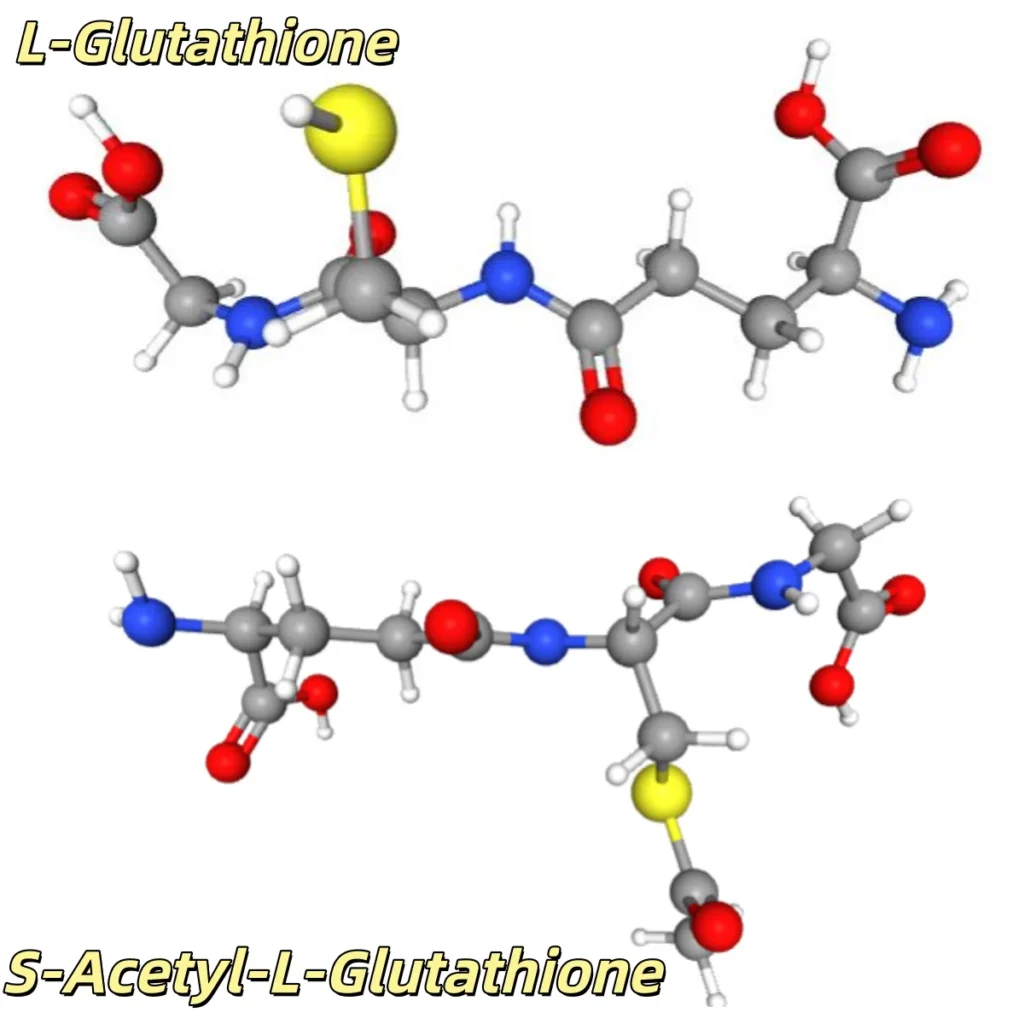
L-Glutathione(GSH) and S-acetyl-L-Glutathione(SAG) share an identical tripeptide core structure: γ-glutamyl-cysteinyl-glycine.
This tripeptide structure is the basis for all biological activities of glutathione. Among them, the thiol group (-SH) on the cysteine residue is the key active site through which glutathione performs antioxidant, detoxification, and other functions.
L-Glutathione (GSH): The Free Thiol Group Is Both the Source of Activity and Instability
In the L-glutathione molecule, the thiol group of cysteine is in a completely free state.
This free thiol group is not only the source of GSH’s powerful antioxidant capacity, but also the root cause of all its inherent defects. It is extremely easily oxidized to disulfide bonds, forming inactive oxidized glutathione (GSSG).
At the same time, the free thiol group is also the source of GSH’s characteristic sulfur odor, which poses significant challenges for product formulation.
S-Acetyl-L-Glutathione(SAG): Acetylation as a Protection and Delivery Strategy
S-Acetyl-L-glutathione is a derivative obtained by chemical modification on the basis of L-glutathione.
2.3.1 Location of Modification
The acetylation modification occurs precisely at the thiol group site of the cysteine residue, not at any other position of the molecule.
This site-specific modification is the key to SAG’s ability to retain full biological activity.
2.3.2 Changes Brought by Acetylation: Stability and Membrane Permeability
The acetyl group acts like a “molecular protective shield”, completely shielding the thiol group during transportation.
This tiny structural change brings three revolutionary improvements:
- Completely solves the problem of thiol oxidation and significantly improves molecular stability.
- Greatly enhances the molecule’s lipophilicity, allowing it to cross cell membranes.
- Fundamentally eliminates the generation of sulfur odor.
Bioavailability: Metabolic Limitations vs. Absorption Breakthroughs
Oral Delivery Barriers of L-Glutathione
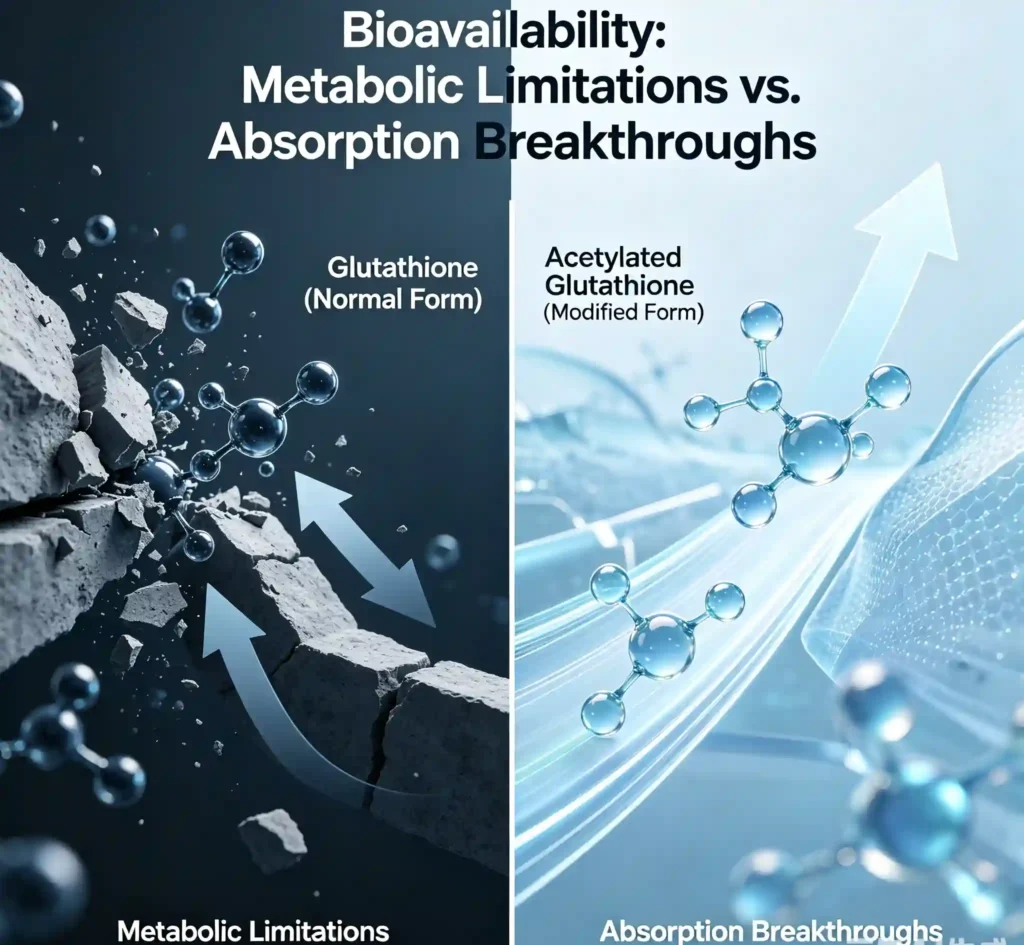
Oral L-glutathione faces three almost insurmountable physiological barriers, resulting in low bioavailability.
3.1.1 Gastrointestinal Digestion by Peptidases
After entering the gastrointestinal tract, L-glutathione is rapidly broken down into individual amino acids by pepsin and trypsin.
Studies indicate that most oral GSH is rapidly broken down by digestive enzymes in the upper gastrointestinal tract, resulting in low absorption of the intact molecule.1In our QC screening of incoming GSH raw materials, we routinely see batch-to-batch oxidation variability that directly impacts potency claims. This instability begins at the molecular level and compounds through every production step.
3.1.2 Hepatic First-Pass Metabolism
Even if a small amount of GSH enters the bloodstream, it will be quickly taken up and metabolized by the liver.
The liver is the organ with the highest glutathione concentration in the human body. It will prioritize using GSH in the blood to meet its own detoxification needs, with only limited amounts reaching peripheral tissues.
The Path of S-Acetyl-L-Glutathione: Prodrug Logic and Intracellular Activation
S-Acetyl-L-glutathione employs an advanced prodrug design concept, effectively bypassing all delivery barriers encountered by GSH.
3.2.1 Resistance to Peptidase Degradation
The presence of the acetyl group alters the molecule’s spatial conformation, thereby making SAG highly resistant to gastrointestinal peptidases.
The acetyl group protects SAG from enzymatic cleavage in the upper GI tract, allowing a significantly higher proportion of SAG to reach the small intestine intact than unmodified GSH.
3.2.2 Passive Diffusion Across Cell Membranes
Due to the significant improvement in lipophilicity, SAG can cross cell membranes via passive diffusion.
This is in sharp contrast to GSH, which can enter cells only slowly via specific transporters.
3.2.3 Intracellular Deacetylation and Release of Active GSH
Once inside the cell, SAG is specifically deacetylated by ubiquitous esterases.
This process releases fully biologically active L-glutathione in situ within the cell, directly exerting its physiological functions.
Preclinical Evidence Comparison
Multiple independent preclinical and in vitro studies have confirmed the significant advantages of SAG in terms of bioavailability.
3.3.1 Plasma GSH Levels
Pharmacokinetic evaluations indicate that SAG achieves higher plasma GSH exposure than equivalent doses of unmodified GSH, with preliminary data suggesting more favorable absorption kinetics.
3.3.2 Intracellular GSH Level Elevation
In vitro studies demonstrate that SAG effectively replenishes intracellular GSH pools across various cell types, particularly in cellular models with impaired endogenous GSH synthesis.2. From a formulation standpoint, this mechanism explains why we consistently observe greater stability in finished SAG products than in GSH: GSH oxidizes before it reaches the cell, whereas SAG arrives intact and activates on demand.
3.3.3 Duration of Action
The modified pharmacokinetic profile of SAG may support less frequent dosing regimens than unmodified GSH, potentially enabling once-daily dosing to improve consumer compliance.
Stability Performance: SAG Shows Clear Advantages

Degradation Pathway of Unprotected Glutathione: Oxidation of Thiol Groups to GSSG
During production and storage, the main degradation pathway of L-glutathione is the oxidation of thiol groups to disulfide bonds, forming inactive GSSG.
Factors such as temperature, pH, oxygen, light, and metal ions can significantly accelerate this oxidation process.
How S-Acetylation Changes Stability Characteristics
The protective effect of the acetyl group on the thiol group fundamentally changes the stability characteristics of glutathione.
4.2.1 Stability in Aqueous Solutions
In aqueous solution at 25°C, SAG exhibits significantly greater stability than unmodified GSH, with substantially lower oxidation rates under identical conditions.
4.2.2 Tolerance to Heat, Oxygen, and Light
SAG exhibits enhanced thermal stability compared to GSH, tolerating standard manufacturing temperatures with minimal degradation.
It also has good tolerance to oxygen and light and does not require special inert-gas protection or light-proof packaging.
What This Means for Production: Process Window, Storage, and Shelf Life
The excellent stability of SAG brings enormous practical value to production and storage.
It provides a wider process window, allowing the use of conventional production equipment and processes without special low-temperature or oxygen-free conditions.
SAG’s enhanced stability profile may contribute to extended shelf life compared to unmodified GSH, depending on specific formulation and storage conditions.
At the same time, SAG’s superior stability reduces manufacturing losses associated with oxidation, streamlining production workflows and improving yield consistency.
Practical note from our operations: We have observed that SAG-based formulations tolerate standard tableting and encapsulation temperatures without specialized nitrogen blanketing, whereas GSH batches often require in-process antioxidant addition and rapid packaging to meet label claim at release testing. This difference directly translates to lower deviation rates and reduced rework costs in commercial production.
Sensory Profile: Resolving the Sulfur Issue for Better Compliance
Source of Odor: Free Thiol Groups
The characteristic sulfur odor of L-glutathione is one of its biggest sensory defects.
This odor comes from volatile sulfur compounds, such as hydrogen sulfide and methyl mercaptan, released after the oxidation of free thiol groups, which have an unpleasant rotten egg odor.
Our incoming inspection team uses odor assessment as a primary screening tool: a distinctly sulfurous sample labeled as “SAG” is flagged for immediate HPLC verification. In ten years of raw material qualification, we have found this simple sensory check to be highly predictive of mislabeled or degraded inventory.
Sulfur odor not only affects product taste and flavor but also leads to poor consumer compliance and low repurchase rates.
S-Acetylation as a Solution: Shielding the Thiol Group
S-acetylation fundamentally solves the sulfur odor problem of glutathione.
The acetyl group completely shields the thiol group, preventing it from oxidation to volatile sulfur compounds.
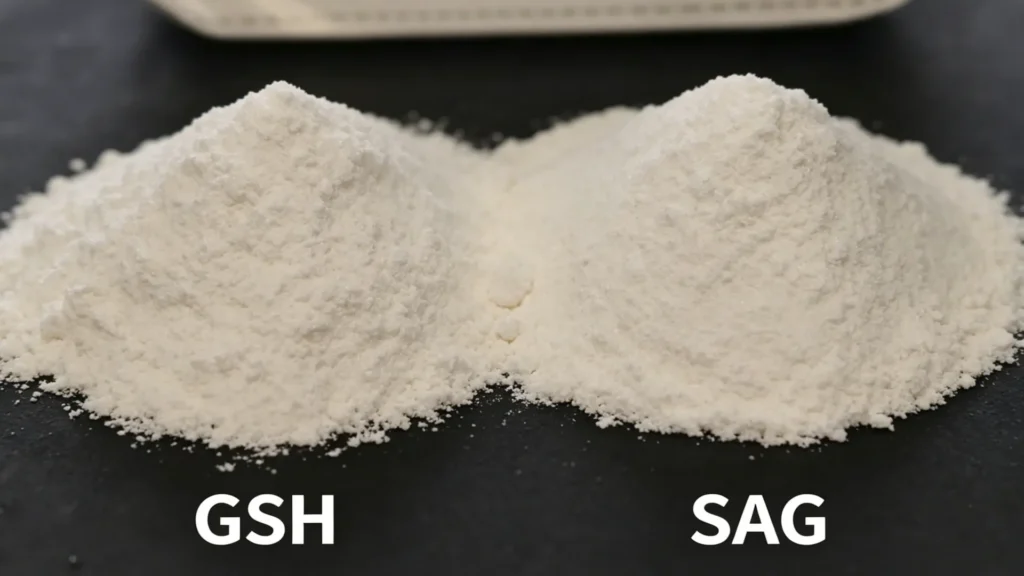
SAG itself is a white, almost odorless powder.
Practical Impact on Product Development
The odorless nature of SAG brings great flexibility to product development.
5.3.1 Reducing or Eliminating Masking Agents
Using SAG eliminates the need to add large amounts of sweeteners, flavors, and bitterness-masking agents.
This approach reduces formulation complexity and cost, while also contributing to the development of products with improved purity and health profiles.
5.3.2 Expanding Flavor Options
SAG pairs perfectly with almost any flavor, including fruit, mint, and herbal flavors.
This enables the development of a diverse range of glutathione products to meet the needs of different consumers.
5.3.3 Improving Consumer Compliance and Repurchase Rates
Without unpleasant odors and tastes, consumers are more willing to take the product long-term.
This directly translates into higher customer satisfaction and repurchase rates.

Cost-Effectiveness SAG vs GSH: A Total Cost of Ownership (TCO) Analysis
Limitations of Comparing Only Price per Kilogram
Most procurement teams evaluate glutathione raw materials primarily by price per kilogram, but this approach is incomplete.
Raw material cost is only one component of total cost.
The critical metric is not raw material cost per kg, but cost per unit of bioactive GSH effectively delivered to target tissues.
Introducing “Cost per Unit of Effectively Delivered GSH.”
To make a fair cost comparison, we need to introduce the concept of “cost per unit of effectively delivered GSH”.
It comprehensively considers all factors that affect actual cost, including raw material prices, bioavailability, manufacturing yield, and shelf-life retention rate.
“Effectively delivered” means what actually reaches your bloodstream.
Calculation Framework for Effective Delivery Cost (TCO)
A proposed internal framework for evaluating effective delivery cost can be expressed as:

| Cost Driver | GSH | SAG |
| Relative raw material cost | Baseline (1×) | ~3-5× |
| Typical dose | 500 mg | 150 mg |
| 24-month potency | 80-85% | 95-98% |
| Extra ingredients | More (masking, antioxidants) | Less |
| Estimated effective cost per mg | Higher | Lower |
*SAG estimate based on prodrug mechanism; human data still developing.
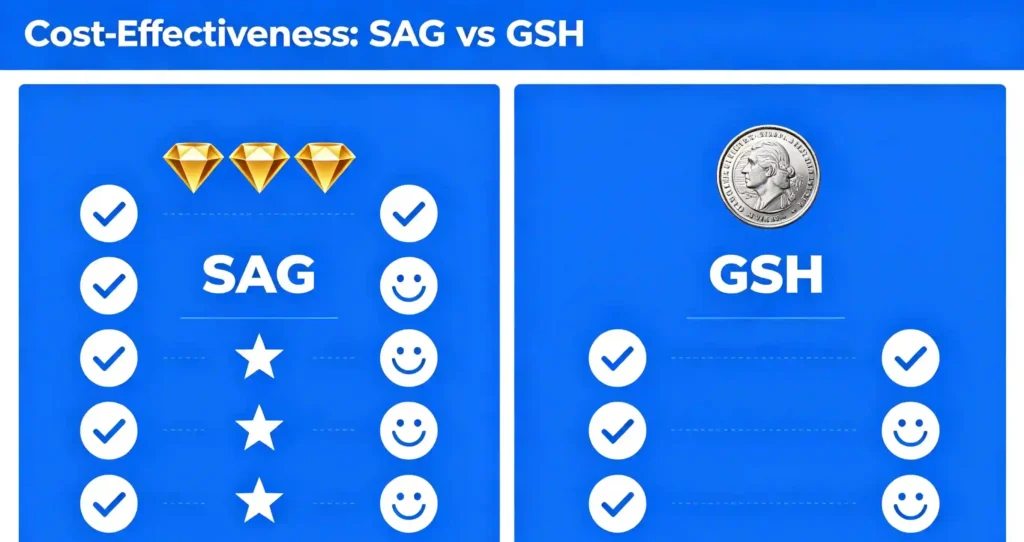
A more accurate cost comparison must factor in bioavailability, manufacturing yield, and stability-related losses, rather than focusing solely on the raw material price per kilogram.
This framework illustrates that real cost is determined by multiple performance factors rather than price alone.
Systemic Cost Considerations Beyond Raw Material Price
In addition to effective delivery costs, using SAG also brings many other hidden cost savings.
6.4.1 Reduced Material Waste Due to Less Degradation
SAG has an extremely low degradation rate during production and storage, greatly reducing material waste.
This directly lowers production costs and improves production efficiency.
6.4.2 Savings on Masking Agents and Antioxidant Excipients
Using SAG eliminates the need to add large amounts of masking agents and antioxidants.
This not only saves excipient costs but also simplifies formulations and reduces the difficulty of quality control.
6.4.3 Possibility of Smaller Capsule Sizes
Due to SAG’s high bioavailability, smaller doses are required to achieve the same efficacy.
This allows for smaller capsule sizes, reducing packaging costs while improving consumers’ swallowing experience.
Impact on End Product Pricing and Market Positioning
SAG costs more per kilogram. However, the total production cost per effective dose is lower because you use less, waste less, and require fewer add-ons.
This cost advantage creates room for investment in clinical validation and consumer education, thereby supporting a premium-product claim backed by acetylation science.
Differentiation Strategy: Building Product Narratives Around S-Acetyl-L-Glutathione
The “Commodity” Narrative of Ordinary Glutathione
L-glutathione has become a highly homogeneous commodity.
The market is flooded with low-priced GSH products, and competition is primarily driven by price.
Products lack differentiation, making it difficult to build brand loyalty, and profit margins are constantly being squeezed.
The “Science-First” Product Narrative Supported by Acetylation
S-Acetyl-L-glutathione provides brands with a powerful, science-based product narrative.
7.2.1 Prodrug Design
SAG adopts advanced prodrug technology, a mature approach widely used in the pharmaceutical industry.
It solves the fundamental problem of poor oral absorption of traditional glutathione and represents a major breakthrough in glutathione delivery technology.
7.2.2 Intracellular Delivery
SAG can directly enter cells and release active glutathione where it is needed most.
This is in sharp contrast to GSH, which can only stay in the blood, truly achieving an efficacy upgrade “from blood to cells”.
7.2.3 Intracellular Activation
SAG is activated only upon entering cells to release GSH.
This intracellular activation mechanism ensures that active GSH is released precisely where it is needed, inside the cell.
Matching Clinical and Functional Medicine Channel Positioning
The scientific endorsement and excellent efficacy of SAG make it ideal for premium channels.
It is particularly suitable for channels that focus on efficacy and scientific evidence, such as functional medicine, clinical nutrition, and professional skincare.
Consumers in these channels are not price-sensitive but have high requirements for product effectiveness and safety.
Authentication: How to Identify Authentic SAG Raw Material
Sensory Indicators: Appearance and Odor
Due to the higher price of SAG, many counterfeit products on the market pass off GSH as SAG.
Preliminary identification can be done through simple sensory inspection.
SAG is a white crystalline powder with almost no odor.
GSH, on the other hand, is usually a white or off-white powder with a distinct sulfur odor.
If the “SAG” sample you receive has a noticeable sulfur odor, it is almost certainly a fake.
In our experience, approximately 15-20% of “SAG” samples submitted by new suppliers for qualification fail this initial odor screen. The most common substitution is oxidized GSH (GSSG), or GSH blended with masking agents, both detectable by HPLC but not by appearance alone. We strongly recommend that procurement teams implement sensory inspection as a zero-cost first line of defense before committing to analytical testing budgets.
Analytical Methods for Confirming Identity
Sensory inspection can only be used as a preliminary screening; confirming authenticity requires professional analytical methods.
8.2.1 HPLC Retention Time Differences
High-performance liquid chromatography (HPLC) is the most commonly used method for identifying SAG and GSH.
SAG and GSH have different retention times on HPLC chromatograms and can be accurately identified by comparison with standard products.
8.2.2 Mass Spectrometry (MS) Fragmentation Characteristics
Mass spectrometry is the most accurate method for identifying SAG.
The molecular weight of SAG is 349.36, while the molecular weight of GSH is 307.3.
By measuring the molecular ion peak and characteristic fragmentation fragments, the identity of the sample can be confirmed with 100% certainty.
Setting Quality Standards for Incoming Raw Materials (QA/QC Perspective)
To ensure raw material quality, it is recommended to establish strict QA/QC standards for SAG:
- Purity: ≥98%
- Moisture content: ≤5%
- Acetate content: Conforms to theoretical value
- Heavy metals: Meets food-grade standards
- Microorganisms: Meets food-grade standards
Global Regulatory Status of S-Acetyl-L-Glutathione(SAG)
The regulatory status of SAG in major global markets is as follows:
United States: Permitted as a dietary supplement ingredient under DSHEA. GRAS status should be verified with the individual raw material supplier.
European Union: Subject to Novel Food authorization. A dossier has been submitted for EFSA evaluation; marketing is strictly prohibited until formal approval is granted by the European Commission.
China: Not yet approved as a novel food ingredient by the National Health Commission (NHC). Any food-related market application requires formal NHC approval via the novel food pathway.
Australia: Permitted for use in listed complementary medicines (AUST L) under the Therapeutic Goods Administration (TGA) regulations.
Canada: Permitted as an ingredient in natural health products (NHPs) under Health Canada’s NPN licensing system.
Regulatory navigation support: JaYoo Biotech maintains active dossier tracking for SAG in major markets and provides regulatory status documentation (COA, stability data, manufacturing flow charts) to support our clients’ product registrations and novel food applications. Contact our technical team (info@jayoobio.com) for jurisdiction-specific compliance packages.
Comprehensive Comparison of Glutathione Delivery Technologies
L-Glutathione (Reduced)
Reduced L-glutathione is the most traditional and common form of glutathione.
Its advantages are low price and a mature production process.
Disadvantages are low bioavailability, poor stability, and obvious sulfur odor.
Liposomal Glutathione
Liposomal glutathione is made by encapsulating GSH in liposomes.
Its bioavailability is somewhat improved over that of ordinary GSH, but remains limited.
Disadvantages are poor stability, high production cost, and high production difficulty.
S-Acetyl-L-Glutathione
S-Acetyl-L-glutathione is currently the most advanced glutathione delivery technology.
It has the advantages of high bioavailability, good stability, odorlessness, and low production difficulty.
It is the most cost-effective form of glutathione overall.
Comparison Table: Delivery Mechanism, Evidence Strength, Stability, Cost Range
| Technical Indicator | L-Glutathione | Liposomal Glutathione | S-Acetyl-L-Glutathione |
| Bioavailability | Low | Moderate | High |
| Intracellular Delivery Capability | Poor | Fair | Excellent |
| Stability | Poor | Medium | Excellent |
| Odor | Strong sulfur odor | Lighter | Odorless |
| Formulation Flexibility | Low | Medium | High |
| Raw Material Cost | Low | Very High | Medium-High |
| Production Difficulty | Low | High | Low |
| Evidence Strength | Medium | Low | Emerging |
| Recommended Application Scenarios | Low-end volume products | Niche premium products | Efficacy products, mainstream premium products |
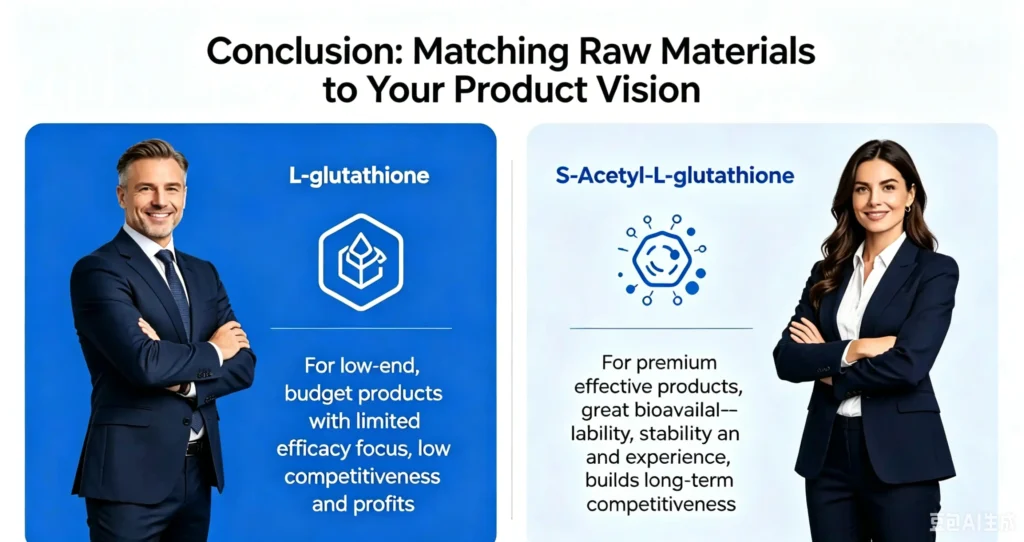
Conclusion: Matching Raw Materials to Your Product Vision
When Ordinary Glutathione Is the Right Choice
If your product is positioned as low-end volume, has a very limited budget, and does not focus on glutathione’s core efficacy, then L-glutathione may be an acceptable choice.
When S-Acetyl-L-Glutathione Provides Systemic Advantages
If you want to create a truly effective premium product by focusing on consumer experience and brand reputation and pursuing long-term market competitiveness, S-acetyl-L-glutathione is undoubtedly the better choice.
Decision Framework: Focus on Product Goals, Not Just Raw Material Costs
Before making a decision, please carefully consider the following questions:
- What is your product positioning?
- Who is your target audience?
- What efficacy do you want your product to achieve?
- What are your cost structure and profit targets?
Successful product development requires aligning raw material characteristics with the intended product vision.
CTA: Contact Us | About JaYoo Biotech
For organizations seeking stable, high-efficiency glutathione raw materials or advanced, customized formulation solutions, JaYoo Biotech offers technical expertise and a commitment to innovation. Visit “https://jayoobio.com/” to learn more about the company’s capabilities and vision, or use the “Contact Us” feature to connect with the professional team.
Please email info@jayoobio.com or call +86-13130678248 to contact our technical experts.
- Witschi A, Reddy S, Stofer B, Lauterburg BH. The systemic availability of oral glutathione. Eur J Clin Pharmacol. 1992;43(6):667-669. https://pubmed.ncbi.nlm.nih.gov/1362956/ [↩]
- Fraternale A, Paoletti MF, Casabianca A, et al. Antiviral and immunomodulatory properties of new pro-glutathione (GSH) molecules. Antiviral Res. 2008;77(3):225-236. https://pubmed.ncbi.nlm.nih.gov/18006276/ [↩]