
Introduction
Fucoidan vs Fucoxanthin: these are the two most prominent active ingredients derived from brown algae. Although they originate from the same raw material, their chemical natures are fundamentally different.
This article begins with molecular structure and systematically compares Fucoidan vs Fucoxanthin across physicochemical properties, application scenarios, market scale, regulatory status, and supply chain costs, providing B2B clients with a practical guide for commercial decision-making.
Molecular Structure & Chemical Composition
The fundamental differences in chemical structures between Fucoidan and Fucoxanthin underlie all distinctions in their commercial applications.
Basic Chemical Classification
| Item | Fucoidan | Fucoxanthin |
| Chemical Category | Polysaccharide | Carotenoid |
| Core Skeleton | L-fucose sulfate | Allenic carotenoid |
| Molecular Weight | 50–500 kDa (varies by algae species) | Approx. 658.9 Da |
| Characteristic Groups | Sulfate group (–OSO₃⁻) | Conjugated double bond, epoxy group, allene bond |
| Polarity | Strong polarity (hydrophilic) | Non-polar (lipophilic) |
Fucoidan is a sulfated water-soluble polysaccharide, mainly composed of L-fucose with abundant sulfate groups, together with small amounts of monosaccharides including galactose, mannose, and glucuronic acid. Fucoidan extracted from different algae species varies significantly in molecular weight, degree of sulfation, and monosaccharide composition.
Fucoxanthin is a lipophilic carotenoid. Its molecule contains unique allene bonds, conjugated double bond systems, and 5,6-monoepoxy groups. These structural features are responsible for the yellowish-brown color of brown algae and also endow Fucoxanthin with distinctive biological activities.
Existence in Algae
| Item | Fucoidan | Fucoxanthin |
| Location in Algae | Cell wall matrix | Chloroplast |
| Physiological Function | Structural support, defense, ion exchange | Light-harvesting pigment for photosynthesis |
| Binding with Other Molecules | Combined with proteins and polyphenols | Bound to chlorophyll-protein complexes |
| Content (Dry Weight) | 5–20% (varies by algae species and season) | 0.1–0.5% (varies by algae species and season); over 1% for microalgae culture |
Decisive Impact of Structures on Properties
- Sulfate group (Fucoidan): Endows the molecule with a negative charge, affecting its solubility, protein-binding capacity, and multiple biological activities, such as anticoagulation and immune regulation.
- Conjugated double bond (Fucoxanthin): The conjugated double bond system makes Fucoxanthin sensitive to light, heat, and oxygen, and is the core source of its strong antioxidant activity and characteristic orange-red color.
- Molecular weight difference: The high molecular weight of Fucoidan brings thickening and film-forming properties; the low molecular weight of Fucoxanthin facilitates transmembrane absorption.
Fucoidan vs Fucoxanthin: Comparison of Physicochemical Properties
Determined by their molecular structures, Fucoidan and Fucoxanthin possess distinct physicochemical properties that directly determine their processing feasibility and application scope.
Comparison of Physical Properties
| Property | Fucoidan | Fucoxanthin |
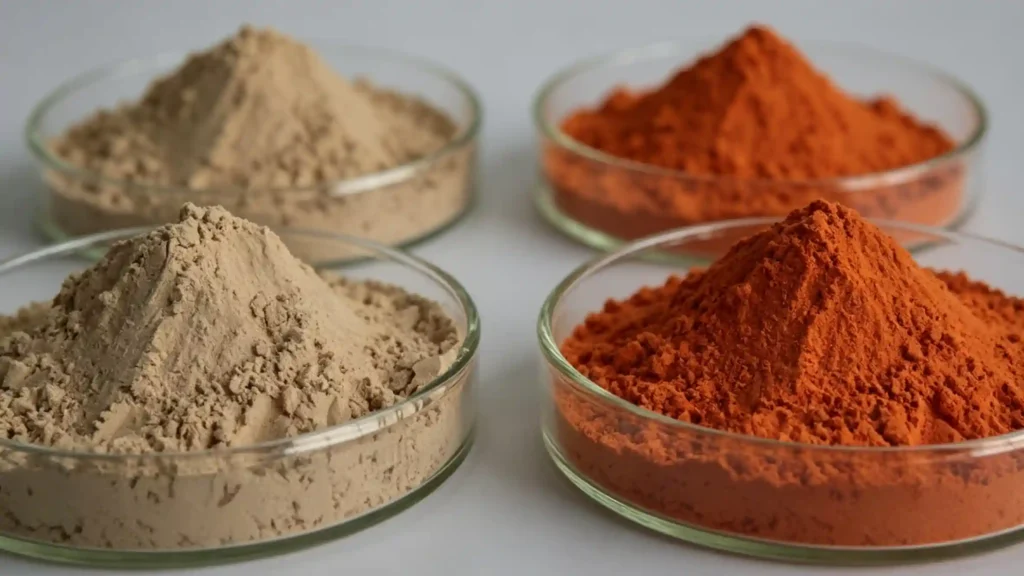
| Appearance | Pale yellow to white powder | Orange-red powder or oily liquid |
| Solubility | Easily soluble in water, insoluble in organic solvents | Soluble in oils, ethanol and acetone, insoluble in water |
| Melting Point | No fixed melting point; thermal decomposition above 200℃ | Approx. 166–168°C |
| Hygroscopicity | Strong (absorbs moisture in the air easily) | Low |
| Light Absorption Characteristics | No characteristic UV-Vis absorption | Strong absorption peak near 450 nm |
Stability Comparison
Stability is one of the most critical technical parameters for B2B clients in formula development.
| Stability Dimension | Fucoidan | Fucoxanthin |
| Thermal Stability | Stable below 80°C; degrades above 120°C | Obvious degradation above 60°C |
| pH Stability | Stable within pH 4–10 | Rapid degradation under acidic conditions (pH < 4) |
| Light Stability | Stable | Extremely sensitive; degrades within hours under UV light |
| Oxygen Stability | Stable (no extra antioxidant treatment required) | Sensitive; prone to oxidation, discoloration and deactivation |
| Metal Ion Reaction | Forms gel with Ca²⁺ and other ions | Fe³⁺ and Cu²⁺ accelerate oxidation |
| Long-term Storage Stability | Over 2 years under dry and normal temperature conditions | 6–12 months under light-proof, oxygen-isolated and low-temperature (-20°C) conditions |
Data Source: Comprehensive references from Carbohydrate Polymers (2020), Journal of Applied Phycology (2019), and other literature.
Summary: Properties Determine Application Directions
| Characteristics | Fucoidan | Fucoxanthin |
| Core Advantages | Good water solubility, high thermal & light stability, controllable cost | Lipophilicity, strong antioxidant activity, natural orange-red pigment |
| Core Limitations | Strong hygroscopicity, high viscosity at high concentrations | High sensitivity to light, heat and oxygen; high extraction cost |
| Suitable Product Types | Water-based products, solid dosage forms, products for normal temperature circulation | Oil-based products, light-proof packaged products, refrigerated or short-shelf-life products |
Fucoidan vs Fucoxanthin: Comparison of Application Scenarios
Physicochemical properties decide the respective suitable commercial application fields of Fucoidan and Fucoxanthin.
Adaptation for End Product Forms
| Product Type | Fucoidan | Fucoxanthin | Explanation |
| Oral Liquid / Liquid Beverage | ✅ Suitable | ❌ Not Recommended | Water solubility vs lipophilicity; Fucoxanthin is unstable in liquid systems |
| Soft Capsule | ⚠️ Applicable (moisture-proof required) | ✅ Highly Suitable | Oil suspension protects Fucoxanthin from degradation |
| Hard Capsule / Tablet | ✅ Highly Suitable | ⚠️ Light-proof packaging & antioxidants required | |
| Powder / Granule | ✅ Highly Suitable | ⚠️ Strict stability verification required | Fucoxanthin is more susceptible to oxidation in powder form |
| Functional Gummy / Jelly | ✅ Suitable | ❌ Not Suitable | High processing temperature and light exposure |
| Cosmetics (Aqueous Serum & Essence) | ✅ Suitable | ❌ Not Suitable | Lipophilic ingredients cannot stay stable in water-based systems |
| Cosmetics (Oil-based Cream & Balm) | ⚠️ Not the optimal choice | ✅ Suitable | Matching lipophilicity and antioxidant function |
| Pet Food | ✅ Suitable | ⚠️ Rarely used (high cost) |
Main Functional Application Fields
| Application Field | Fucoidan | Fucoxanthin | Research Evidence Level |
| Immune Health Regulation | ★★★ Core Application | — | Abundant human clinical studies on Fucoidan |
| Adjuvant Anti-tumor | ★★★ Core Application | ★ Limited researches | A large number of in vitro and animal studies on Fucoidan |
| Intestinal Health | ★★★ Core Application | — | Clear prebiotic effect of Fucoidan |
| Fat Loss / Weight Management | — | ★★★ Core Application | Multiple animal studies and preliminary human trials on Fucoxanthin |
| Antioxidation | ★ | ★★★ Core Application | The ORAC value of Fucoxanthin is significantly higher than most carotenoids |
| Metabolism Improvement (Blood Glucose & Lipids) | ★ | ★★ | Researches exist for both ingredients; more focused studies on Fucoxanthin |
| Anti-inflammation | ★★ | ★★ | Sound in vitro and animal experimental data for both |
| Anticoagulation | ★★★ (Caution Required) | — | Fucoidan presents heparin-like activity |
References for Functional Research
- Fucoidan for immune regulation: van Weelden et al., Marine Drugs, 2019
- Fucoxanthin for fat loss mechanism: Maeda et al., Biochemical and Biophysical Research Communications, 2005
- Comprehensive review of both ingredients: Wang et al., Marine Drugs, 2022
Market Scale & Future Prospects
Global Market Scale Comparison
| Indicator | Fucoidan | Fucoxanthin |
| Current Estimated Global Market Size | Approximately 150–250 million US dollars | Approximately 50–100 million US dollars |
| Estimated Compound Annual Growth Rate (CAGR, 2024–2030) | 6–8% | 8–12% |
| Data Source | Grand View Research, 2023; Mordor Intelligence, 2024 | Same as left |
Note: The market data is forecast based on 2024–2025 industry reports and reflects long-term growth trends. The actual market performance in 2026 may fluctuate due to the global economic environment.
End Product Application Ratio (Estimated)
- Dietary Supplements & Functional Health Food: 60%
- Cosmetics: 15%
- Functional Food & Beverage: 15%
- Pet Food & Feed: 5%
- Others (including pharmaceutical intermediates): 5%
- Dietary Supplements (focused on weight management): 70%
- Cosmetics (antioxidation, whitening & anti-aging): 20%
- Functional Beverage: 5%
- Others: 5%
Driving Factors for Future Growth
| Driving Factor | Fucoidan | Fucoxanthin |
| Rising global awareness of immune health (post-pandemic era) | ★★★ Strong Driver | — |
| Growing demand for fat loss & weight management products | — | ★★★ Strong Driver |
| Trend of replacing synthetic pigments with natural pigments | — | ★★ Driver |
| Expansion of adjuvant anti-tumor nutrition market | ★★ Driver | — |
| Growth of anti-aging cosmetics market | ★ Driver | ★★ Driver |
| Regulation liberalization for novel food approval | ⚠️ Slight impact | ★★★ Critical Bottleneck & Opportunity |
| Cost reduction via improved extraction & microalgae cultivation technology | ★ Slight impact | ★★★ Core Driver |
Market Outlook & Commercial Suggestions
| Ingredient | Market Stage | Competition Pattern | Market Entry Suggestion |
| Fucoidan | Mature Stage | Numerous suppliers (mainly from China and Japan); high product homogeneity and fierce price competition | Suitable for enterprises with large-scale production and strong cost control capabilities. Differentiation directions: specific algae species, molecular weight classification and higher purity |
| Fucoxanthin | Growth Stage | Relatively concentrated suppliers; high technical barriers in stability control and extraction technology, large room for product differentiation | Suitable for enterprises pursuing high premium and differentiated positioning. Priority should be given to regulatory compliance and formula stability technology |
Laws & Regulations
Regulatory compliance is a core prerequisite for B2B clients to launch new projects.
Regulatory Status in Major Markets
| Market | Fucoidan | Fucoxanthin | Explanation & Data Source |
| China | Common food raw material (multiple algae species) / Health food raw material | Novel food raw material (approval required) | Fucoxanthin is not included in the Catalogue of Health Food Raw Materials. It shall be filed as novel food or registered as health food |
| United States | Dietary supplement raw material (GRAS eligible) | Dietary supplement raw material (NDI notification required) | Both can be legally used in dietary supplements; FDA NDI notification is recommended but not mandatory |
| European Union | Novel Food (partial algae species authorized) | Novel Food (authorization required) | Limited authorized cases and strict restrictions for Fucoxanthin |
| Japan | Functional food raw material | Functional food raw material | Both applicable for FOSHU/FFC functional food |
| South Korea | Health functional food raw material | Health functional food raw material | Filing required in accordance with MFDS regulations |
⚠️ Important Notice: The above regulatory status is current as of 2026. National regulations are updated continuously. Enterprises shall verify the latest policies with professional regulatory consultants before product launch. This document does not constitute legal advice.
Labeling & Claim Rules
| Item | Fucoidan | Fucoxanthin |
| Permitted Functional Claims (varies by market) | Immune support, intestinal health, antioxidation | Fat metabolism promotion, auxiliary weight management, antioxidation |
| Recommended Daily Dosage | 10–300 mg/day (varies by product type) | 5–20 mg/day (refer to Japanese FFC cases) |
| Maximum Usage Limit | No mandatory upper limit in most markets (follow GMP) | Recommended upper limit in some markets (safety dosage data required for application in China) |
Required Documents for Import & Export
B2B purchasers shall request the following documents from suppliers for both ingredients:
- Certificate of Analysis (COA)
- Detailed analytical method validation report
- Long-term and accelerated stability test data
- Heavy metal test report (Lead, Arsenic, Mercury, Cadmium)
- Microbiological test report
- Pesticide residue test report (for wild algae raw materials)
- Non-GMO statement
- Allergen statement (e.g., crustaceans, sulfites)
- Certificate of origin
- Organic certification (USDA Organic, EU Organic, etc., as required)
- Kosher / Halal certification (per target market requirements)
Supply Chain & Procurement
Main Producing Areas & Supply Sources
| Ingredient | Global Main Producing Areas | Major Supplying Countries | Typical Supplier Type |
| Fucoidan | North Atlantic, North Pacific, coastal aquaculture areas | China, Japan, South Korea, Norway, France | Primary algae processing enterprises, biotechnology companies |
| Fucoxanthin | Coastal areas of Japan (Wakame), aquaculture zones in China, microalgae cultivation bases | Japan, China, South Korea | Professional extract manufacturers, microalgae biotechnology enterprises |
- Fucoidan: Abundant raw material sources. China is a major producer of kelp and wakame with prominent cost advantages. Algal species, harvesting season, and sea area will affect molecular structure and degree of sulfation; batch consistency shall be verified during procurement.
- Fucoxanthin: Traditional extraction from brown algae yields low content (0.1–0.5% dry weight) and is costly. In recent years, microalgae cultivation technology (e.g., Pavlova) has helped reduce costs and improve supply stability.
Procurement & Selection Decision Table
| Business Scenario | Recommended Ingredient | Reason |
| Develop oral liquid / water-based products | Fucoidan | Fucoxanthin is water-insoluble and unstable in liquid |
| Develop fat loss soft capsules | Fucoxanthin | Oil-based formula ensures stability and matches core functions |
| Minimize raw material cost | Fucoidan (10–30% purity) | Lower cost per active unit |
| Pursue high product differentiation & premium | High-purity Fucoxanthin | High technical barriers and low market competition |
| Export to China (minimize regulatory risks) | Fucoidan | High entry threshold for Fucoxanthin as novel food in China |
| Export to Europe & America | Both available | Comply with local NDI / Novel Food regulations respectively |
| Require 2-year shelf life at normal temperature | Fucoidan | Fucoxanthin is not suitable for long-term storage at room temperature |
| Develop high-end anti-aging skin care products | Fucoxanthin | Lipophilicity, antioxidant activity and natural orange-red pigment |
| Develop pet immune health products | Fucoidan | Controllable cost and sufficient research support |
Supplier Evaluation Checklist
B2B purchasers are recommended to evaluate suppliers according to the checklist below:
- Raw material traceability: Clear algae species, aquaculture/harvesting sea area; no heavy metal or pollutant risks.
- Product consistency: Multiple COA batches were provided to verify batch-to-batch stability.
- Purity & activity indicators: Fucoidan (sulfate content, total sugar content, molecular weight distribution); Fucoxanthin (trans-isomer ratio, total carotenoid content).
- Test reports: Third-party test reports (SGS, Eurofins, etc.) for heavy metals, microorganisms, and pesticide residues.
- Stability data: Accelerated stability (40°C/75% RH) and long-term stability test reports.
- Regulatory support: Familiarity with target market regulations and ability to provide documents for regulatory application.
- Supply capacity: Minimum Order Quantity (MOQ) and annual maximum supply capacity.
- Intellectual Property: Check potential patent infringement risks when using Fucoxanthin (an independent Freedom-to-Operate analysis is required).
For detailed pricing information, please contact suppliers directly for quotations tailored to specific purity and volume requirements.
Summary & Decision Suggestions
Core Summary
Structure determines properties, and properties determine applications. Fucoidan is water-soluble, stable, and cost-effective, making it ideal for large-scale immune and intestinal health products. Fucoxanthin is lipophilic, sensitive to environmental conditions, and offers a high technical premium, making it suitable for differentiated high-end products targeting fat loss and antioxidant activity.
B2B Quick Decision Table
| Core Business Demand | First Choice | Secondary Choice |
| Develop water-based beverages & liquid products | Fucoidan | — |
| Develop fat loss capsule products | Fucoxanthin | — |
| Control raw material cost to the lowest | Fucoidan (Crude Extract) | — |
| Maximize product differentiation & profit premium | High-purity Fucoxanthin | High-purity Fucoidan (specific algae source) |
| Minimize regulatory risks (especially for Chinese market) | Fucoidan | — |
| Require long-term shelf life (≥ 2 years) at room temperature | Fucoidan | — |
| Simple formula development & good water compatibility | Fucoidan | — |
| Develop high-end oil-based skin care creams | Fucoxanthin | — |
| Need natural orange-red pigment plus functional activity | Fucoxanthin | — |
Action Recommendations
For enterprises choosing Fucoidan
- Confirm that the selected algae species complies with the regulations of the target markets.
- Select 2–3 suppliers and compare sulfate content, molecular weight distribution, and batch consistency.
- Test formula stability and taste (strong hygroscopicity may affect dosage form selection).
For enterprises choosing Fucoxanthin
- Confirm regulatory approval routes first (especially for exports to China and the EU).
- Request complete stability data and packaging suggestions from suppliers.
- Add antioxidant systems and adopt light-proof packaging (dark bottles, aluminum foil bags, capsules) in formulas.
- Use lipophilic carriers (e.g., medium-chain triglyceride [MCT] oil) to improve bioavailability.
For enterprises using both ingredients
- Suitable for high-end products positioned as comprehensive brown algae extract formulas.
- Verify the stability of the two ingredients in the finished products separately.
- High overall formula cost; target high-premium market positioning.
References
- van Weelden, G., et al. (2019). Fucoidan Structure and Activity in Relation to Anti-Cancer Mechanisms. Marine Drugs, 17(1), 32.
- Maeda, H., et al. (2005). Fucoxanthin from edible seaweed, Undaria pinnatifida, shows an anti-obesity effect through UCP1 expression in white adipose tissues. Biochemical and Biophysical Research Communications, 332(2), 392–397.
- Wang, Y., et al. (2022). Fucoidan and Fucoxanthin: A Comprehensive Review on Their Sources, Structures, and Bioactivities. Marine Drugs, 20(10), 638.
- Ale, M. T., & Meyer, A. S. (2013). Fucoidans from brown seaweeds: An update on structures, extraction techniques, and use of enzymes as tools for structural elucidation. RSC Advances, 3(22), 8131–8141.
- Peng, J., et al. (2011). Fucoxanthin, a natural carotenoid from brown algae, induces differentiation and apoptosis in human melanoma cells. Cancer Letters, 300(2), 67–176.
- Grand View Research. (2023). Seaweed Extract Market Size Report.
- Mordor Intelligence. (2024). Fucoidan Market – Growth, Trends, and Forecast (2024-2029).
Further Support
For more services, please feel free to contact us:
- 📄 Obtain detailed raw material specifications and COA templates
- 🧪 Apply for Fucoidan or Fucoxanthin samples
- 📞 Consult regulatory compliance and formula technical support
- 📊 Request an abstract of the latest market research reports
+86 13130678248