
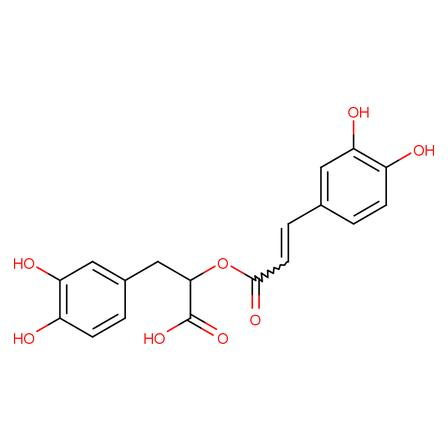
(Structural formula of rosmarinic acid)
Part 1. Basic Chemical Information
1.1 Standard Nomenclature
Name: Rosmarinic acid,
CAS No.: 20283-92-5
Molecular formula: C₁₈H₁₆O₈
Molecular weight: 360.31
Chemical structure: Synthesized by esterification of caffeic acid and 3,4-dihydroxyphenyllactic acid. Its molecule contains two catechol hydroxyl groups and conjugated double bonds, which form the core structural basis for its potent antioxidant activity.
1.2 Physical and Chemical Properties
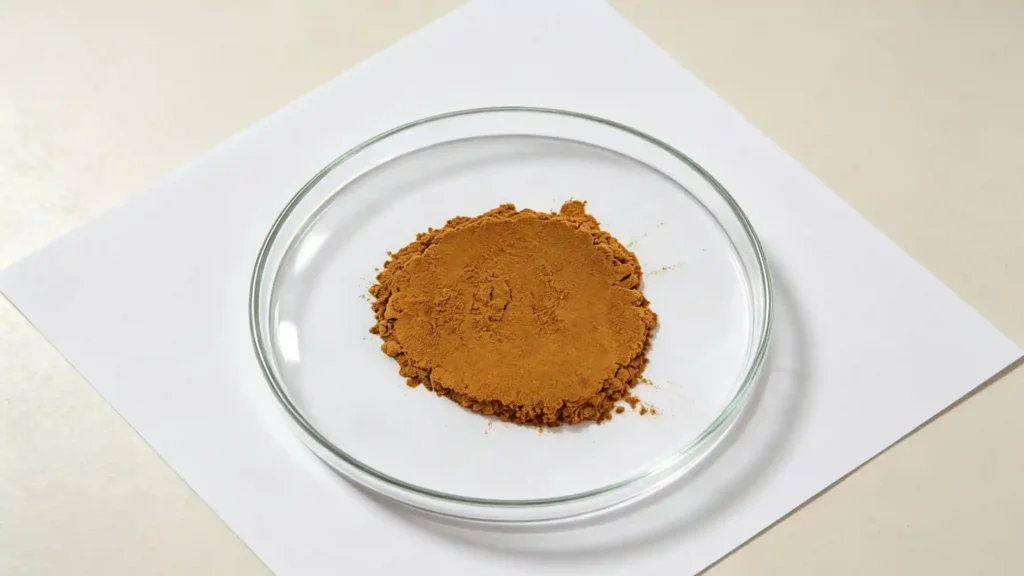
- Appearance: High-purity product appears as a white crystalline powder; industrial extracts are light yellow to tan powders.
- Melting point: 171–175 ℃
- Solubility: Freely soluble in ethanol, methanol, acetone and DMSO; soluble in propylene glycol, suitable for cosmetic formulations; slightly soluble in cold water. Its solubility rises significantly in hot water, yet high temperature may trigger degradation.
- Stability: Optimal stability under weakly acidic conditions at pH 4–6; prone to oxidative hydrolysis and deactivation under strongly alkaline conditions, high temperatures, or prolonged light exposure. It can remain stable for more than 18 months under recommended storage conditions (cool, shaded, and sealed).
- Spectral characteristics: Maximum UV absorption at 330 nm, serving as the universal quantitative basis for HPLC detection in the industry.
- Optical rotation: [α] D20=+102°~+110° (in ethanol solution)
Part 2. Natural Plant Sources
2.1 Main Enriched Plant Families (High Content)
Lamiaceae: rosemary, perilla, salvia miltiorrhiza, lemon balm, oregano, thyme, mint, sage, basil
Boraginaceae: comfrey, borage
2.2 Content Reference
- Rosemary leaves: Relatively high rosmarinic acid content, widely applied as a natural antioxidant in the food industry.
- Perilla leaves: High rosmarinic acid content; a primary raw material for industrial extraction.
- Salvia miltiorrhiza and mint: Medium content, used as traditional Chinese medicinal raw materials.
Rosmarinic acid can be detected in more than 160 plant species worldwide. Herb leaves contain far higher levels than rhizomes and fruits.
Part 3. Main Extraction and Purification Methods (rosmarinic acid purification methods)
3.1 Crude Extraction Technologies
- Ethanol-water reflux extraction (the most widely adopted industrial method)
- Ultrasonic/microwave-assisted extraction (shortens extraction time and improves yield)
- Supercritical CO₂ extraction (zero solvent residue, for high-end raw materials)
- Enzyme-assisted extraction (environmentally friendly)
3.2 Purification and Refining Technologies
- Macroporous resin adsorption purification: Dominant mass-production method with moderate cost, delivering purity of 10%–60%.
- Silica gel column chromatography: For laboratory preparation of high-purity samples (≥90%).
- High-speed counter-current chromatography (HSCCC): No solid-phase adsorption loss, applied to prepare high-purity reference standards.
- Preparative HPLC: Specialized purification for standards and high-purity monomers above 98%.
- Membrane separation combined with crystallization: Refining process for low-purity food-grade products.
3.3 Novel Synthetic Routes
Plant cell suspension culture and microbial fermentation synthesis are not limited by seasonal factors and represent the direction of large-scale industrial production in the future.
Part 4. Core Biological Activities and Mechanisms of Action
4.1 Powerful Antioxidation (Core Advantage)
- The two catechol hydroxyl groups in its structure rapidly scavenge free radicals (hydroxyl radicals, superoxide anions, lipid peroxyl radicals). Its antioxidant capacity outperforms vitamin E and tea polyphenols in in vitro lipid antioxidant systems.
- It blocks the lipid oxidation chain reaction and inhibits low-density lipoprotein oxidation; it activates the cellular Nrf2 antioxidant pathway, thereby upregulating the expression of endogenous antioxidant enzymes.
4.2 Broad-Spectrum Anti-Inflammatory Effect
Inhibits the NF-κB inflammatory pathway and reduces the release of inflammatory mediators, including COX-2, PGE2, and histamine; relieves skin, respiratory, and joint redness and inflammation, and exerts anti-allergy and anti-pruritus effects.
4.3 Antibacterial Activity & Natural Preservative
Inhibits the growth of Staphylococcus aureus, Escherichia coli, Propionibacterium acnes, and fungi. It damages bacterial cell membranes, suppresses DNA replication, and can partially replace synthetic parabens as preservatives.
4.4 Specialized Skin Care Efficacy
- Anti-photoaging: Moderate UVB absorption capacity, serving as an auxiliary antioxidant.
- Anti-glycation: Inhibits AGE formation, reducing skin dullness and sagging.
- Barrier repair: Soothes sensitive skin, reduces redness, alleviates seborrheic dermatitis and acne.
- Tyrosinase inhibition: Mild brightening effect to fade post-inflammatory pigmentation.
4.5 Internal Pharmacological Activities (Health Food & Pharmaceutical Fields)
- Hepatoprotection: Alleviates chemical liver injury and reduces transaminase levels.
- Cardiovascular protection: Dilates blood vessels, improves insulin resistance, regulates blood lipids, and lowers blood pressure.
- Auxiliary anti-tumor effect: Inhibits tumor cell proliferation and alleviates oxidative damage caused by chemoradiotherapy. It shows potential to reverse tumor resistance to certain first-line chemotherapeutic agents, primarily due to its antioxidant and anti-inflammatory properties.
- Respiratory relief: Alleviates symptoms of allergic rhinitis, cough, and asthma.
Part 5. Four Major Industrial Applications, Dosage, and Relevant Regulations
5.1 Cosmetic Industry
- Regulation: Listed in China’s Catalog of Used Cosmetic Raw Materials, it is legally available for use.
- Recommended dosage: 0.1%–0.3%; maximum 0.3% for leave-on creams and essences.
- Applicable products: Anti-aging essence, soothing repair mask, acne care products, hair care color-locking shampoo and conditioner, eye care products.
- Positioning: Core active ingredient for natural anti-oxidation, anti-inflammatory soothing, auxiliary preservation, and anti-photoaging.
5.2 Feed Additives
- Policy: Featuring natural antibacterial and antioxidant properties, it is regarded as a promising feed additive complying with China’s livestock “antibiotic reduction/replacement” policy.
- Dosage: 50–500 mg per kilogram of complete feed.
- Functions: Prevents oxidative deterioration of fish oil and lipid feeds; improves livestock intestinal health, reduces diarrhea, enhances meat antioxidant capacity, extends meat shelf life, and cuts antibiotic usage.
5.3 Health Food
- China: Approved as a raw material for health food filing; dietary supplements containing rosmarinic acid are commercially available in the US market.
- Oral dosage: 50–200 mg per serving, supplied in capsules, tablets and herbal oral liquids.
- Main functional orientations: Liver protection, anti-inflammation, anti-oxidation, allergy relief, cardiovascular care, and anti-aging for brain health.
5.4 Food Industry
- EU: Rosemary extract (E392) is legally permitted as a natural antioxidant.
- China: Rosemary extract is allowed for the preservation of oils and meat products; high-purity rosmarinic acid monomer is not yet listed as a novel food ingredient under GB2760.
- Dosage: 0.02%–0.3% for meat and baked goods, inhibiting lipid rancidity, preserving color and extending shelf life.
Part 6. Safety and Toxicology
- Extremely low acute toxicity: No acute risks under conventional usage, and the median lethal dose varies with test species and sample purity.
- Skin irritation: Undiluted high-purity powder causes mild irritation to skin and eyes; formulations diluted below 0.3% are non-irritating and suitable for sensitive skin.
- Long-term oral administration: No liver or kidney toxicity at regular health-care dosages; pregnant women, lactating women, and patients on medication should consult medical professionals before use.
- Operation protection: Gloves and goggles are required during production to avoid inhalation of dust and direct contact with mucous membranes.
Part 7. Industrial Purity Grading Standards
- Food/Feed grade: 5%–20% rosmarinic acid (crude extracts from rosemary or perilla).
- Cosmetic raw material grade: 20%–60% (intermediates purified by macroporous resin).
- High-purity pharmaceutical/functional raw material grade: 90%–98% (purified via column chromatography).
- Reference standard: ≥99.5% (refined by preparative HPLC for detection and calibration).
Part 8. Summary of Industrial Advantages
- Natural origin, free from the toxic side effects of synthetic antioxidants, and compatible with clean-label and organic products.
- Multi-functional integration: Combines antioxidant, anti-inflammatory, and antibacterial preservative effects, serving multiple purposes in a single formula.
- Superior stability compared with most polyphenols, compatible with aqueous, oily, and emulsified systems.
- Full industrial-chain coverage amid rising market demand across four sectors: cosmetics, feed, health food, and food processing.
Part 9. Further Support
For more services, please feel free to contact us:

Obtain detailed raw material specifications and COA templates

Apply for samples

Consult regulatory compliance and formula technical support

Request an abstract of the latest market research reports
Contact Us:
Phone:+86 15817492830
Wechat:15817492830
E-mail:info@jayoobio.com 、 sales@jayoobio.com