
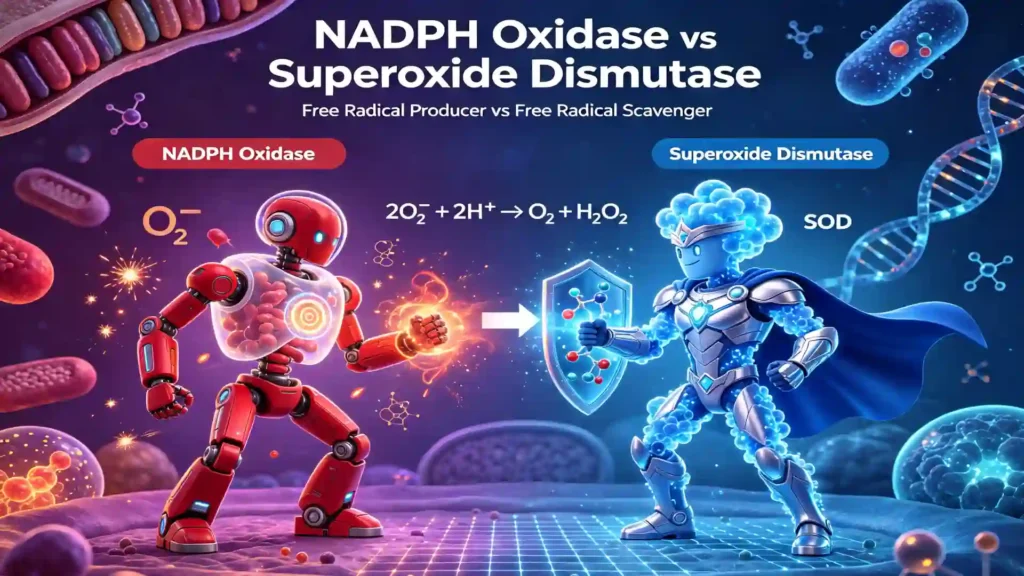
Part 1. Introduction: The Root Cause of Oxidative Stress Disorders
The dynamic balance between NADPH oxidase and superoxide dismutase (SOD) governs skin photoaging, livestock transport stress, sub-health chronic inflammation, and systemic aging. This article delivers practical application guidance for formula developers and raw material purchasers.
Part 2. NADPH Oxidase vs Superoxide Dismutase: Understanding the Two Core Enzymes of Oxidation Balance
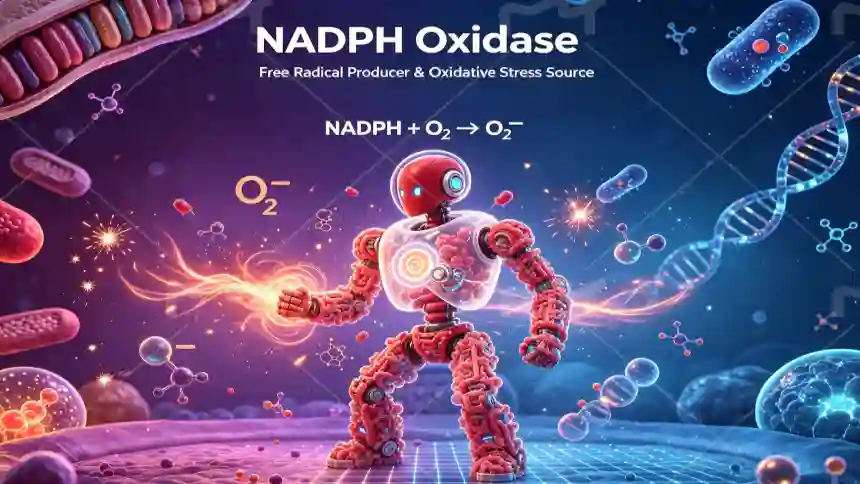
1 NADPH Oxidase: Free Radical Producer and Source of Oxidative Stress
- Definition & Properties
It is a functional enzyme exclusive to animals that generates reactive oxygen species (ROS), acting as the primary source of superoxide anions. Its isoform family includes NOX1, NOX2, NOX3, NOX4, NOX5, DUOX1 and DUOX2. - Mechanism of Action
It uses NADPH as an electron donor to catalyze the formation of superoxide anion free radicals. Moderate activation supports immune defense, while excessive activation triggers massive accumulation of free radicals. - Key Trigger Scenarios for Industry Reference
UV radiation, high-temperature transportation, seasonal stress, inflammatory infection, metabolic disorders, and external irritants. - Adverse Effects
Excessive enzyme activity leads to rampant free radicals, further causing cell membrane damage, inflammatory outbreaks, skin aging, weakened immunity, and growth retardation in livestock.
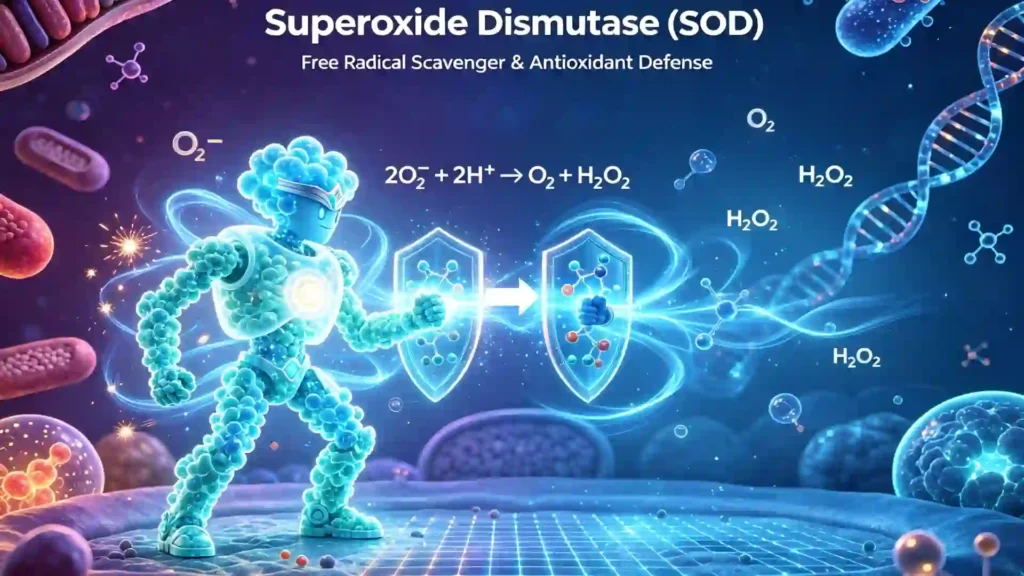
2 Superoxide Dismutase (SOD): Free Radical Scavenger and First Line of Antioxidant Defense
- Definition & Properties
An endogenous metallo-antioxidant enzyme naturally present in organisms, categorized into three major types: Cu/Zn-SOD, Mn-SOD, and Fe-SOD. Cu/Zn-SOD and Mn-SOD are the dominant variants used in industrial applications. - Mechanism of Action
It specifically catalyzes the dismutation of toxic superoxide anions into oxygen and relatively stable hydrogen peroxide (H₂O₂). Hydrogen peroxide can be further decomposed into water and oxygen by catalase (CAT) in vivo, thereby mitigating oxidative damage. - Core Physiological Functions
Regulate redox balance, suppress inflammation, repair cellular damage, relieve stress, and delay aging. - Segmented Industrial Advantages
Cu/Zn-SOD is suitable for skincare products and oral health supplements; Mn-SOD features high thermal resistance, ideal for feed pelleting and livestock anti-stress applications.
Part 3. Comprehensive Comparison: NADPH Oxidase vs SOD
NADPH oxidase and SOD form a pair of natural antagonistic systems in organisms, with entirely opposite functions, action orientations, activation patterns, and industrial values. Below is a multi-dimensional comparison to clarify their differences and provide professional references for formula development and raw material procurement.
- Core Function
NADPH oxidase acts as a free radical producer, catalyzing the generation of superoxide anions and driving oxidative reactions in the body. SOD functions as a free radical scavenger that specifically eliminates superoxide anions and blocks oxidative cascades, creating completely opposing effects. - Action Orientation
NADPH oxidase is pro-oxidative, pro-inflammatory and pro-stress; higher enzyme activity correlates with aggravated oxidative damage, inflammation and stress lesions. SOD delivers antioxidant, anti-inflammatory and anti-stress effects; higher enzyme activity strengthens the body’s antioxidant capacity, repair performance and stress resistance. - Activation Characteristics
NADPH oxidase is passively activated by stress: its activity remains stable under normal conditions and surges upon exposure to UV light, high temperatures, transportation, and inflammation. SOD operates constitutively and endogenously, with no strong direct external activators; its antioxidant efficacy can only be enhanced via exogenous supplementation or process modifications to improve its activity and stability. - Industrial Positioning
NADPH oxidase serves only as a mechanistic research target in industry, with the primary goal of inhibiting its overactivation, and it cannot be added to commercial end products for daily use, food, feed, or skincare. SOD serves as a core restorative raw material with mature commercial applications, and the primary industrial demand is for high-activity, high-stability SOD.
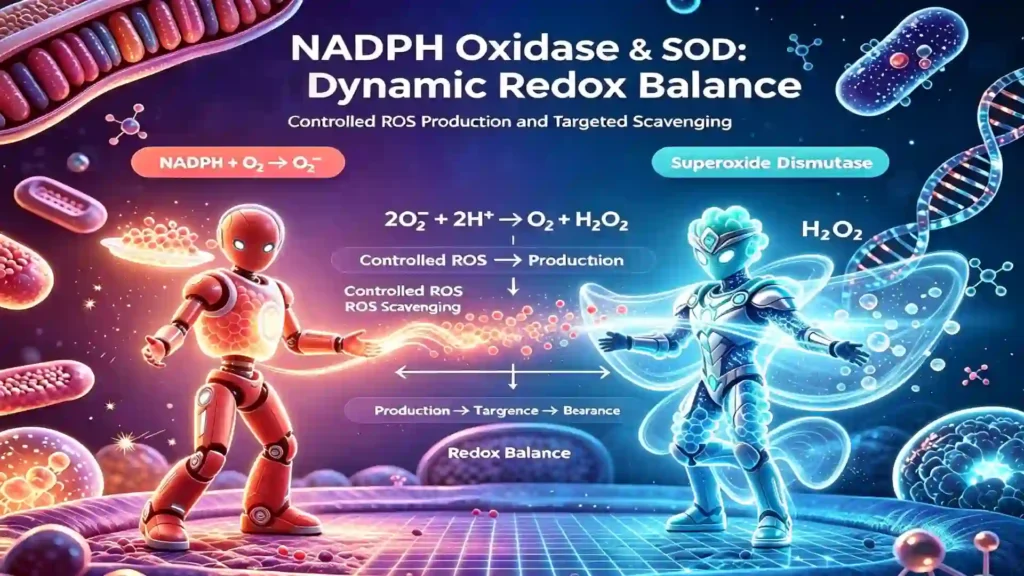
Part 4. Mutual Restriction Mechanism: The Core Principle of Systemic Redox Homeostasis
The healthy steady state of organisms relies on the dynamic balance between NADPH oxidase and SOD. The balance or imbalance of the two enzymes directly determines cellular health, physical condition, and product efficacy.
The two systems maintain dynamic equilibrium: a moderately activated NADPH oxidase generates trace amounts of free radicals to support basic immunity and metabolic regulation, thereby sustaining normal physiological functions. Meanwhile, endogenous SOD works continuously to clear excess free radicals and prevent their accumulation. This keeps the body free from oxidative damage, presenting clear skin, sufficient vitality, robust livestock growth, and stable immunity.
Imbalanced Damaged State Triggered by External Stimuli
External stimuli such as UV radiation, high temperatures, stress, inflammation, and irregular sleep directly trigger overactivation of NADPH oxidase, leading to explosive free radical production. Endogenous SOD in the body is limited in both content and activity, so it cannot rapidly eliminate large numbers of free radicals. This ultimately disrupts redox balance and triggers cascading damage, the root cause of all oxidative lesions, stress injuries, and chronic inflammatory disorders.
Based on this mutual restriction logic, the industry has recognized a dual-path antioxidant strategy as the most scientific R&D framework: on one hand, formulate ingredients or nutritional regulators to restrain overactivation of NADPH oxidase and reduce free radical production at the source; on the other hand, supplement exogenous high-activity, high-stability SOD to strengthen the body’s free radical scavenging capacity. This two-way regulation modulates systemic redox balance, thereby fundamentally resolving oxidative and stress-induced pathologies.
Part 5. Industrial Applications Across Three Major Sectors: Mechanism-Driven Product Development
1 Skincare Industry: Combat Photoaging and Repair Sensitive Skin
Core skincare concerns are closely linked to overactivated NADPH oxidase. UV exposure, air pollution, late nights, and impaired skin barriers drastically activate cutaneous NADPH oxidase, generating abundant free radicals that continuously degrade collagen and keratinocytes. Consequences include dullness, fine lines, sagging, redness, sensitive skin, and stubborn acne marks, collectively referred to as photoaging in the industry.
The mainstream industrial solution is to incorporate stabilized Cu/Zn-SOD. Featuring high activity and excellent skin compatibility, Cu/Zn-SOD scavenges superoxide anions on the skin surface, blocks oxidative cascades induced by NADPH oxidase, reduces melanin deposition, soothes inflammatory redness, and repairs damaged skin barriers. It delivers multifunctional benefits, including anti-aging, skin repair, and brightening, serving as a core active ingredient in premium antioxidant skincare products.
2 Functional Food and Health Supplement Industry: Alleviate Sub-health and Delay Systemic Aging
Modern lifestyles featuring late nights, irregular schedules, and high-fat diets can sustainably activate NADPH oxidase, leading to excessive free radical buildup in the body. This triggers chronic oxidative damage, fatigue, sluggish metabolism, weakened immunity, and premature aging, and long-term accumulation may induce chronic inflammation.
Considering human digestive physiology, encapsulated acid-resistant modified SOD is the preferred raw material for oral products. Unmodified SOD is readily degraded by gastric acid and digestive enzymes, resulting in extremely low absorption rates, whereas encapsulated SOD withstands gastric erosion and reaches the intestinal tract for absorption. It elevates in vivo SOD activity, balances redox status, and offsets oxidative damage caused by overactivated NADPH oxidase, delivering anti-inflammatory, anti-aging, metabolic-improving, and immunity-boosting effects. It is widely applied in SOD oral liquids, chewable tablets, functional meal replacements, and health beverages.
3 Feed and Pet Nutrition Industry: Relieve Breeding Stress and Facilitate Antibiotic-Free Farming
Livestock feed and pet nutrition represent the most widely applied and high-efficacy sector for SOD. Under high temperatures, long-distance transport, seasonal temperature shifts, feed transitions, and high-density breeding, or when pets face environmental changes, seasonal transitions, post-surgery recovery, and sensitive skin conditions, intracellular NADPH oxidase rapidly overactivates, generating massive free radicals. This results in weight loss in livestock, reduced feed intake, growth retardation, weakened immunity, and a high incidence of enteric and respiratory diseases; pets suffer from tear stains, itchy skin, hair loss, and poor physical fitness. Traditionally, antibiotics were used to relieve stress and inflammation, bringing risks of drug residues and compliance violations.
The optimal industrial solution is adding thermostable Mn-SOD. Mn-SOD exhibits outstanding resistance to high temperatures, acids, alkalis, and processing, fully adapting to the 80–100°C pelleting process of feed without significant activity loss. Supplemental Mn-SOD neutralizes excess free radicals generated by activated NADPH oxidase in livestock and pets, alleviates stress-induced damage, and suppresses inflammation. It improves survival rates and daily weight gain in livestock, enhances meat, egg, and milk quality, reduces antibiotic use, and advances antibiotic-free green breeding, making it an essential raw material for green livestock farming and pet functional nutrition.
Part 6. Raw Material Selection and Common Industry Pitfalls: Core Standards for R&D and Procurement
From an industrial perspective, NADPH oxidase is used only for scientific research, mechanistic studies, and drug target development, with no commercial additive value for consumer goods, food, feed, or skincare. SOD is the only functional raw material in end-product formulation, so proper SOD selection directly determines product efficacy and is a key priority for formulators and purchasers.
A prevalent industry misconception is the overemphasis on raw material purity as the sole indicator of evaluation. As an active enzyme preparation, SOD’s enzymatic activity (IU/mg), thermal stability, and processing compatibility take precedence over purity. High-purity SOD with low activity and poor stability fails to exert antioxidant effects in formulations, leading to ineffective products and low customer repurchase rates.
Targeted selection criteria for different application scenarios:
- Skincare: Prioritize high-activity, skin-compatible Cu/Zn-SOD for skin repair and anti-photoaging claims;
- Oral health supplements: Prioritize encapsulated modified SOD with acid resistance and improved absorption efficiency;
- Livestock & pet feed: Prioritize thermostable Mn-SOD compatible with high-temperature pelleting to retain activity during processing and relieve breeding stress.
Key selection indicators to verify in sequence: enzymatic activity value, thermal stability data, encapsulation technology and activity retention rate, followed by heavy metal limits, microbial indicators and regulatory compliance certifications. Reject purity-only evaluation standards to avoid formulation failure, subpar product efficacy, and compliance risks.
Part 7. Summary and Industry Outlook
In summary, the antagonistic balance between NADPH oxidase and SOD forms the core underlying logic of the antioxidant industry. Simply put, NADPH oxidase acts as the “activation switch” of oxidative stress, generating damaging free radicals and triggering skin lesions, sub-health, and breeding stress. SOD serves as the body’s “antioxidant shield”, eliminating free radicals, repairing oxidative damage, and enhancing stress resistance, making it the core commercial active raw material across industries.
Precision anti-aging skincare, functional health food, and antibiotic-free livestock breeding have become mainstream industry trends. Single-component antioxidant formulations can no longer meet market demand, and dual-path antioxidant solutions combining “inhibition of free radical generation + enhancement of free radical scavenging” have become the mainstream R&D direction. High-activity, stable, application-specific modified SOD raw materials have become essential differentiated competitive assets for brand product upgrading.
Industry practitioners who master the core mechanisms and functional differences between the two enzymes, along with standardized raw material selection rules, can accurately address end-user pain points, boost product competitiveness, avoid pitfalls in industry development, and achieve comprehensive upgrades in R&D, procurement, and product operations.