
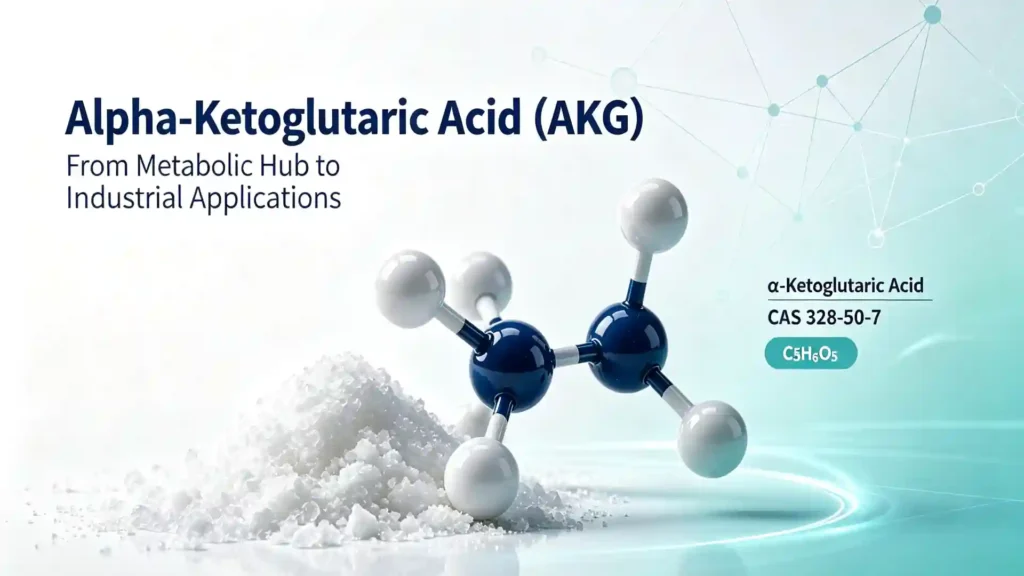
This article is designed as a pillar page for B2B ingredient suppliers, formulators, and procurement professionals researching α-ketoglutarate (AKG, CAS 328-50-7) for cell culture, animal nutrition, dietary supplements, and industrial applications.
α-Ketoglutarate (α-ketoglutaric acid, AKG), also known as 2-oxoglutarate or 2-oxopentanedioic acid, is an organic compound with the molecular formula C₅H₆O₅ and CAS number 328-50-7. It occupies a unique position in biochemistry: it is simultaneously an intermediate of the tricarboxylic acid (TCA) cycle, a nitrogen carrier in amino acid metabolism, and an emerging signaling molecule involved in gene regulation and cellular stress responses.
For industry professionals, AKG is not merely a chemical with a complex name. It is a versatile ingredient with established roles in biopharmaceutical manufacturing, animal feed, dietary supplements, and green chemistry. Understanding what AKG is, how it functions, and where it fits in your application requires examining its chemistry, biology, and regulatory landscape together.
I. What Does “α-Ketoglutarate” Mean?
The name encodes the molecular structure. “Glutarate” refers to a five-carbon dicarboxylic acid backbone (glutaric acid), with carboxyl groups at both ends. The “α-keto” designation indicates a ketone group (C=O) positioned on the carbon adjacent to a carboxyl group — the alpha position.
AKG is therefore a keto acid: a molecule containing both a carboxylic acid and a ketone. This dual functionality gives it reactivity as both an acid and a carbonyl compound. In aqueous solution at physiological pH, AKG exists predominantly as the α-ketoglutarate dianion, which is the biologically active form.
The compound is highly soluble in water (approximately 278–600 g/L at 20°C, depending on the source) and typically appears as a white crystalline powder with a melting point around 113–117 °C. It is stable under proper storage conditions but should be protected from moisture and prolonged light exposure.
II. AKG in Biological Systems: More Than Just a TCA Cycle Intermediate
2.1 The TCA Cycle Connection
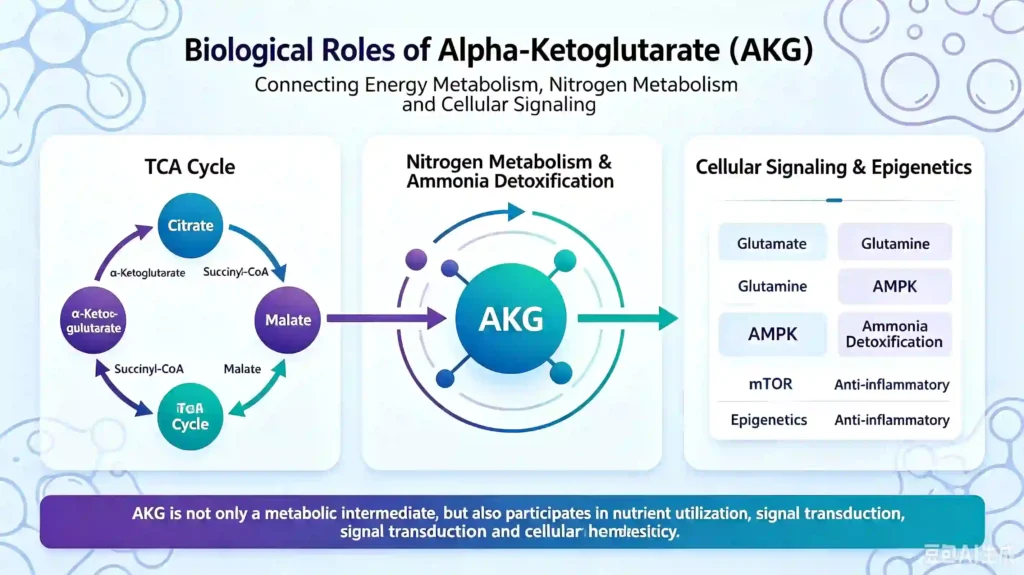
The TCA cycle (also known as the Krebs cycle or citric acid cycle) is the central pathway for oxidative metabolism in aerobic organisms. AKG is generated from isocitrate by isocitrate dehydrogenase (ICDH) and subsequently converted to succinyl-CoA by the α-ketoglutarate dehydrogenase complex. This step produces NADH, which feeds into the electron transport chain for ATP generation.
In cell culture and animal nutrition, AKG serves as a carbon skeleton donor that replenishes TCA cycle intermediates. When cells consume intermediates faster than they regenerate them (a phenomenon called anaplerotic insufficiency), supplementing AKG can help maintain cycle flux and support energy production. This is particularly relevant in high-density bioprocesses where metabolic demand outpaces endogenous synthesis capacity.
2.2 Nitrogen Metabolism and Ammonia Detoxification
AKG serves as the primary amino group acceptor in transamination reactions. Through glutamate dehydrogenase and aminotransferases, AKG is converted to glutamate, which can then be converted to glutamine. This pathway is critical for:
- Ammonia detoxification: Free ammonia is toxic to cells and organisms. By fixing ammonia into glutamate/glutamine, AKG prevents ammonia accumulation and its associated cellular damage.
- Amino acid homeostasis: The AKG/glutamate/glutamine interconversion provides a flexible nitrogen buffer that supports amino acid synthesis and distribution across tissues.
- pH regulation in cell culture: Ammonia accumulation in bioreactors is a common problem that can inhibit cell growth, alter glycosylation profiles, and reduce product quality. Media formulations using AKG instead of (or alongside) glutamine have been shown to reduce ammonia accumulation significantly while maintaining cell productivity.
2.3 Signaling and Regulatory Functions
Emerging research has positioned AKG not just as a metabolic substrate but as a signaling molecule that influences:
- mTOR pathway: AKG can activate mTOR signaling, which promotes protein synthesis and cell growth.
- AMPK pathway: AKG also interacts with AMPK, the cellular energy sensor, suggesting a role in energy homeostasis regulation.
- Epigenetic regulation: AKG is a cofactor for dioxygenases involved in DNA and histone demethylation, linking metabolism to gene expression.
- Anti-inflammatory effects: Animal studies have shown that dietary AKG reduces proinflammatory cytokines (IL-6, TNF-α, IL-1β) and promotes anti-inflammatory IL-10 in models of colitis and LPS challenge.
These mechanisms collectively explain why AKG has attracted attention in fields ranging from bioprocessing to geroprotection research.
III. Physical and Chemical Properties
| Property | Value |
| Molecular Formula | C₅H₆O₅ |
| Molecular Weight | 146.10 g/mol |
| CAS Number | 328-50-7 |
| EINECS Number | 206-330-3 |
| Appearance | White crystalline powder |
| Melting Point | 113–117°C |
| Water Solubility | 278–600 g/L (20°C) |
| pKa₁ / pKa₂ | 2.35 / 4.85 |
| LogP | -0.495 |
| Storage | Cool, dry, protected from light |
Handling note: AKG is classified as a skin and eye irritant (GHS05/GHS07). Use proper personal protective equipment (gloves, goggles, dust mask) when handling the powder.
IV. Functional Mechanisms: Why AKG Is Used in Industrial Applications
Mechanism 1: Anaplerotic Support in Cell Culture
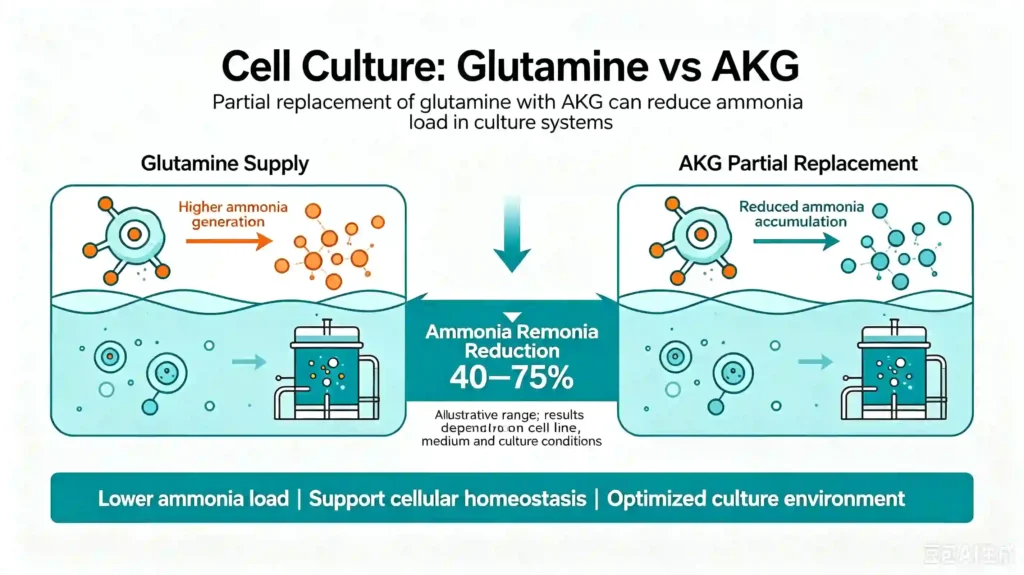
In CHO and other mammalian cell culture systems, glutamine is commonly used as an energy source, but its metabolism generates ammonia as a byproduct. Replacing or supplementing glutamine with AKG can:
- Reduce ammonia accumulation by 40–75% in some studies
- Maintain or improve specific productivity
- Support more consistent glycosylation profiles
- Reduce pH control challenges associated with ammonia buildup
The underlying mechanism is straightforward: AKG enters the TCA cycle directly, providing energy without the ammonia-generating side reactions of glutamine catabolism.
Mechanism 2: Ammonia Detoxification in Animal Nutrition
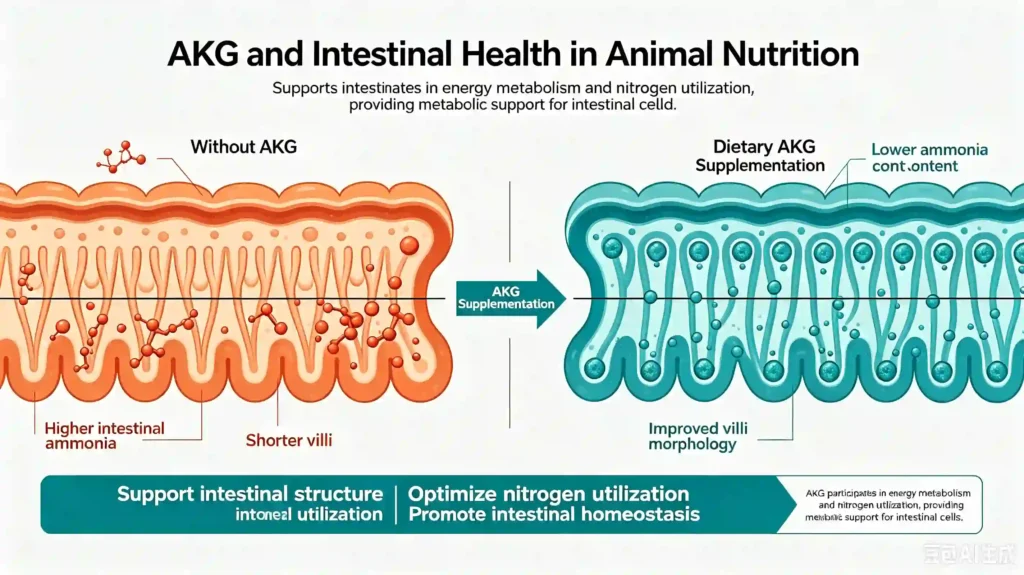
In monogastric animals, especially young piglets and poultry, ammonia from intestinal microbial activity and amino acid deamination can damage the intestinal epithelium and impair growth. AKG supplementation in feed:
- Reduces luminal ammonia concentrations
- Improves intestinal morphology (villus height, tight junction integrity)
- Modulates gut microbiota composition (reduces Firmicutes/Bacteroidetes ratio in some studies)
- Supports immune function via reduced proinflammatory signaling
These effects have been documented across multiple species, including pigs, poultry, and fish.
Mechanism 3: Bone and Metabolic Health (Emerging Research)
Animal studies have demonstrated that AKG supplementation can:
- Increase bone mineral density and bone mass in aged or ovariectomized models
- Upregulate osteogenic transcription factors (Runx2, Osterix)
- Reduce osteoclastogenesis and bone resorption
- Improve mesenchymal stem cell function in aged animals
A 2020 study found that adding 0.25% or 0.75% AKG to the drinking water of aged mice restored serum AKG levels, increased bone mass, and accelerated bone regeneration. While these findings are promising, human clinical evidence remains limited, and further research is needed before inferring therapeutic applications.
Mechanism 4: Cellular Stress Resistance and Longevity Signaling
AKG has been shown to extend lifespan in yeast, nematodes, fruit flies, and mice, potentially through:
- Inhibition of TOR signaling (mimicking caloric restriction)
- Antioxidant properties
- Regulation of hypoxia response and inflammatory pathways
- Epigenetic modulation via dioxygenase cofactor activity
These geroprotective mechanisms are an active area of research but should not be presented as established human benefits.
V. Market Overview: AKG in the Global Supply Chain
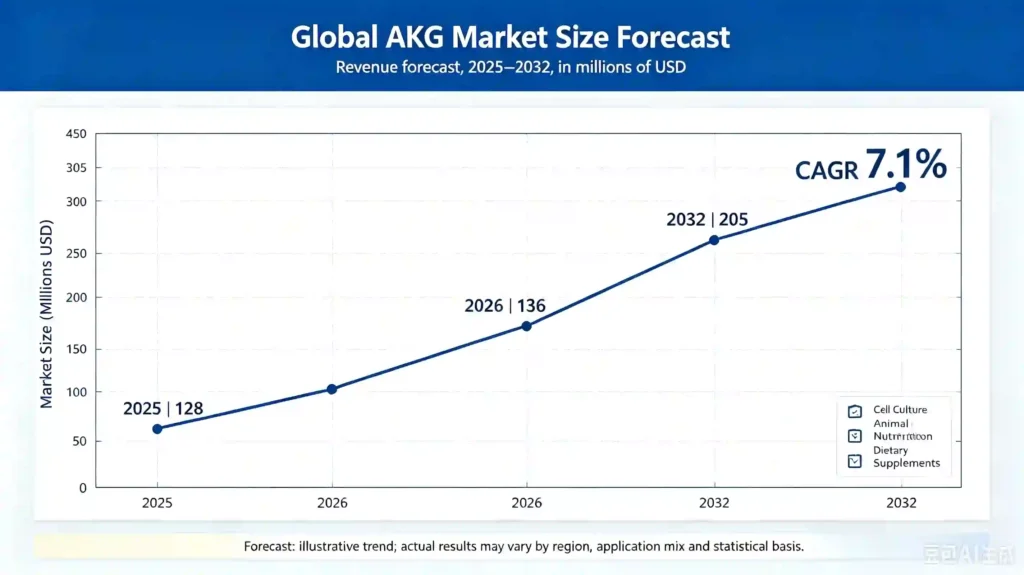
5.1 Market Size and Growth
| Metric | Value |
| 2025 Global Market Size | ~$128 million USD |
| 2026 Estimated Size | ~$136 million USD |
| 2032 Projected Size | ~$205 million USD |
| CAGR (2026–2032) | ~7.1% |
Source: Global market research reports
5.2 Key Players
Major producers and suppliers of α-ketoglutaric acid include SFI Health (Klaire Labs), TNJ Chemical Industry, Evonik Industries AG, Spectrum Chemical, and several Chinese manufacturers. The top four players hold approximately 40% of the market.
5.3 Product Forms
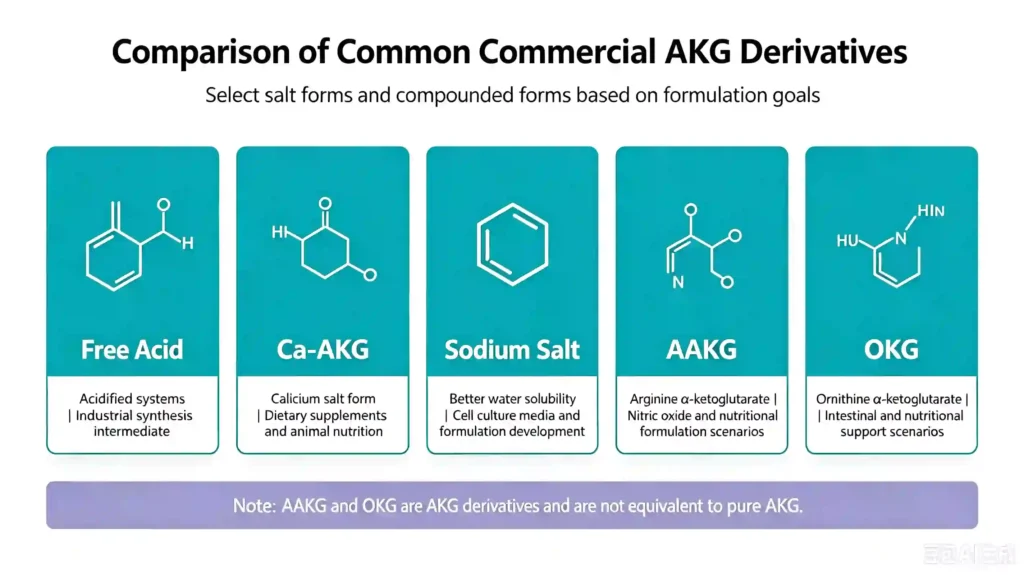
AKG is commercially available in multiple grades and derivative forms:
- Free acid: Standard form, food/feed/pharma grades
- Calcium α-ketoglutarate (Ca-AKG): Used in dietary supplements, GRAS status in the US
- Sodium α-ketoglutarate: Used in cell culture media
- L-Arginine α-ketoglutarate (AAKG): Sports nutrition ingredient (note: associated with adverse effects, see Safety section)
- Ornithine α-ketoglutarate (OKG): Clinical nutrition applications
- Pyridoxine α-ketoglutarate: Pharmaceutical combinations
5.4 Applications by Segment
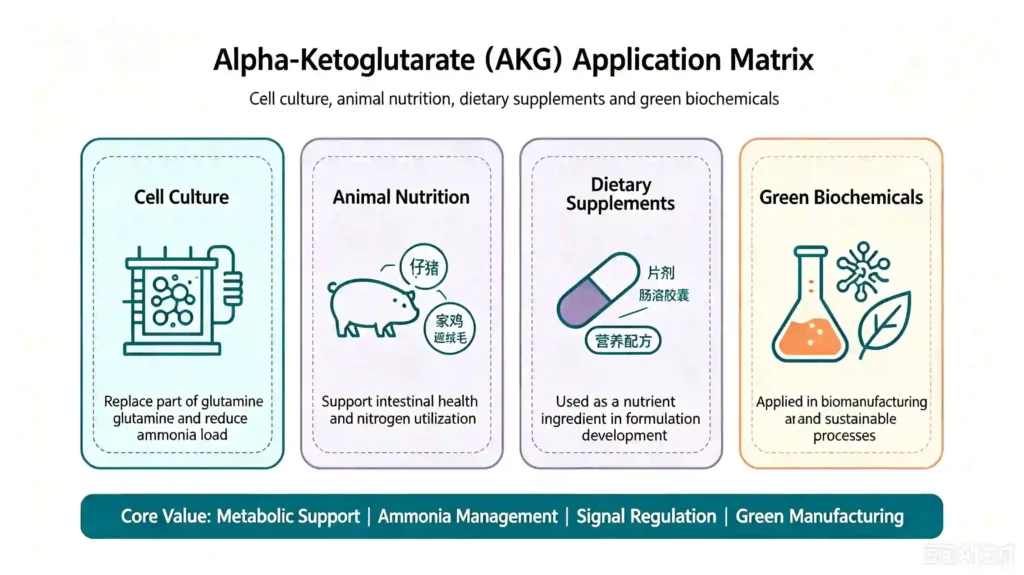
| Application | Primary Function | Typical Grade |
| Cell Culture Media | Anaplerotic substrate, ammonia reduction | Pharma/cell culture grade |
| Animal Feed | Ammonia detoxification, gut health | Feed grade |
| Dietary Supplements | Metabolic support, geroprotection (research) | Food/supplement grade |
| Biopharmaceutical Manufacturing | Media component, process optimization | High purity |
| Green Chemistry | Platform chemical for synthesis | Industrial grade |
VI. Regulatory and Safety Status
6.1 Safety Profile
AKG has a favorable safety profile in animal studies. The oral LD₅₀ in rats exceeds 5.0 g/kg, and a 14-day repeated-dose study established a NOAEL of 1.0 g/kg/day. Human studies have used pure AKG or AKG salts at doses up to 30 g/day without significant adverse effects.
Important distinction: While AKG alone appears well-tolerated, L-arginine α-ketoglutarate (AAKG) has been associated with adverse effects including heart palpitations and dizziness. The combination of arginine with AKG produces different physiological effects than AKG alone, and these should not be conflated.
6.2 Regulatory Status by Region
| Region | Status |
| United States | AKG: Flavoring agent/GRAS for intended uses; Ca-AKG: GRAS |
| European Union | Ca-AKG permitted in food supplements; free acid status varies |
| China | Listed as food flavoring (GB 2760); industrial and feed applications established |
| Canada | Permitted as flavor enhancer |
Note: Regulatory status is subject to change. Suppliers should verify current compliance requirements for their specific target markets and applications.
VII. Key Takeaways for Industry Professionals
- AKG is a metabolic intermediate, not a drug. Its primary value lies in supporting existing metabolic pathways—TCA cycle flux, nitrogen handling, and cellular energy status.
- Different applications require different grades and forms. Cell culture demands high-purity, low-endotoxin material. Feed applications prioritize cost-effective bulk supply. Supplement formulations may use calcium or other salts for stability and bioavailability considerations.
- The evidence base is strongest for cell culture and animal nutrition applications. Bone health, longevity, and geroprotection research is promising but remains preclinical or early-stage clinical.
- Safety is well-documented for AKG alone. Distinguish AKG from AAKG when discussing side effects.
- Market growth is steady, not explosive. The ~7% CAGR reflects steady adoption in established applications rather than a speculative boom.
VIII. Frequently Asked Questions
What is the difference between α-ketoglutarate and α-ketoglutaric acid?
They refer to the same compound. The “acid” form is the protonated molecule; “α-ketoglutarate” typically denotes the deprotonated anion (as it exists at physiological pH). In commercial contexts, the terms are often used interchangeably.
Is AKG the same as glutamine?
No. Glutamine is an amino acid (C₅H₁₀N₂O₃) containing nitrogen. AKG is a keto acid (C₅H₆O₅) that serves as a nitrogen acceptor. In cell culture, AKG can partially replace glutamine’s energy-supplying function while reducing ammonia generation.
Can AKG replace glutamine in cell culture media?
In many CHO and hybridoma systems, AKG supplementation allows reduced glutamine concentrations without compromising productivity or product quality, while significantly lowering ammonia accumulation. However, complete replacement requires careful media optimization and is not universally applicable.
What is calcium α-ketoglutarate (Ca-AKG) used for?
Ca-AKG is a calcium salt of AKG, often used in dietary supplements because calcium improves the handling characteristics and may support bioavailability. It has GRAS status in the United States.
Is AKG stable in aqueous solution?
AKG is water-soluble and reasonably stable in solution, though it can undergo decarboxylation under extreme pH or temperature conditions. For cell culture media, it is typically added as a concentrated stock solution and filter-sterilized.
What is the difference between AKG and AAKG?
AAKG (L-arginine α-ketoglutarate) is a salt formed from arginine and AKG. It is used in sports nutrition but has been associated with side effects including heart palpitations and dizziness. AKG alone does not appear to carry these risks. Do not treat the two as interchangeable.
IX. Compliance Statement
This article is provided for business-to-business information and procurement reference purposes only. It does not constitute medical advice, product efficacy claims, or a recommendation for any specific use. Application directions, functional descriptions, and regulatory status are compiled from public sources and industry practice; customers must independently verify suitability against current regulations in their target markets and their own process validation. Information may be updated as regulations and technologies evolve.