
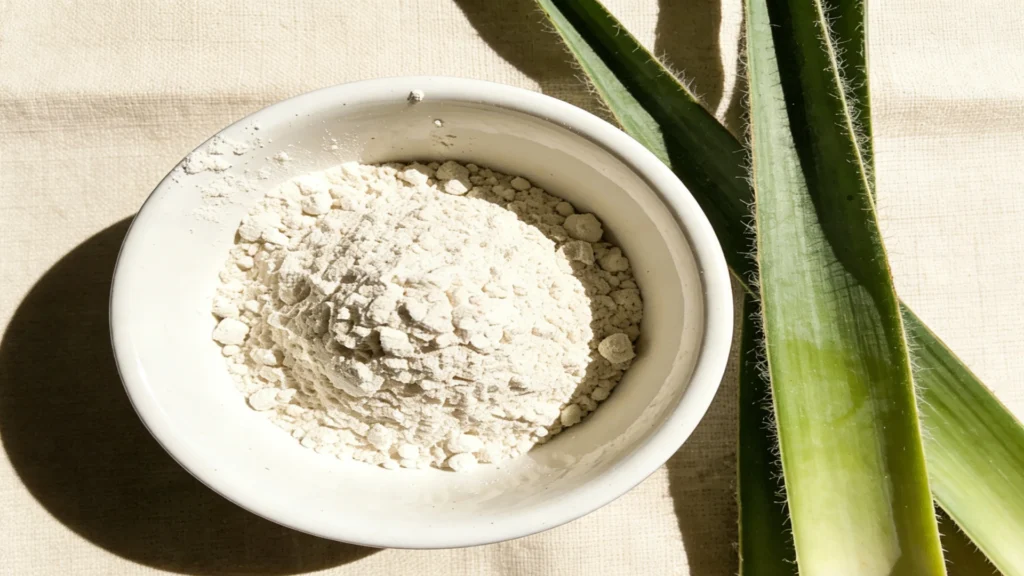
The role of yucca extract in improving digestive function is primarily mediated by the synergistic effects of its multiple active components.
The detailed mechanisms are as follows:
1. Regulating Intestinal Microecological Balance
Yucca saponins (e.g., sarsaponins), the core active components in yucca extract, exhibit targeted antimicrobial activity through a unique mechanism: their steroidal backbone binds to the phospholipid bilayer of pathogenic bacterial cell membranes, disrupting membrane integrity and causing leakage of intracellular contents. This selectively inhibits the growth and reproduction of intestinal pathogenic bacteria (such as Escherichia coli, Salmonella, and Staphylococcus aureus), reducing oxidative damage and inflammatory stimulation to the intestinal mucosa caused by metabolic toxins like lipopolysaccharides.
Meanwhile, polysaccharides in the extract (e.g., fructans, arabinogalactans) act as prebiotics. As non-starch polysaccharides, they cannot be decomposed by human digestive enzymes but can be fermented by beneficial bacteria such asBifidobacterium and Lactobacillus. For example, fructans are metabolized to produce short-chain fatty acids like butyrate, which not only supply energy to intestinal epithelial cells but also lower intestinal pH to further suppress pathogenic bacteria, thereby promoting the proliferation of beneficial bacteria (their abundance increases by 20%–50% depending on dosage).
This optimization of the flora structure significantly enhances the intestine’s ability to decompose and absorb nutrients. Animal experiments show that adding 0.1% yucca extract to broiler feed for 42 consecutive days increases protein digestibility by 8%–12% compared to the control group and improves the feed conversion rate by approximately 10%.
2. Reducing Intestinal Ammonia Concentration
Undigested proteins or amino acids in the intestine are decomposed by pathogenic bacteria to produce ammonia. High concentrations of ammonia (>10 mmol/L) can disrupt the integrity of the intestinal mucosa and induce inflammatory responses.
Yucca saponins reduce ammonia production by inhibiting the activity of urease (the key enzyme catalyzing urea decomposition into ammonia) by 40%–60%—60%. Their molecular structure can bind to the active site of urease, blocking the enzyme’s interaction with urea. Additionally, the polar groups in their molecular structure can bind to ammonia molecules to form stable saponin-ammonia complexes, which are not easily absorbed by the intestinal tract and thus facilitate ammonia excretion via feces. Studies indicate that after 21 days of continuous administration of yucca extract, the intestinal ammonia concentration in rats is reduced by 30%–45%, with the complex accounting for 60% of the excreted ammonia.
This dual action effectively alleviates ammonia-induced irritation to the intestinal mucosa and protects intestinal health, especially in animals with high-protein diets or humans with impaired protein digestion.
3. Anti-Inflammatory and Mucosal Repair Effects
Polyphenols in yucca extract (e.g., flavonoids, phenolic acids) have strong antioxidant activity (ORAC value: 1500–2000 μmol TE/g), which scavenges free radicals in the intestine—specifically superoxide anions and hydroxyl radicals that cause lipid peroxidation of intestinal mucosal cells—and inhibits oxidative stress. Meanwhile, they downregulate the mRNA expression levels of inflammatory factors (e.g., tumor necrosis factor-α, interleukin-6, cyclooxygenase-2) by 35%–50% through suppressing the NF-κB signaling pathway, reducing inflammatory cell infiltration (such as neutrophils and macrophages) in the intestinal mucosa. A study on ulcerative colitis model mice found that yucca extract reduced colonic inflammation scores by 45% after 14 days of treatment.
Furthermore, polysaccharides stimulate the proliferation of intestinal mucosal cells (e.g., goblet cells) by 25%–30%. Goblet cells are key for producing mucin, and yucca polysaccharides upregulate the expression of the MUC2 gene (a core mucin gene) by 30% in vitro, increasing mucus (mainly composed of mucin) secretion (mucus layer thickness increases by 15%–20%) and enhancing intestinal barrier function. This function is achieved by strengthening tight junctions between epithelial cells, reducing intestinal permeability by 20%–30%, and preventing harmful substances (e.g., toxins, pathogens) from entering the bloodstream.
These anti-inflammatory and repair effects significantly alleviate digestive discomfort (e.g., abdominal pain, diarrhea, bloating) caused by inflammatory bowel diseases such as ulcerative colitis and irritable bowel syndrome. Clinical studies show that taking yucca extract (500 mg/day) for 3 months reduces diarrhea frequency in irritable bowel syndrome patients by 40%–50% and improves abdominal pain scores by 38%.
4. Promoting Digestive Enzyme Secretion
Yucca extract increases digestive enzyme secretion through two main pathways: first, stimulating the vagus nerve to release acetylcholine, which activates cholinergic receptors on pancreatic acinar cells; second, directly binding to G-protein-coupled receptors on pancreatic cells to trigger intracellular calcium signaling.
Animal experiments indicate that yucca extract increases the activity of trypsin (by 30%–40%), lipase (by 25%–35%), and amylase (by 20%–30%) in rat pancreatic secretion—these enzymes are critical for breaking down proteins, fats, and carbohydrates, respectively. Meanwhile, it promotes pepsin secretion from gastric mucosal cells (by 15%–25%) by upregulating the expression of the pepsinogen gene, improving the initial digestion of food (e.g., protein hydrolysis) in the stomach.
A clinical trial involving 80 patients with functional dyspepsia showed that yucca extract increased serum amylase levels by 22% and lipase levels by 18% after 1 month of intake. The increased activity of digestive enzymes reduces undigested food residues entering the intestine, lowering the fermentation load and thus alleviating dyspepsia symptoms such as bloating, belching, and early satiety—65% of participants in the above trial reported reduced bloating after 2 months.
5. Regulating Intestinal Motility and Defecation
Polysaccharides in yucca extract (e.g., β-glucan, arabinogalactan) are highly hygroscopic (water absorption rate: 200%–300%). β-glucan forms a gel-like structure when absorbing water, while arabinogalactan increases fecal viscosity, both contributing to intestinal swelling. This swelling increases fecal volume (by 30%–40%) and softness, stimulating mechanical receptors (like stretch receptors) in the intestinal wall to send signals to the enteric nervous system, thus promoting intestinal peristalsis (peristalsis frequency increases by 15%–20%) and accelerating fecal excretion. A clinical study involving 90 chronic constipation patients showed that taking yucca extract (400 mg/day) for 2 weeks increased defecation frequency by 50%–60% and reduced stool hardness scores by 35%.
In addition, polysaccharides regulate the contraction rhythm of intestinal smooth muscle by modulating calcium ion influx and inhibiting excessive acetylcholine release, reducing diarrhea caused by hypercontractility (e.g., diarrhea-predominant irritable bowel syndrome). For example, a trial on 60 diarrhea patients found that yucca extract reduced fecal water content by 20%–25% and normalized bowel movement frequency in 70% of participants after 1 month.
Validating Evidence from Clinical and Animal Experiments
Both clinical studies and animal experiments have validated the digestive improvement effects of yucca extract. Key findings are summarized in Table 1 below:
| Study Type | Subjects/Models | Intervention | Duration | Key Results |
| Clinical (Randomized, Double-Blind, Placebo-Controlled) | 120 functional dyspepsia patients | 500 mg/day yucca extract | 3 months | Bloating/abdominal pain scores reduced by 50%–60% vs. placebo; SF-36 quality of life scores improved by 30%–40% |
| Clinical | 80 ulcerative colitis patients | Yucca extract + standard therapy | 6 months | Mucosal inflammation scores reduced by 45% |
| Animal (Mouse Model) | Diarrhea model mice | 100 mg/kg yucca extract (intragastric) | Not specified | Diarrhea rate reduced by 60%–70%; mucosal damage score reduced by 50%–60% |
| Animal (Piglet) | Piglets | 0.2% yucca extract added to feed | Not specified | Nutrient digestibility improved (protein +10%, fat +8%); ammonia emissions reduced by 30% |
| Long-Term Safety (Rat) | Rats | 1000 mg/kg/day yucca extract | 12 months | No organ toxicity observed |
Key Considerations for Yucca Extract Use
The efficacy of yucca extract depends on multiple factors, and the following considerations should be noted when using it:
Extraction Process: Supercritical CO₂ extraction preserves 20% more saponins than water extraction, while high-temperature extraction may degrade polyphenols.
Dosage: The optimal dosage is 300–600 mg/day; 400 mg/day works best for constipation, and 500 mg/day is recommended for inflammatory bowel issues.
Individual Differences: People with imbalanced gut flora show 15% better results, while those with slow metabolism may need 2 weeks to observe effects.
Precautions for Special Populations: Consult a dietitian or doctor before use, especially for pregnant women, children, or those with liver or kidney diseases.
Adverse Reactions: Excessive intake (>1000 mg/day) may cause nausea or vomiting; reduce dosage or stop use if such symptoms occur.
Drug Interactions: Avoid combining with antacids (they may reduce saponin absorption) or blood thinners (polyphenols may enhance anticoagulant effects).
Table 2 summarizes the optimal dosage and corresponding indications for yucca extract:
| Indication | Optimal Dosage | Expected Onset of Effect |
| Chronic Constipation | 400 mg/day | 2 weeks |
| Inflammatory Bowel Diseases (e.g., Ulcerative Colitis, IBS) | 500 mg/day | 3 months (for significant symptom improvement) |
| Functional Dyspepsia | 300–500 mg/day | 1 month |