
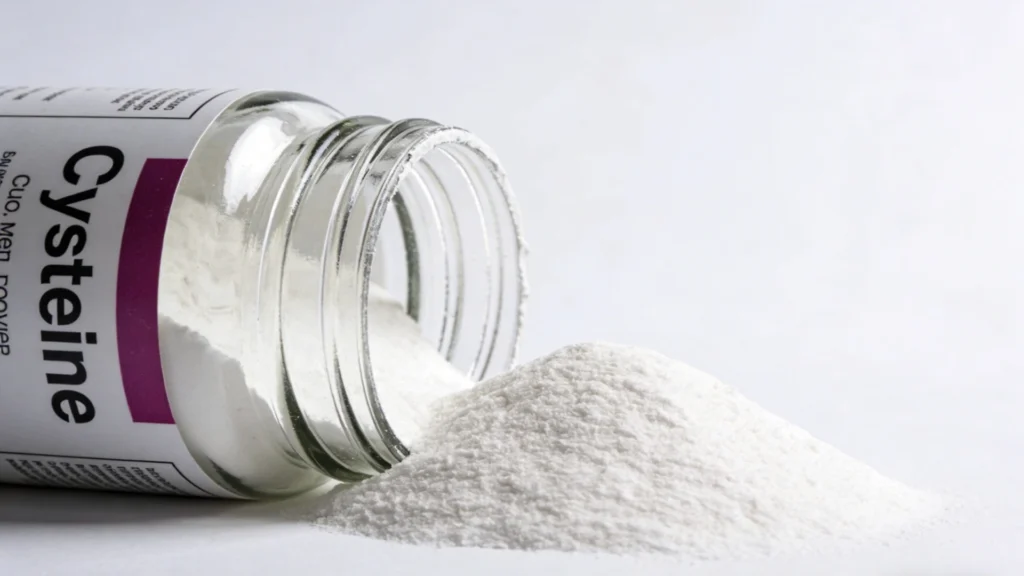
I. Cysteine: An Indispensable Sulfur-Containing Amino Acid for the Human Body
Cysteine is an important sulfur-containing amino acid in the human body. As one of the basic units composing proteins, it widely exists in human cells and tissues, participates in various core physiological processes, and is an indispensable substance for maintaining the normal operation of the body. Unlike essential amino acids, cysteine is a non-essential amino acid, which can be synthesized by the human body through the metabolic transformation of methionine, and can also be efficiently obtained from the daily diet. For example, meat, eggs, dairy products, beans, and vegetables such as garlic, broccoli, and onions are all rich in cysteine, providing sufficient nutritional support for the body.
II. Core Physiological Functions of Cysteine
The core physiological function of cysteine is closely related to the active sulfhydryl group (-SH) in its molecular structure — this special group endows it with strong antioxidant and detoxification capabilities, and is also the key for it to participate in various physiological reactions. Firstly, cysteine is the core precursor of glutathione, an important antioxidant in the body. Glutathione is the main antioxidant in human cells, which can effectively scavenge excess free radicals in the body, reduce oxidative stress damage to cells, protect the integrity of cell membranes and the stability of DNA, delay cell aging, and is of great significance for maintaining skin and organ functions. Secondly, the sulfhydryl group of cysteine can combine with heavy metals (such as lead and mercury) and chemical toxins in the body to form soluble complexes, promoting their excretion through the kidneys and liver, thereby reducing the damage of toxins to the body, especially playing an important auxiliary role in liver detoxification function. In addition, cysteine also participates in the formation and breakage of protein disulfide bonds, regulates the spatial structure of proteins, maintains the structural strength and health of skin, hair, and nails, so it is also widely used in the field of beauty and skincare, as well as nutritional supplements.
III. An Optimized Derivative of Cysteine: N-Acetyl-L-Cysteine (NAC)
Although cysteine is crucial to the human body, direct supplementation of natural cysteine has obvious limitations: natural cysteine has poor stability, is easily oxidized and inactivated in vitro, has low absorption efficiency after entering the human body, and is difficult to fully exert its physiological effects. To solve this problem, researchers synthesized its derivative — N-Acetyl-L-Cysteine (NAC) — using cysteine as the raw material through acetylation modification. As an “optimized upgraded version” of cysteine, NAC retains the core active group (sulfhydryl group) of cysteine, and at the same time, through acetylation modification, it greatly improves its own stability, water solubility, and bioavailability, overcomes the defects of natural cysteine, and becomes the most widely used form of cysteine in the fields of medicine, nutrition and health care, beauty, etc.
IV. Core Advantages and Application Scenarios of N-Acetyl-L-Cysteine
The core advantages of the physiological functions of N-Acetyl-L-Cysteine are prominently reflected in both clinical applications and daily health care, mainly focusing on the following three aspects:
(I) Powerful Mucolytic Action to Protect Respiratory Health
First, a powerful mucolytic action to protect respiratory health. The sulfhydryl group in NAC can break the disulfide bonds between mucin molecules in sputum, destroy the structure of mucin, thereby reducing the viscosity of sputum, making the originally thick and difficult-to-cough sputum thin and easy to expectorate. Based on this characteristic, NAC is a commonly used mucolytic agent in clinical practice, widely used in the adjuvant treatment of respiratory diseases such as chronic bronchitis, chronic obstructive pulmonary disease (COPD), pneumonia, and bronchiectasis. It can effectively relieve symptoms such as difficulty in expectoration, chest tightness, and shortness of breath, improve pulmonary ventilation function, and help patients restore an unobstructed respiratory tract.
(II) Enhanced Antioxidation and Liver Protection
Second, enhanced antioxidant and liver protection. As a direct precursor of glutathione, NAC can be quickly absorbed after entering the human body, and converted into cysteine in cells, thereby promoting the synthesis of glutathione, significantly increasing the level of glutathione in the body, and enhancing the overall antioxidant capacity of the body. This effect can not only reduce oxidative stress damage to cells and delay aging, but also effectively protect the liver from damage caused by alcohol, drugs, chemical poisons, etc. In clinical practice, NAC is even used as a specific antidote for acetaminophen (paracetamol) poisoning, which can quickly neutralize excessive toxic metabolites in the body, reduce liver damage, and save patients’ lives.
(III) Regulating Metabolism and Assisting in Maintaining Overall Health
Third, regulating metabolism and assisting in maintaining overall health. NAC can regulate the cellular metabolism process, inhibit the release of inflammatory factors, reduce chronic inflammatory responses in the body, and has a certain auxiliary effect on relieving chronic respiratory inflammation, joint inflammation, etc.; at the same time, it can also participate in the regulation of neurotransmitters (such as glutamate), maintain the normal function of the nervous system, and help improve mood and relieve neural fatigue. In the field of beauty, NAC scavenges free radicals in the skin through its antioxidant effect, reduces skin damage caused by ultraviolet rays and environmental factors, and at the same time promotes the synthesis of collagen, helping to improve skin roughness, dullness, pigmentation, and other problems, and has become a popular ingredient in high-end skin care products and nutritional supplements.
V. Comparative Advantages of NAC and Natural Cysteine
Compared with natural cysteine, N-Acetyl-L-Cysteine has significant advantages: it has stronger stability, is not easily oxidized, and is convenient for storage and transportation; it has better water solubility, is easier to be absorbed and utilized by the human body, and takes effect faster; its application scenarios are also wider. It can be used not only as a drug for clinical treatment, but also as a dietary supplement for daily health maintenance, and can also be applied in the field of beauty to achieve multi-dimensional health protection.
VI. Summary: The Health Value of Cysteine and NAC
In summary, cysteine is an indispensable basic nutrient for the human body, supporting many physiological functions of the body; while N-Acetyl-L-Cysteine, as its derivative, makes up for the deficiencies of natural cysteine through structural optimization, expands its application scope, and plays an irreplaceable role in the fields of medical treatment, nutrition, beauty, etc. With the continuous in-depth scientific research, people’s understanding of these two substances will be more comprehensive, and their value in maintaining human health, preventing and assisting in the treatment of diseases will also be further explored and applied.