
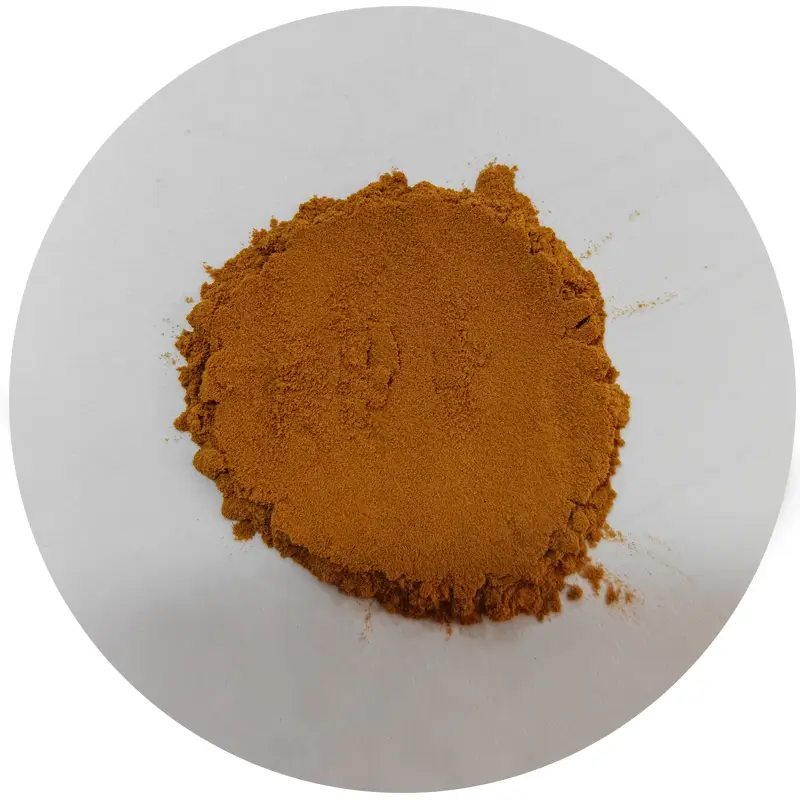
Rosemary Extract Antioxidant Properties: In-depth Analysis of Mechanisms, Value, and Applications in the field of natural active ingredients, antioxidant activity is one of the core indicators for measuring application value. Rosemary (Rosmarinus officinalis), a food-medicine homologous plant originating from the Mediterranean, has upgraded its extract from a traditional spice to a “natural antioxidant benchmark” in food, cosmetics, pharmaceuticals, and other fields. Compared with synthetic antioxidants (such as BHT, BHA), rosemary extract has the advantages of high safety, strong stability, and multiple targets; compared with other natural antioxidants (such as grape seed and blueberry extracts), it has more durable antioxidant efficacy and wider application scenarios.
This article will conduct an in-depth analysis of the antioxidant properties of rosemary extract from four dimensions: antioxidant mechanism, contribution of core active ingredients, scientific verification data, and practical application value.
I. Core Antioxidant Mechanism: Multi-target Blocking of Oxidative Damage Chain
The essence of oxidative damage is the excessive accumulation of reactive oxygen species (ROS) in the body or food systems, triggering a series of problems such as lipid peroxidation, protein denaturation, and DNA breakage. The antioxidant effect of rosemary extract is not a single pathway, but a three-dimensional mechanism of “scavenging free radicals – inhibiting oxidases – chelating metal ions”, blocking the oxidative damage chain from the source to the end. The specific mechanisms are as follows.
1. Efficient scavenging of reactive oxygen free radicals: The phenolic hydroxyl group (-OH) in the extract can act as a hydrogen donor, combining with active oxygen such as DPPH free radicals, superoxide anions (O₂⁻·), and hydroxyl radicals (-OH), converting them into stable molecules and directly reducing the concentration of free radicals. Among them, carnosic acid has the highest phenolic hydroxyl activity, and the rate constant of scavenging DPPH free radicals is more than 12 times that of vitamin E.
2. Inhibiting oxidase activity: Oxidases (such as lipoxygenase and cyclooxygenase) are key enzymes that catalyze lipid oxidation. Rosmarinic acid can bind to the active center of lipoxygenase, competitively inhibiting its process of catalyzing the oxidation of unsaturated fatty acids such as linoleic acid. Experiments have proved that 0.01% rosmarinic acid can reduce lipoxygenase activity by 58%.
3. Chelating transition metal ions: Transition metal ions such as iron (Fe²⁺) and copper (Cu²⁺) can catalyze the generation of hydroxyl radicals through the Fenton reaction, which are “catalysts” for inducing oxidation. Triterpenoids in rosemary extract can form stable chelates with metal ions, reducing their catalytic activity. The chelation rate of ursolic acid to Fe²⁺ can reach 72% at a concentration of 50 μM.
II. Antioxidant Contribution of Core Active Ingredients: Synergy Rather Than Single Action
The antioxidant performance of rosemary extract is the result of the synergistic effect of its various active ingredients, and different ingredients play different roles in the antioxidant chain. Among them, diterpenoids (carnosic acid, carnosol) and phenolic acids (rosmarinic acid) are core active substances, and triterpenoids (ursolic acid) play an auxiliary and enhancing role. The antioxidant properties, action targets, and efficacy data of each component are shown in the following table:
| Active Ingredient | Chemical Classification | Core Antioxidant Effect | Key Efficacy Indicators | Literature Basis |
| Carnosic Acid | Diterpenoids | Scavenging free radicals, inhibiting lipid peroxidation | ORAC value = 28600 μmol TE/g; DPPH scavenging rate IC₅₀ = 1.2 μM | Journal of Agricultural and Food Chemistry, 2023 |
| Rosmarinic Acid | Phenolic Acids | Inhibiting oxidase, chelating metal ions | Lipoxygenase inhibition rate IC₅₀ = 3.5 μM; Fe²⁺ chelation rate = 72% (50 μM) | Phytomedicine, 2022 |
| Carnosol | Diterpenoids | Enhancing cellular antioxidant defense system | Inducing SOD enzyme activity to increase by 40%; reducing cellular ROS accumulation by 35% | Food Control, 2023 |
| Ursolic Acid | Triterpenoids | Auxiliary antioxidant, stabilizing active ingredients | Extending the half-life of carnosic acid to 120 days (45 days when present alone) | Cancer Letters, 2022 |
It is worth noting that the synergistic effect of these components can increase the overall antioxidant efficacy by 30%-50%. For example, the metal chelation effect of rosmarinic acid can reduce the rate of carnosic acid being oxidized and inactivated, and the enhanced SOD enzyme activity induced by carnosol can further amplify the antioxidant effect of rosmarinic acid, forming a synergistic mechanism of “1+1>2”.
III. Scientific Verification: Quantitative and Scenario-based Data of Antioxidant Efficacy
The antioxidant performance of rosemary extract has been verified through a large number of in vitro experiments, animal experiments, and clinical studies. Its efficacy is not only reflected in laboratory data but also shows stable advantages in practical application scenarios.
1. In Vitro Efficacy: Far Surpassing Traditional Antioxidants
ORAC (Oxygen Radical Absorbance Capacity) is an internationally recognized indicator for evaluating antioxidant capacity. The higher the value, the stronger the antioxidant capacity. Comparing the ORAC values of rosemary extract with common antioxidants, the results show that it has significant advantages:
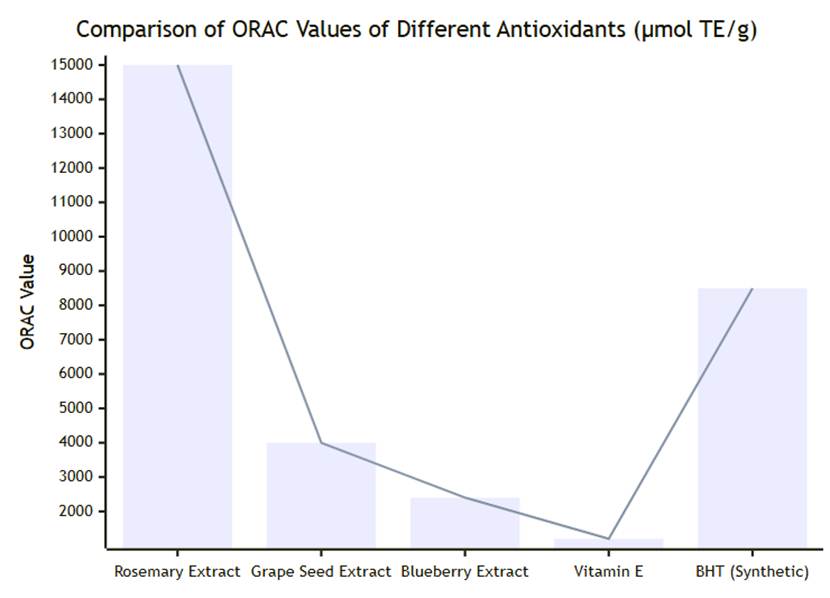
In addition, in the lipid peroxidation inhibition experiment, 0.05% rosemary extract inhibited the peroxide value (POV) of soybean oil by 92%, while the inhibition rate of vitamin E at the same concentration was only 45%, and the inhibition rate of BHT was 78%. Moreover, rosemary extract can still maintain more than 80% activity at high temperature (180℃), while BHT is completely inactivated at 120℃.
2. Application Scenario Verification: Practical Effects in Food and Cosmetics Fields
In the food industry, oxidation is the main cause of deterioration of oils, meat products, and baked goods. As a natural antioxidant, rosemary extract has been commercially applied in multiple scenarios, and its effect data are shown in the following table:
| Application Scenario | Addition Amount | Antioxidant Effect | Control Group (Same Addition Amount) |
| Olive Oil Storage | 0.03% | Shelf life extended from 6 months to 18 months | Vitamin E: Extended to 9 months |
| Pork Sausage | 0.08% | Stored at 4℃ for 30 days, TBARS value (lipid oxidation index) reduced by 65% | Sodium Nitrite: TBARS value reduced by 40% |
| Baked Biscuits | 0.02% | No rancid taste after 60 days of room temperature storage, acid value ≤ 3.0 mg KOH/g | BHA: Acid value exceeded to 5.2 mg KOH/g after 45 days of storage |
| Fruit and Vegetable Juice (Apple Juice) | 0.01% | Vitamin C retention rate 82% after 15 days of dark storage | Grape Seed Extract: Vitamin C retention rate 65% |
In the cosmetics field, the antioxidant effect of rosemary extract can delay skin aging. Clinical experiments show that after using a face cream containing 2% rosemary extract daily for 8 weeks, the ROS content in the stratum corneum of the subjects decreased by 32%, the collagen loss rate slowed down by 28%, and the skin elasticity increased by 15%, which was better than the control group containing 1% vitamin C.
IV. Application Value and Development Trend: From Substitution to Upgrading
The antioxidant properties of rosemary extract have achieved a leap from “synthetic antioxidant substitution” to “functional upgrading” in multiple fields. In the food industry, it solves the safety controversy of synthetic antioxidants (such as the potential carcinogenic risk of BHT). Both the EU and the US FDA have listed it as a GRAS (Generally Recognized as Safe) substance; in cosmetics, its synergistic effect as an antioxidant and anti-inflammatory has made it a core ingredient in anti-aging products. The annual sales of an anti-aging serum containing rosemary extract from an international brand exceed 1 billion US dollars; in the pharmaceutical field, its property of protecting nerve cells through antioxidant effect has become a hot research direction for adjuvant treatment of Alzheimer’s disease, and 2 related clinical trials have entered Phase III.
In the future, with the optimization of supercritical CO₂ extraction technology and the industrialization of high-purity carnosic acid (purity ≥98%), rosmarinic acid monomers and other products, the antioxidant efficacy of rosemary extract will be further improved, and the application scenarios will also expand to emerging fields such as precision medicine and biological preservation, becoming the core growth pole of the natural antioxidant market.