
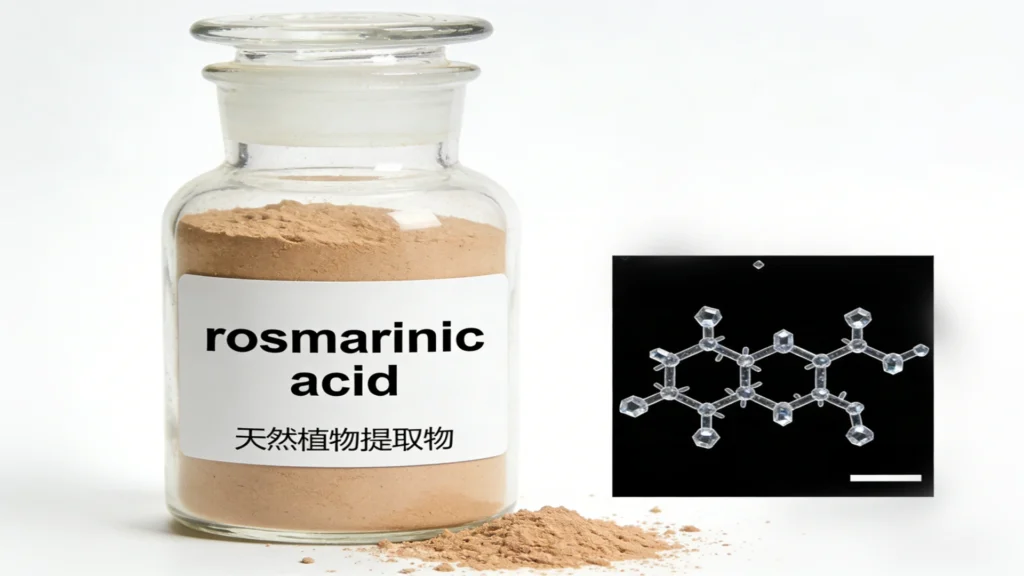
Rosmarinic Acid is the core active ingredient extracted from the Labiatae rosemary plant. As a water-soluble polyphenolic compound, it is the key substance with the most prominent health value in rosemary extract.
With its unique molecular structure, rosmarinic acid has strong and mild biological activity. It can provide natural health protection for various animals without adding artificial additives or relying on complex extraction complexes.
It has a wide range of applications. Whether it is family companion animals such as dogs and cats, or economic livestock and poultry such as broilers, pigs, and beef cattle, all can obtain comprehensive health protection with the natural characteristics of rosmarinic acid.
As a new benchmark in the field of natural antioxidants, the core value of rosmarinic acid is far more than antioxidant. Its five core efficacies can fully protect animal health. The following will detail these five core efficacies, helping every breeder clearly grasp their value and role and use them scientifically to protect animal health.
Core Efficacy 1: Strong Antioxidant Capacity, Resisting Oxidative Stress and Delaying Cellular Aging
As a new benchmark for natural antioxidants, the most prominent advantage of rosmarinic acid is its antioxidant capacity, far exceeding that of ordinary antioxidants, which not only underpins its ability to protect animal health but also distinguishes it from other natural ingredients.
Authoritative studies have confirmed that the antioxidant effect of rosmarinic acid is not only far superior to common natural antioxidants such as vitamin E and tea polyphenols, but also 2-4 times that of synthetic antioxidants BHA and BHT, with the advantages of long-lasting antioxidant effect and no residue.
Its molecule is rich in multiple phenolic hydroxyl groups, and this special structure enables it to quickly capture and scavenge harmful free radicals such as superoxide anions and hydroxyl radicals in animals, blocking the oxidative chain reaction from the source and reducing oxidative damage.
Oxidative stress is the main cause of animal cellular aging and organ function decline, and rosmarinic acid can effectively resist this damage, delay the process of cellular aging, and maintain stable organ function.
For elderly dogs and cats, it can reduce the risk of organ function decline, such as the heart and kidneys, caused by oxidative damage, and extend the healthy life of animals; for animals kept in cages for a long time and lacking exercise, it can help maintain the balance of free radical metabolism in the body and reduce sub-healthy problems.
What’s more, rosmarinic acid is resistant to high temperatures (190-240℃). When added to pet food and livestock and poultry feed, it can not only play an antioxidant role, but also prevent oil oxidation and deterioration, extend the shelf life of food quality, and indirectly ensure animal food safety.
Core Efficacy 2: Broad-Spectrum Antibacterial and Anti-Inflammatory, Protecting Intestinal Health and Enhancing Overall Immunity
Rosmarinic acid has both broad-spectrum antibacterial and mild anti-inflammatory effects, making it a natural “immune guard” in animals. There is no need to worry about residues and side effects of artificial antibacterial and anti-inflammatory products, so it is suitable for long-term daily health care.
In terms of antibacterial effect, rosmarinic acid has a significant inhibitory effect on common pathogenic bacteria in animals, especially on bacteria that are prone to cause intestinal diseases, such as Staphylococcus aureus, Escherichia coli, and Salmonella, with clear effects.
Different from chemical antibacterial agents, rosmarinic acid can inhibit the growth of harmful bacteria without destroying the balance of beneficial flora such as Bifidobacteria in the intestines, and can effectively regulate the structure of intestinal microbial communities to protect intestinal microecological health.
Studies have shown that adding an appropriate amount of rosmarinic acid can significantly increase the abundance of probiotics in animal intestines, reduce the number of harmful bacteria such as sulfate-reducing bacteria, fundamentally reduce common problems such as intestinal infections, diarrhea, and indigestion, and reduce drug dependence.
In terms of anti-inflammation, rosmarinic acid can inhibit the synthesis and release of inflammatory factors such as prostaglandins and leukotrienes in the body, effectively alleviating acute and chronic inflammatory reactions throughout the body, and relieving discomfort caused by inflammation.
For dogs and cats, it can relieve discomfort such as arthritis, skin inflammation, and gastrointestinal mucosal inflammation, and improve the quality of animal life; for livestock and poultry, it can reduce the incidence of respiratory and gastrointestinal inflammation, and reduce problems such as slow growth and decreased immunity caused by inflammation.
Long-term use of rosmarinic acid will not produce drug resistance, making it a natural antibacterial and anti-inflammatory ingredient that is both safe and effective and suitable for the daily health care of various animals.
Core Efficacy 3: Regulating Digestive Function, Improving Nutrient Absorption and Appetite
Animal health is inseparable from good digestive function. Rosmarinic acid has a mild and long-lasting regulating effect on the digestive system, no gastrointestinal irritation, and can protect gastrointestinal health in many aspects, and improve nutrient absorption efficiency.
On the one hand, rosmarinic acid can gently stimulate the secretion of gastric juice and bile, help animals better decompose nutrients such as fat and protein in food, improve feed utilization rate, and reduce nutrient waste.
This is particularly important for young animals and weak animals, which can help them quickly supplement nutrients, promote growth and development, enhance physical fitness, and reduce various health problems caused by weakness.
On the other hand, its anti-inflammatory properties can soothe gastrointestinal mucosal inflammation, effectively relieve common intestinal discomfort such as gastrointestinal spasm, flatulence, and constipation, improve fecal quality, reduce intestinal toxin accumulation, and build a solid line of defense for intestinal health.
Many breeders will encounter the problem of a pet’s loss of appetite, especially for dogs and cats in the post-operative recovery period, old age, or stress. Rosmarinic acid can be used as a natural appetite enhancer, which is mild and non-irritating.
Its mild herbal aroma can effectively improve the palatability of pet food, solve the problem of pet pickiness and refusal to eat, and let animals take the initiative to eat and supplement nutrients.
In addition, rosmarinic acid can also regulate animal nitrogen and sulfur metabolism, reduce the emission of malodorous gases such as ammonia and hydrogen sulfide in feces, with a maximum reduction of more than 50%, which not only improves the breeding environment but also further protects intestinal health, forming a double protection.
Core Efficacy 4: Neuroprotection + Emotional Relief, Improving Cognition and Alleviating Stress Response
The neuroprotective effect of rosmarinic acid is a major feature that distinguishes it from other natural ingredients. It can provide effective protection for animal neurological health without matching other ingredients, especially suitable for elderly pets and stress-sensitive animals.
Studies have confirmed that rosmarinic acid can smoothly cross the blood-brain barrier, protect neurons from free radicals and oxidative damage, promote the normal secretion of neurotransmitters, delay age-related cognitive decline, and protect brain health.
For elderly dogs and cats, this effect can effectively improve symptoms such as memory loss, slow response, and cognitive impairment similar to “Alzheimer’s disease”, help maintain brain vitality, improve the quality of life in old age, and make elderly animals more energetic.
At the same time, rosmarinic acid has a natural sedative and soothing effect, which can regulate the secretion level of stress hormones in animals, relieve abnormal emotions such as anxiety, depression, and irritability, without relying on sedative drugs.
For pets kept in cages for a long time, with variable environments and easily frightened (such as pet dogs and ornamental cats), as well as livestock and poultry during transportation and group transfer, supplementing rosmarinic acid can effectively shorten the anxiety time and extend the sleep time.
It can also reduce abnormal behaviors caused by stress, such as barking, gnawing, refusing to eat, and restlessness. Through the dual effect of “neuroprotection + emotional relief”, it can make animals maintain a stable and healthy physical and mental state, and reduce health risks caused by stress.
Core Efficacy 5: Nourishing Skin and Fur, Strengthening Skin Barrier, and Mildly Repelling Parasites
Rosmarinic acid has a significant nourishing effect on animal skin and fur. It is a natural and non-irritating skin care ingredient, no need to add preservatives, suitable for animals of all skin types, including skin-sensitive animals.
With its strong antioxidant and anti-inflammatory properties, rosmarinic acid can repair the damaged skin barrier, enhance skin resistance, effectively relieve common skin problems such as itching, redness, dandruff, and allergies, and improve skin health.
At the same time, it can accelerate the healing speed of wounds and mosquito bites, reduce the risk of skin infection, especially suitable for skin-sensitive, young, or elderly animals, avoiding irritating damage caused by chemical skin care products.
In terms of fur care, rosmarinic acid can promote skin blood circulation, provide sufficient nutrition for hair follicles, enhance hair follicle vitality, reduce hair loss and breakage, and improve hair condition.
Long-term supplementation of rosmarinic acid can make animal fur thicker, softer, and shinier, improve the problem of dry, rough, and split hair, which not only makes pets more beautiful but also improves the quality and economic value of livestock and poultry fur.
In addition, rosmarinic acid, together with its own volatile components, has a mild parasite repellent effect, which can play an auxiliary parasite repellent role without matching other parasite repellent components.
Supplementing rosmarinic acid in the daily diet can reduce the attachment of external parasites such as fleas, lice, and mites to a certain extent, reduce the risk of infection, and reduce the use of anthelmintic drugs.
Compared with chemical anthelmintic products, rosmarinic acid is non-toxic and non-irritating. Long-term use will not cause harm to animal bodies, making it a safe, natural, and suitable auxiliary anthelmintic ingredient for long-term daily protection.
Safety and Application Instructions
Natural safety is one of the core advantages of rosmarinic acid. Under reasonable dosage, it has no toxic effects and side effects on most animals, so there is no need to worry about the use risk, and it is suitable for the daily health care needs of various animals.
The European Food Safety Authority (EFSA) has clearly evaluated that the safe addition amount of rosmarinic acid in dog food is 300mg/kg, and 50mg/kg in cat food. Strictly following this dosage can fully ensure animal health and avoid metabolic burden caused by excessive dosage.
Its daily application scenarios are flexible and convenient. It is mainly used as a natural additive mixed into pet staple food, snacks, and livestock and poultry feed, and can also be made into external products such as skin care sprays and body washes.
It should be noted that cats have a special metabolic system, and their tolerance to rosmarinic acid is lower than that of dogs. The dosage should be strictly controlled, and high-concentration rosmarinic acid and related essential oils should be avoided from direct contact with cat skin to prevent irritation.
In addition, pregnant and lactating animals have special physical conditions and weak metabolic capacity. It is recommended to use rosmarinic acid under the guidance of a veterinarian to ensure safe use without hidden dangers and protect the health of female animals and young animals.
In summary, as a new benchmark for natural antioxidants, rosmarinic acid comprehensively protects animal health with its five core efficacies, balancing safety and efficiency, and is a natural and high-quality animal health care ingredient.
As a new benchmark for natural antioxidants, it can replace some artificial additives, reduce the harm of chemical substances to animal bodies, and at the same time specifically solve common animal health problems, exerting multiple effects without complex matching, highlighting the core advantages of being natural, efficient, and safe.
Whether it is family pet breeding or large-scale livestock and poultry breeding, rosmarinic acid, as a new benchmark for natural antioxidants, is a trustworthy natural health assistant, helping various animals have a healthier and more comfortable living state.