
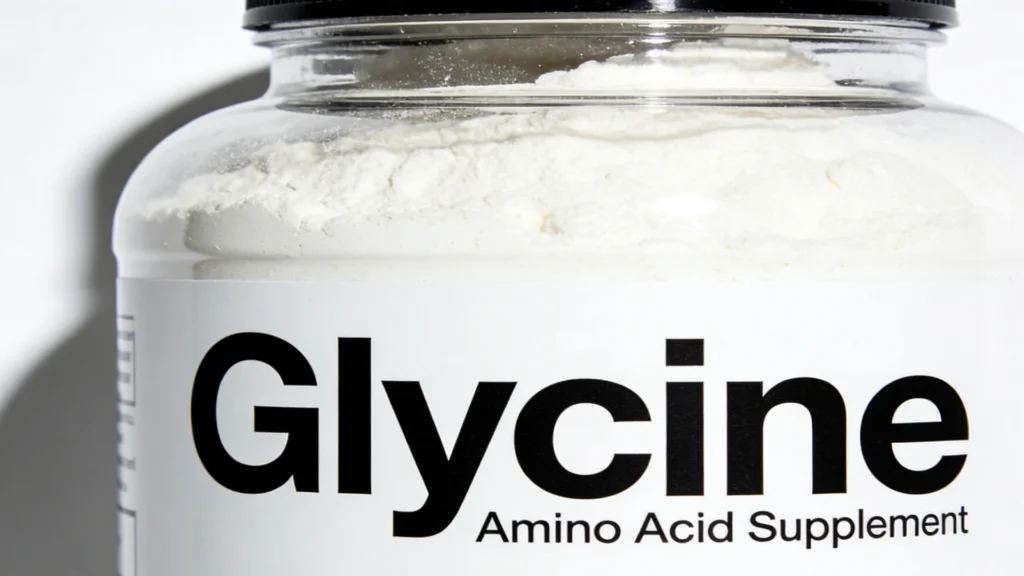
Opening Question: What is glycine? Unlock the Mystery of This Amino Acid
When exploring the essential nutrients of the human body, a common question always arises: What is glycine? This seemingly simple question hides a substance crucial to human health. It is not only the basic unit of life but also a “versatile player” that maintains the normal operation of the body. To truly understand what glycine is, we need to conduct a comprehensive and in-depth analysis from multiple dimensions, such as its nature, characteristics, physiological functions, and daily acquisition methods, uncovering the mystery of this special amino acid.
Core Definition: What is glycine? Clarify Its Nature and Dual Identity
First, clearly answer what glycine is: Glycine (abbreviated as Gly or G), also known as aminoacetic acid, is the simplest stable amino acid in nature and one of the 20 basic amino acids that make up human proteins. Its chemical formula is C₂H₅NO₂, with a relative molecular mass of 75.07, making it the smallest amino acid in terms of molecular weight. Unlike other amino acids, glycine has only one hydrogen atom as its side chain. This unique structure endows it with many special chemical and physiological properties, and also determines its multiple roles in the human body. When many people ask what is glycine, they often overlook its “dual identity”—it is both a non-essential amino acid (can be synthesized by the human body itself) and a conditionally essential amino acid. When the human body is in a state of stress, injury, or illness, the glycine synthesized by itself cannot meet the demand, so it needs to be obtained additionally through diet or supplements.
Characteristic Analysis: What is glycine? Understand Its Unique Chemical and Physiological Properties
To deeply explore what glycine is, we must mention its core characteristics. Glycine is a white crystalline solid, odorless, non-toxic, with a slight sweet taste, which is why it is named “glycine”. It is easily soluble in water, slightly soluble in pyridine, and almost insoluble in ethanol and ether. It has stable chemical properties and can be stored at room temperature for 2-3 years. Due to its extremely simple side chain, glycine is the only protein amino acid without optical activity. It can adapt to both hydrophilic and hydrophobic environments, which allows it to play a unique role in the formation of the secondary structure of proteins—it can disrupt the formation of α-helices, tend to form random coils, and is also the most abundant amino acid in the triple helix structure of collagen, accounting for one-third of the total amino acids in collagen. These characteristics are the key to understanding what glycine is and the basis for it to assume multiple physiological functions in the human body.
Physiological Value: What is glycine? Reveal Its Core Roles in the Human Body
When we further ask about the core value of what glycine is, we will find that it is everywhere in human physiological activities. As the basic unit of protein synthesis, glycine is involved in the synthesis of all human proteins, from muscles to skin to internal organs. Especially in the synthesis of collagen, glycine is an indispensable core component, which is crucial for maintaining skin elasticity, bone health, and joint function. In addition, glycine is also an inhibitory neurotransmitter, mainly acting on the brain and spinal cord. It can regulate the excitability of the central nervous system, help calm emotions, relieve anxiety, and even participate in the processing of motor and sensory information to ensure the normal operation of vision, hearing, and motor functions; if the release of glycine in the spinal cord is disturbed, it may also lead to uncontrolled muscle contraction and cause spastic paralysis.
Metabolism and Detoxification: What is glycine? Unlock Its Hidden Health Benefits
Another important significance of what is glycine is reflected in its support for human metabolism and detoxification functions. Glycine is a glucogenic amino acid that can be converted into glucose in the liver, providing energy for the brain and body, and helping to maintain stable blood sugar levels, avoiding the impact of blood sugar fluctuations on brain function. At the same time, it can regulate the secretion of bile acids from the gallbladder, help break down ingested fats, and promote the digestion and absorption of lipids. In terms of detoxification, glycine is an important substance for liver conjugation detoxification. It can combine with toxic substances in the body (such as benzene ring-containing compounds like benzoic acid) to form non-toxic, water-soluble substances (such as hippuric acid), which are excreted through urine, reducing the detoxification burden on the liver. In addition, glycine is a component of the endogenous antioxidant reduced glutathione, which can enhance the body’s antioxidant capacity, reduce cell damage caused by free radicals, and delay aging.
Acquisition Methods: What is glycine? How to Supplement Glycine Through Diet
After understanding what glycine is, many people will care about how to obtain this important amino acid. The human body can synthesize a small amount of glycine through serine conversion, glyoxylate transamination, and other pathways, but it usually cannot meet daily needs (adults need 3-5 grams per day, while the human body can only synthesize 2-3 grams by itself), so it needs to be supplemented through diet. The main food sources of glycine are divided into animal-derived and plant-derived. Among them, animal-derived foods have a higher content, such as gelatin powder (19.1 grams of glycine per 100 grams), pork skin, chicken skin, bone broth, salmon, red meat, etc. The connective tissues in these foods will decompose into a lot of glycine during slow cooking; among plant-derived foods, kidney beans, legumes, brewer’s yeast, oats, etc., also contain a certain amount of glycine, which can provide partial supplementation for vegetarians.
Diversified Applications: What is glycine? Expand Its Cross-Border Value
In addition to physiological functions and acquisition methods, the application value of what glycine is also worthy of attention. In the field of daily chemical industry, glycine is used to produce high-end detergents, surfactants and hair dyes, with moisturizing and thickening effects; in the food industry, it can be used as a flavoring agent, deodorant and preservative to improve food flavor and extend shelf life; in the medical field, it is not only a drug solvent and buffer but also an intermediate for many drugs, which can be used to assist in the treatment of hyperacidity, gastric ulcers and other diseases; in the agricultural field, glycine is an important raw material for the production of herbicide glyphosate and plant growth regulator glyphosine. In addition, scientists have also found glycine on comets, which provides an important clue for exploring the origin of life.
Summary: What is glycine? Understand the Health Significance of Glycine
In summary, answering what glycine is is not only defining an amino acid but also recognizing a core substance that supports human health. It has a simple structure but powerful functions. It is not only the basic building block of life but also a “versatile player” that regulates body metabolism, protects organ functions, and participates in detoxification and antioxidant functions. From protein synthesis to neural regulation, from energy supply to detoxification and protection, glycine penetrates every link of human physiological activities and is closely related to our health. Understanding what is glycine, mastering its acquisition methods and roles, can help us better regulate our bodies, and through scientific dietary supplements, let this simple but important amino acid escort our health.