
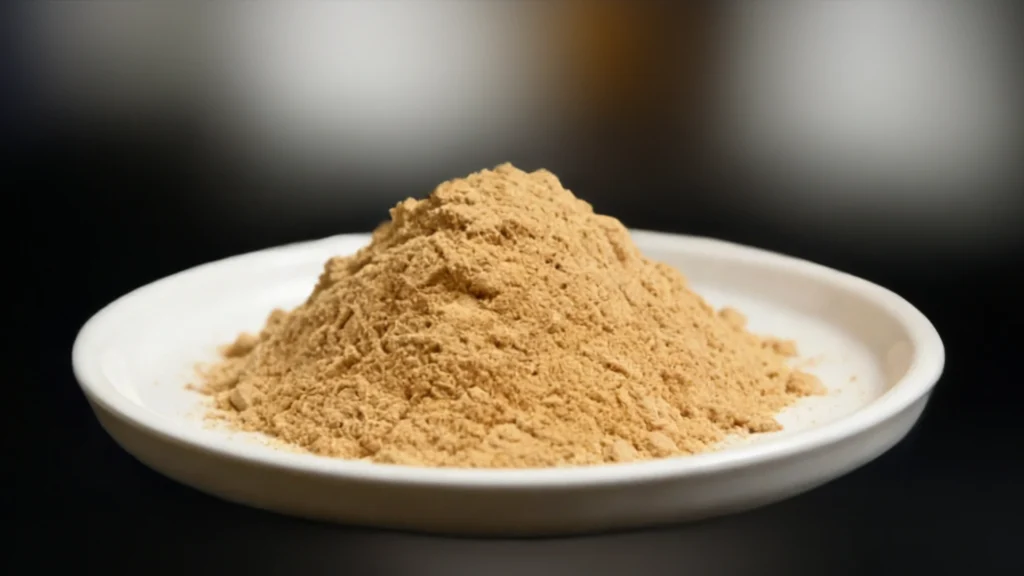
I. Botanical Characteristics and Raw Material Sources of Yucca
Yucca schidigera is a perennial evergreen shrub in the Liliaceae family, native to North American arid deserts, thriving in high temperatures (>40°C) and low rainfall (<200mm annually). It grows 1-3 meters tall with sword-shaped leaves and white flowers. Its rhizomes are rich in active ingredients for extract production. Due to scarce wild resources, cultivation is primary in California, Arizona, and Mexico’s Baja California Peninsula, with over 100,000 hectares cultivated and high rhizome yields.
II. Core Components: Molecular Structure and Mechanism of Action
Yucca extract contains steroidal saponins (40%-60%), polyphenols (15%-25%), polysaccharides (10%-20%), and minor alkaloids, amino acids, and minerals.
1. Steroidal Saponins: Core for surface activity and gas-binding. Yucca saponin A has strong surface activity; saponin B binds ammonia effectively. Mechanism: Reduce water surface tension, enhancing nutrient absorption; bind ammonia and hydrogen sulfide via hydrogen bonding.
2. Polyphenols: Natural antioxidants and anti-inflammatories, including resveratrol, chlorogenic acid, quercetin, and caffeic acid. Mechanism: Scavenges free radicals with high ORAC values; anti-inflammation via inhibiting COX-2 and LOX, and downregulating NF-κB.
3. Polysaccharides: Heteropolysaccharides composed of glucose, galactose, arabinose, and rhamnose, with molecular weight 10-100 kDa (20-50 kDa most active). Mechanism: Activate mucosal immunity by binding TLR4 and increasing sIgA; regulate flora balance by promoting beneficial bacteria and inhibiting harmful bacteria.
| Core Component | Content Range | Key Subtypes/Composition | Core Functions |
| Steroidal Saponins | 40%-60% | Yucca saponin A, B, C (spirostanol skeleton + 1-3 sugar chains) | Reduce surface tension, bind harmful gases, synergistic dispersion of other components |
| Polyphenols | 15%-25% | Resveratrol (30% of total), chlorogenic acid, quercetin, caffeic acid | Antioxidation (high ORAC value), anti-inflammation (inhibit inflammatory mediators) |
| Polysaccharides | 10%-20% | Glucose (60%), galactose (25%), arabinose (10%), rhamnose (5%) | Activate mucosal immunity, regulate intestinal flora balance |
III. Application Fields: Full-Scale Expansion Across Industries
1. Livestock and Poultry Breeding: Yucca extract is a natural additive replacing antibiotics, used in pigs, chickens, cattle, and sheep for environmental improvement and antibiotic-free breeding.
(1) Improving Breeding Environment: Precisely Reducing Harmful Gas Concentrations
| Breeding Type | Addition Dosage | Ammonia Concentration Change | Hydrogen Sulfide Concentration Change | Incidence/Mortality Change |
| Finishing Pigs | 0.2% | 18mg/m³ → 8mg/m³ (55.6% decrease) | 3.2mg/m³ → 1.1mg/m³ (65.6% decrease) | Respiratory disease incidence: 12% → 3% (75% reduction) |
| Layers | 0.15% | Stabilized at 5-7mg/m³ (national standard ≤15mg/m³) | – | Mortality rate: 4% → 1.5% (62.5% reduction) |
Mechanism analysis: The binding of saponins to ammonia is dose-dependent (higher addition leads to higher binding rate) and pH-dependent (binding rate reaches over 90% at intestinal pH 6.5-7.0).
(2) Promoting Nutrient Absorption: Enhancing Production Performance
| Breeding Type | Addition Dosage | Key Production Performance Indicators |
| Broilers | 0.2% | Feed conversion ratio (FCR): 1.85 → 1.62 (12.4% improvement); Average daily gain (ADG): 52g → 58g (11.5% increase); Intestinal villus height +30%, crypt depth -25% |
| Dairy Cows | 0.3% | Milk yield: 32kg/day → 35kg/day (9.4% increase); Milk fat percentage: 3.8% → 4.1% (7.9% increase); Somatic cell count (SCC): 250,000/mL → 180,000/mL (28% reduction) |
| Piglets (21 days old) | 0.1% | Diarrhea rate: 15% → 5% (66.7% reduction); Serum total protein (TP) +18%, albumin (ALB) +22% |
(3) Replacing Antibiotics: Core Solution for Antibiotic-Free Breeding
EU case: A Dutch farm used yucca extract to replace antibiotics (e.g., oxytetracycline) in 2021. Pig survival rate increased from 92% to 96% (4% increase), feed costs decreased by 8%, and pork drug residues (e.g., oxytetracycline) dropped from 0.12mg/kg to undetectable levels (complying with EU standards).
Chinese case: A Shandong broiler farm adopted a compound additive of “yucca extract + probiotics” in 2022, reducing antibiotic use by 70%. Broiler survival rate increased from 93% to 97% (4% increase), and the qualification rate of products exported to Japan reached 100%.
Scientific basis: The multi-targeted effects of yucca extract (inhibiting harmful bacteria, enhancing immunity, improving the environment) can replace the “single bactericidal” effect of antibiotics without the risk of drug resistance (2023 review in Veterinary Pharmacology and Therapeutics).
2. Daily Chemical and Pharmaceutical Fields: Innovative Breakthroughs from Natural Raw Materials to Functional Products
The mildness and versatility of yucca extract have made it a “natural star raw material” in daily chemicals and pharmaceuticals, widely used in shampoos, skincare products, topical gels, and dietary supplements.
(1) Daily Chemical Products: Dual Roles as Natural Surfactants and Antioxidants
| Product Type | Added Components (Dosage) | Key Effects |
| Shampoos | 0.5% yucca saponin + 0.3% yucca polyphenols | Oil removal rate: 90% (equivalent to sodium lauryl sulfate); Skin irritation reduced by 60%; Hair split ends reduced by 30%, shine enhanced by 25% |
| Skincare Creams | 0.2% resveratrol + 0.1% chlorogenic acid | After 8 weeks of use: Wrinkle depth reduced by 20% (3D skin imaging); Skin elasticity increased by 15% (Cutometer test); Antioxidant capacity improved by 40% |
| Body Washes | 0.4% yucca saponin + 0.2% yucca polysaccharides | Foam height (50mL solution): 180mm (equivalent to synthetic surfactants); Easy to rinse (no residue); Skin stratum corneum moisture content +10% |
(2) Pharmaceutical Products: Clinical Applications in Anti-Inflammation, Analgesia, and Immune Regulation
| Product Type | Added Components (Dosage) | Clinical Effects |
| Topical Gels (FDA-approved) | 5% yucca extract | For muscle pain/arthritis: VAS score 7.2 → 3.1 (57% decrease) after 7 days of twice-daily use; Effective rate 85% (vs. 30% placebo); COX-2 activity inhibited by 50%, PGE₂ levels reduced by 40% |
| Dietary Supplements | 100mg yucca saponin + 50mg yucca polyphenols per capsule | For subhealthy individuals: Colds reduced from 2 times/month to 1 time every 2 months (66.7% reduction); Serum IgG +30%, NK cell activity +25% |
| Potential Drugs | Modified yucca saponins (mannose-substituted sugar chains) | In vitro experiments: Tumor angiogenesis inhibition rate 70%; Animal experiments pending |
3. Other Fields: Cross-Border Applications in Environmental Protection and the Food Industry
Leveraging its complexation and antioxidant properties, yucca extract has demonstrated unique value in environmental protection and the food industry.
(1) Environmental Protection: Natural Solutions for Wastewater Treatment and Soil Improvement
Wastewater treatment: Adding 0.1% yucca extract to wastewater containing Pb²⁺ (100mg/L), stirring for 30 minutes, and standing for 2 hours achieves a Pb²⁺ removal rate of 92% (higher than the traditional chemical precipitation method’s 85%). The mechanism involves sugar chains of saponins forming stable Pb-saponin complexes to remove heavy metal ions (2023 study in Acta Scientiae Circumstantiae).
Soil improvement: Applying 50kg/mu of yucca extract to saline-alkali soil (0.8% salt content) for 3 consecutive years reduced soil salt content to 0.3% (62.5% decrease), increased soil porosity from 40% to 55% (37.5% improvement), and raised cotton yield from 300kg/mu to 400kg/mu (33.3% increase) (Xinjiang farm case).
(2) Food Industry: Natural Preservatives and Functional Additives
| Food Category | Addition Dosage | Key Effects |
| Bacon | 0.05% yucca polyphenols | Shelf life: 6 months → 9 months (50% extension); Sodium nitrite content: 30mg/kg → 5mg/kg (83.3% reduction, complying with GB 2760); Stable color (reduced oxidative discoloration) |
| Bread | 0.1% yucca polysaccharides | Fermentation time: 120 minutes → 100 minutes (16.7% reduction); Volume: 450mL → 520mL (15.6% increase); Hardness (3-day storage): 250g → 180g (28% reduction, delaying aging) |
| Apple Juice | 0.08% yucca saponins | Stratification rate: 15% → 3% (80% reduction); Stability improved by 5 times; Sucrose addition reduced by 10% (lowering calories, saponin sweetness = 0.2× sucrose) |
Application Distribution of Yucca Extract (Chart Description)
| Application Field | Proportion |
| Livestock and Poultry Breeding | 40% |
| Daily Chemicals | 25% |
| Pharmaceuticals | 15% |
| Environmental Protection | 10% |
| Food Industry | 10% |
IV. Extraction Processes: From Traditional to Modern Optimization
The production process of yucca extract directly impacts the retention rate and purity of active ingredients. Current mainstream processes include water extraction-alcohol precipitation, ultrasonic-assisted extraction, and supercritical CO₂ extraction. Their characteristics are compared below:
| Extraction Process | Process Flow | Purity | Extraction Rate | Advantages | Disadvantages |
| Water Extraction-Alcohol Precipitation (Traditional) | Dried rhizomes → crushing (20-40 mesh) → water extraction (80℃, 2h, solid-liquid ratio 1:10) → filtration → alcohol precipitation (70% ethanol, 4℃, 12h) → centrifugation → spray drying (150℃) → finished product | 80%-85% | 30%-40% | Low cost, simple equipment, suitable for large-scale production | Time-consuming (>12h), low extraction rate, polysaccharide degradation (high-temperature-induced glycosidic bond breakage) |
| Ultrasonic-Assisted Extraction (Modern) | Dried rhizomes → crushing (40-60 mesh) → ultrasonic extraction (200W, 60℃, 30min, solid-liquid ratio 1:15) → filtration → alcohol precipitation → centrifugation → drying → finished product | 85%-90% | 50%-60% | High extraction rate, short time (75% reduction), high polysaccharide retention rate (>90%) | High equipment cost (2-3× traditional), high energy consumption (200W/hour) |
| Supercritical CO₂ Extraction (High-End) | Dried rhizomes → crushing (60-80 mesh) → supercritical CO₂ extraction (30MPa, 40℃, 2h, entrainer: ethanol) → separation → drying → finished product | 90%-95% | – | High purity (active ingredient retention >95%), no solvent residue, suitable for heat-sensitive components (e.g., polyphenols) | Extremely high cost (10× traditional), low output (suitable for small-batch high-end products) |
Process Optimization Directions
Composite process: Combining “ultrasonic-assisted extraction + supercritical CO₂ extraction” balances extraction rate (60%) and purity (90%), shortening the time to less than 2 hours (2023 study in Separation and Purification Technology).
Enzyme-assisted extraction: Adding cellulase (0.5%) and pectinase (0.3%) during water extraction breaks down plant cell walls (cellulose and pectin), increasing the extraction rate by 20%-30% (2022 study in Science and Technology of Food Industry).
V. Market Prospects: From 1 Billion to 5 Billion US Dollars in Growth Potential
1. Market Size and Growth Trend
According to a 2023 report by Grand View Research, the global yucca extract market size reached 1.05 billion US dollars, with a compound annual growth rate (CAGR) of 15.2% from 2023 to 2030. It is expected to exceed 3 billion US dollars by 2030, or 5 billion US dollars when considering the growth of emerging market demand.
2. Regional Distribution
| Region | Market Share | Growth Driver |
| North America | 40% | Demand for antibiotic-free breeding and natural daily chemical products |
| Europe | 30% | Same as above; policy support for natural additives |
| China | 15% | Large-scale animal husbandry; consumer preference for green products (demand growth rate >20%) |
| India | 5% | Same as China |
| Others | 10% | Emerging markets in Southeast Asia, the Middle East, etc. |
3. Competitive Landscape
| Enterprise Type | Key Enterprises | Market Share | Product Characteristics |
| U.S. Enterprises | MGP Ingredients; Yucca Products Company | 25%; 15% | High purity (>95%); supplied to North American and European feed/daily chemical enterprises |
| Chinese Enterprises | Zhejiang biotechnology company; Shandong natural extract company | 5%; 3% | Medium-low purity (80%-90%); mainly for domestic animal husbandry and food industry; exporting to Southeast Asia/Middle East |
4. Future Trends
Technological innovation: Enhancing biological activity through molecular modification (e.g., sulfation modification of saponin sugar chains to improve anti-inflammatory activity) and compound compatibility (e.g., yucca extract + curcuma extract + green tea extract to enhance antioxidant effects).
Application expansion: Expanding to the agricultural field (biopesticides to inhibit pest growth), energy field (biofuels produced by converting polysaccharides to ethanol), and cosmetics field (high-end anti-aging products such as yucca polyphenol serums).
Policy support: The EU’s 2024 ban on antibiotics in feed and China’s 2025 goal of full-chain antibiotic-free livestock and poultry breeding will further drive market demand.
Conclusion
As a natural multifunctional plant essence, yucca extract has expanded its application scope from livestock and poultry breeding to daily chemicals, pharmaceuticals, environmental protection, and the food industry.
With continuous technological innovation and growing market demand, its value will be further highlighted. In the future, yucca extract is expected to become a core natural resource driving sustainable development, providing greener, healthier, and more environmentally friendly product solutions for humanity.