
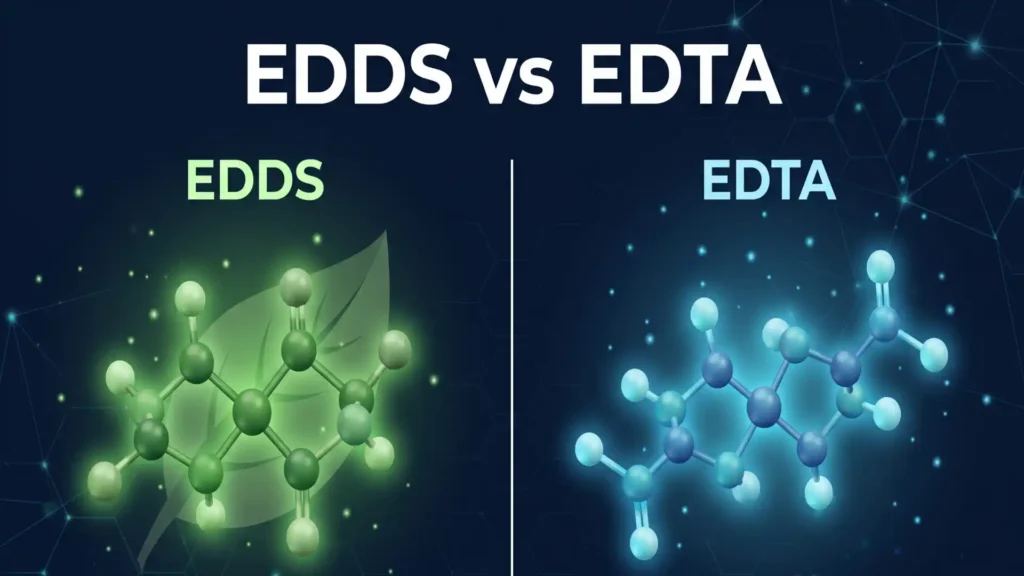
If you are looking for an EDTA replacement for your formulation, or simply trying to figure out how EDDS and EDTA actually differ and which one fits your application, this article provides a systematic comparison across six dimensions (molecular structure, chelation performance, biodegradability, regulatory status, application scenarios, and sourcing criteria) to help you make an evidence-based selection decision.
I. Chelating Agents: What They Are and Why They Matter
Metal ions are everywhere in aqueous systems, including calcium, magnesium, iron, copper, manganese, and zinc, and they are the formulator’s invisible adversaries:
• Calcium and magnesium ions (water hardness) deactivate surfactants and form soap scum;
• Transition metals such as iron, manganese, and copper catalyze the decomposition of peroxide and hypochlorite bleaches, causing bleach failure, fabric damage, and product discoloration;
• Trace heavy metals oxidize oils and fats to produce rancid odors and destabilize fragrances and active ingredients.
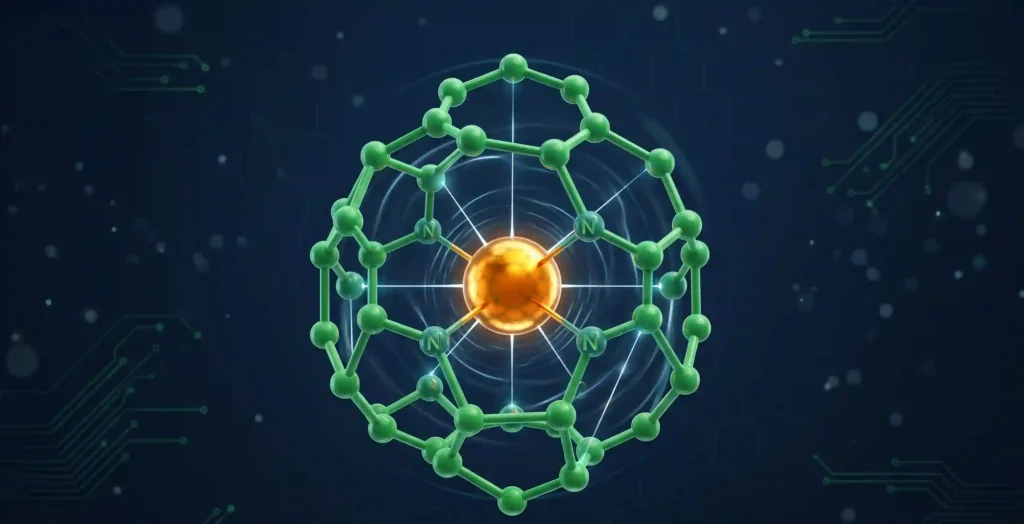
A chelating agent uses multiple nitrogen and oxygen donor atoms in its molecule to “wrap around” a metal ion, forming stable chelate rings that lock the ion inside a complex and strip it of its reactivity. The core performance metric of any chelant is its thermodynamic stability constant (log K): the higher the value, the stronger its grip on a given metal ion.
EDTA and EDDS belong to the same structural family: an ethylenediamine backbone carrying carboxylic acid “claws”. The difference lies in the number and arrangement of those claws, and that small difference sends the two molecules down very different environmental paths.
II. EDTA: The Industry’s Default Answer for Decades
EDTA (ethylenediaminetetraacetic acid), CAS No. 60-00-4, molecular formula C10H16N2O8, was first synthesized in the 1930s and remains one of the most produced and most used synthetic chelating agents in the world, with annual global output measured in the tens of thousands of tonnes.
Its strengths are hard to beat:
• Strong, broad-spectrum chelation: high stability constants with nearly all polyvalent metal ions, from calcium and magnesium to iron and copper, making it one of the most versatile chelants available;
• Wide pH operating range: effective from roughly pH 2 to 11;
• Mature and inexpensive: nearly a century of industrial history, a well-established supply chain, and low cost;
• Extensively validated: used almost everywhere, from industrial cleaning, textile and dyeing, pulp bleaching, and water treatment to food, pharmaceuticals, and cosmetics.
But EDTA has one weakness that has drawn criticism for decades: it is extremely persistent in the environment. EDTA is highly persistent in natural waters and typically falls far short of the pass threshold for “readily biodegradable” classification in standard 28-day ready-biodegradability tests (OECD 301 series). Notably, EDTA degradation intermediates in the environment (such as ethylenediaminetriacetic acid) can further cyclize into diketopiperazine-type compounds, which accumulate as persistent pollutants. Because EDTA continues to complex metal ions in water bodies, environmental scientists have been concerned about its long-term effects on metal mobility and nutrient cycling in aquatic ecosystems since the 1980s.
III. EDDS: The Green Chelating Agent Built to Replace EDTA
EDDS (ethylenediamine-N, N’-disuccinic acid), free-acid CAS No. 20846-91-7, most commonly supplied as the trisodium salt ([S,S]-EDDS-3Na, CAS No. 178949-82-1), has the same molecular formula as EDTA (C10H16N2O8), and the two are structural isomers, yet their environmental behavior could hardly differ more.
3.1 The Critical Detail: The S,S Stereoisomer
The EDDS molecule has two chiral centers, giving three stereoisomers: [S,S], [R,R], and the achiral meso form [R,S]. Only [S,S]-EDDS offers excellent biodegradability; the [R,R] and mixed forms degrade markedly less well (Schowanek et al., 1997). This is the single most important specification to watch when purchasing EDDS: the [S,S] isomer content of a commercial product directly determines how “green” it really is. Today’s high-quality EDDS is produced by microbial fermentation (using ethylenediamine plus fumaric or maleic acid as substrates, with the microorganism synthesizing [S,S]-EDDS stereospecifically), whereas the older chemical route (ethylenediamine + maleic/fumaric acid) yields a mixture of isomers and greatly diminishes the environmental value of the product.
3.2 Where EDDS Fits
EDDS has been extensively studied as a “drop-in candidate” to replace EDTA: the molecules are structurally related and their coordination modes are similar, so many formulations can be evaluated for substitution on a near 1:1 basis. EDDS is already used at scale in European and American markets in automatic dishwashing detergents, laundry products, and personal care formulations, and it has a substantial research and application track record in agricultural micronutrient fertilizers and contaminated-soil remediation.
IV. EDDS vs EDTA: The Core Comparison Table
| Dimension | EDTA | [S,S]-EDDS |
| Chemical name | Ethylenediaminetetraacetic acid | Ethylenediamine-N,N’-disuccinic acid |
| CAS number | 60-00-4 (free acid) | 20846-91-7 (free acid); 178949-82-1 (trisodium salt) |
| Molecular formula | C10H16N2O8 | C10H16N2O8 (structural isomer) |
| Chelation strength (log K, Fe3+) | ≈ 25.1 | ≈ 20.6 (still a strong chelant) |
| Transition metals (Cu2+, Fe3+) | Strong | Strong, comparable to EDTA |
| Hardness ions (Ca2+, Mg2+) | Strong | Clearly weaker than EDTA |
| pH operating range | approx. 2–11 | approx. 3–9 |
| Biodegradability (OECD 301 series) | Usually fails “readily biodegradable” criteria | [S,S] isomer passes as readily biodegradable |
| Stereoisomer issue | None (achiral) | Only [S,S] degrades; S,S content matters |
| Production route | Mature chemical synthesis | Mainly microbial fermentation (stereospecific) |
| Price | Low | Currently higher than EDTA |
| Ecolabel / green formulation fit | Limited (many ecolabels set biodegradability thresholds for chelants) | Compatible (meets readily biodegradable requirements) |
| Established applications | Nearly all sectors; ~100 years of history | Automatic dishwashing, detergents, personal care, agricultural micronutrients, soil remediation |
V. Key Difference #1: Biodegradability
This is the most fundamental difference between the two, and the driving force behind the whole “EDTA replacement” movement.
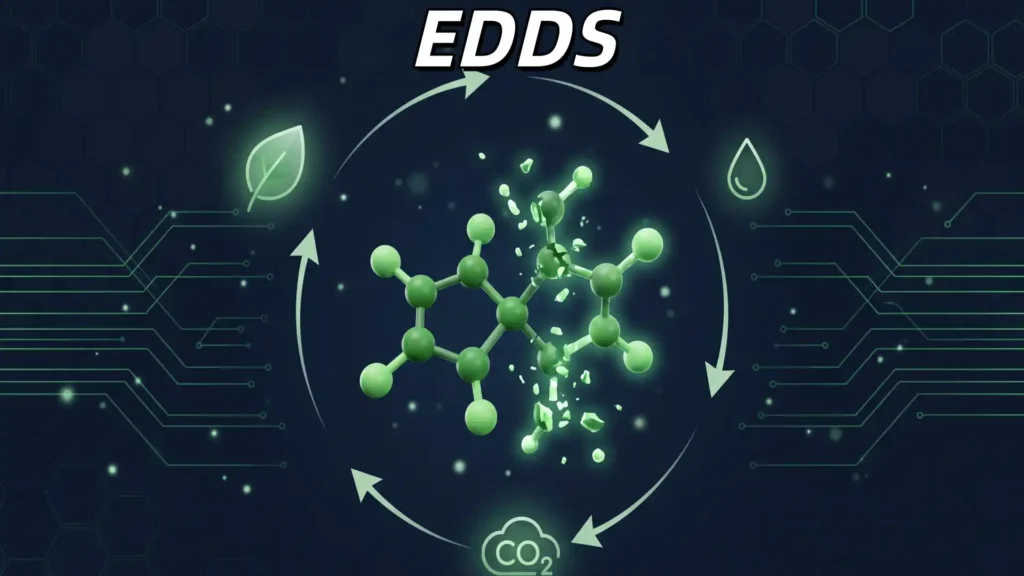
Why does EDDS degrade? The structure of [S,S]-EDDS is recognized by naturally occurring microbial enzymes (EDDS lyase-type enzymes), which cleave its carbon-nitrogen bonds and mineralize the molecule stepwise into carbon dioxide, water, and ammonia. Multiple studies published in leading environmental science journals (including Schowanek et al.’s 1997 comparison of the three stereoisomers) have confirmed that [S,S]-EDDS degrades effectively in soil and aquatic environments and retains good degradability even in heavily polluted soils, while the [R,R] and mixed forms are far more persistent. This underscores a key point: EDDS’s environmental credentials rest entirely on its S,S-isomer content. Claiming “EDDS is biodegradable” without specifying the isomer is simply not accurate.
Why doesn’t EDTA degrade? The complexes EDTA forms with metal ions are extremely stable, and its molecular structure offers few sites that common microbial enzymes can attack efficiently. Under certain conditions (e.g., acclimated bacterial strains, photolysis-assisted processes) EDTA can partially degrade, but in standard OECD 301 ready-biodegradability tests and in real surface waters it falls well short of “readily biodegradable” and is widely regarded as a persistent aquatic pollutant. That is exactly why ecolabels and sustainable procurement policies treat it with suspicion.
What this means for buyers: the biodegradability of a chelating agent is becoming a genuine plus.
VI. Key Difference #2: Chelation Performance and pH Range
Beyond environmental profile, formulators care most about one question: if I switch to EDDS, will performance suffer?
For transition metals: adequate. Taking iron as the benchmark, the stability constant of Fe(III)-EDDS (log K ≈ 20.6) is lower than that of Fe(III)-EDTA (≈ 25.1), but it still sits firmly in the strong-chelation range, strong enough to sequester the “troublemaker” ions (iron, copper, manganese) that catalyze bleach decomposition in most applications. In bleach-containing systems such as automatic dishwashing detergents, extensive formulation research has validated EDDS as a viable EDTA substitute.
For hardness ions: weaker, and that is not necessarily a bad thing. EDDS chelates calcium and magnesium markedly less strongly than EDTA. Two consequences follow:
• Downside: if softening hard water and controlling Ca/Mg scale is your formulation’s primary job, EDDS alone underperforms EDTA, so you will typically need a co-chelant (e.g., MGDA or GLDA) or a higher dosage;
• Upside: EDDS does not “waste” its binding power on the abundant calcium and magnesium; it preferentially captures the low-concentration but high-hazard transition metals (Fe, Cu, Mn). In bleach-stabilization scenarios, this selectivity can translate into higher effective utilization of the chelant.
pH range: slightly narrower. EDTA is effective from about pH 2–11; EDDS from about pH 3–9. For the vast majority of detergents (mildly alkaline to alkaline), cosmetics (near neutral), and agricultural applications, this range is entirely sufficient, but for strongly alkaline industrial cleaning (pH above 10–11) we recommend laboratory validation first.
Bottom line: for the core task of locking up transition-metal ions, EDDS is up to the job; for water softening, EDTA still holds the edge, and an EDDS-based solution usually requires a systematically designed blend.
VII. Key Difference #3: Regulations and Market Trends
Regulation is the external force you cannot ignore, and the strongest signals currently come from the EU:
• The new EU Detergents Regulation (Regulation (EU) 2026/405): the EU published its revised Detergents Regulation in March 2026, with full application from summer 2029. The new law strengthens biodegradability requirements for organic ingredients in detergents (including laundry-capsule films) and introduces a digital product passport and requires non-EU manufacturers to appoint an EU authorized representative. The specific implementing details for chelating agents are still to be worked out in delegated acts, but the direction is unmistakable: organic ingredients that are not readily biodegradable will face steadily growing compliance pressure in the EU detergent market.
• Ecolabel schemes: EU Ecolabel, Nordic Swan, and similar schemes impose biodegradability thresholds on chelating agents in detergents. EDTA, which cannot meet the “readily biodegradable” bar, is effectively excluded; biodegradable chelants such as EDDS, MGDA, and GLDA are the standard choices for ecolabel formulations.
• Brand commitments: several multinational consumer-goods groups have written the phase-out of non-biodegradable chelants into their sustainable sourcing policies and list EDDS among the recommended alternatives.
• Trends in China: under the “dual carbon” and green-chemistry policy agenda, biodegradable chelating agents continue to gain share in industrial cleaners and eco-friendly detergents, and several Chinese producers have already industrialized EDDS production.
To be objective: EDTA is not comprehensively banned in the EU and remains legal in many sectors, including pulp bleaching, industrial water treatment, food, and pharmaceuticals. The driving force is a substitution trend, not an immediate ban, but formulation transitions take years, and getting ahead of them is the rational procurement move.
VIII. Application-by-Application Selection Guide
8.1 Automatic Dishwashing (ADW)
EDDS first. Automatic dishwashing is one of EDDS’s most mature applications: high demand for transition-metal control in bleach-containing systems, a formulation pH comfortably inside EDDS’s range, and strong brand and consumer sensitivity to environmental profile. EDDS has an extensive commercial track record in European and American markets.
8.2 Liquid Detergents and Laundry Capsules
EDDS in combination. Laundry places heavy demands on water softening, and EDDS alone cannot fully replace EDTA’s calcium/magnesium chelation. The common approach is an EDDS + MGDA/GLDA blend that covers both transition-metal control and hardness control while satisfying biodegradability requirements.
8.3 Personal Care and Cosmetics
EDDS first. Most cosmetic formulations sit near neutral pH, well within EDDS’s range, and controlling trace-metal-catalyzed oxidation (discoloration, off-odors, active-ingredient failure) is exactly where EDDS excels. EDDS is already used as a chelating agent and stabilizer in cosmetic formulations, and its biodegradability aligns with the clean beauty trend. Always verify permitted use levels against the cosmetic regulations of your target markets and local authority requirements.
8.4 Agricultural Micronutrient Fertilizers
EDDS or Fe-EDDS. The chelated form of micronutrients such as iron and zinc directly determines uptake efficiency. Fe-EDDS offers a good balance of soil stability and biodegradability, leaves no persistent residue after degradation, and suits drip irrigation and fertigation systems.
8.5 Contaminated Soil Remediation (Heavy-Metal Washing)
EDDS is among the most thoroughly researched biodegradable washing agents in the academic literature. Under excess-dosing (ex-situ washing) conditions, it extracts copper, zinc, and lead efficiently, and the residual chelant degrades in soil afterward, which presents a lower environmental risk than EDTA. Site-specific bench testing is essential before engineering application.
8.6 Strongly Alkaline Industrial Cleaning, Pulp Bleaching, and Other Extreme Processes
EDTA still has the edge. In systems above pH 10, or processes demanding maximum, broad-spectrum chelation power, EDTA’s performance is still hard to match. Where the product does not enter environmentally regulated spaces (e.g., closed-loop industrial systems), continuing with EDTA remains a reasonable choice.
IX. What Specs to Check When Sourcing EDDS
If you have decided to evaluate EDDS, confirm at least the following with your supplier before ordering:
1. [S,S] isomer content: the core specification. High-quality fermentation-derived EDDS should be well above 90% [S,S] (per the supplier’s actual spec sheet); anything lower directly undermines the biodegradability claim;
2. Active content and form: trisodium-salt solutions are commonly supplied at around 35% active content (varies by supplier; check the spec sheet); powder or granular grades as needed;
3. Heavy-metal and impurity residues: critical for cosmetic or food-contact applications downstream;
4. Fermentation vs chemical synthesis: prefer fermentation-derived product to guarantee stereospecific purity;
5. Regulatory support documents: REACH registration status, OECD 301 biodegradability test report, ecolabel compatibility documentation;
6. Supply reliability: fermentation capacity, batch-to-batch consistency, and export experience (especially shipping and documentation for EU markets).
Jayoo Biotech is a specialized supplier of [S,S]-EDDS, offering [S,S]-EDDS with 99.8% purity and an ee value of 99.8%. Contact us at sales@jayoobio.com for technical documentation, samples, and quotations.
X. Frequently Asked Questions (FAQ)
Q1: Can EDDS replace EDTA 1:1?
Not recommended as a straight swap. EDDS and EDTA have identical molecular weights (292.24 for the free acids) but different chelation profiles: similar for transition metals, weaker for calcium and magnesium. In transition-metal-controlled scenarios like automatic dishwashing, substitution is fairly direct; in hardness-heavy scenarios, you will need a co-chelant or dosage adjustment; determine the final ratio through laboratory evaluation.
Q2: Which is more expensive, EDDS or EDTA?
EDDS currently costs more than EDTA. EDTA benefits from nearly a century of mature supply chains and extremely low cost; EDDS is mainly produced by fermentation and costs more. When comparing, calculate the cost per unit of effective chelation and factor in your customers’ willingness to pay a sustainability premium, rather than looking at the per-tonne price alone.
Q3: Is EDTA going to be banned?
EDTA is not comprehensively banned in the EU or China and remains legal in most sectors. The trend is “restriction and substitution in parallel”: the new EU Detergents Regulation (2026/405) tightens biodegradability requirements for organic ingredients, ecolabels set biodegradability thresholds for chelants, and brands are proactively phasing EDTA out. For export-oriented detergent and personal-care lines, start the substitution assessment early.
Q4: Why is EDDS sold in both liquid and solid forms, and which is better?
The active ingredient is identical; the choice depends on the process. Liquid (typically a trisodium-salt solution) is easy to dose and suits automated dosing systems; solid is easier to ship long-distance and suits low-moisture formulations. What really matters is the S,S content and other specs from Section 9, not the physical form.
Q5: What is EDDS’s pH operating range?
Approximately pH 3–9 (EDTA: approximately pH 2–11). Mainstream applications such as detergents, cosmetics, and agriculture all fall within this range; for systems above pH 10, validate first.
Q6: Is EDDS safe for humans?
EDDS has low acute toxicity and is already used as a chelating agent in cosmetic formulations. But “safe” is context-dependent: for direct-ingestion scenarios such as food and pharmaceuticals, you must confirm compliance with the specific regulations of each target market; you cannot extrapolate from cosmetic use.
Q7: Besides EDDS, what other EDTA alternatives exist?
MGDA (methylglycinediacetic acid) and GLDA (tetrasodium glutamate diacetate) are the other two mainstream biodegradable chelants; both usually outperform EDDS on calcium/magnesium chelation with equally good environmental profiles. In practice, EDDS/MGDA/GLDA are often blended, splitting the work between “transition-metal control” and “hardness control”.
Q8: How can I verify that the EDDS I bought is a high-S,S fermentation product?
Ask your supplier for a chiral analysis report (e.g., HPLC on a chiral column) and a stated [S,S] isomer specification, and consider third-party re-testing. This single number determines the product’s biodegradability, making it the most important quality document in EDDS sourcing.
XI. Conclusion: A Decision Checklist
Choosing between EDDS and EDTA is ultimately a trade-off between “broad-spectrum performance + low cost” and “environmental compliance + future-proofing”:
• Detergents or personal-care products exported to the EU, ecolabel certification, or brand customers with sustainability commitments → prioritize EDDS (blend with MGDA/GLDA where needed);
• Strongly alkaline processes, closed-loop systems, extreme cost sensitivity with no environmental gate → EDTA remains reasonable;
• New formulations with heavy water-softening demands → test an EDDS + MGDA/GLDA blend first.
The window for formulation transition is open now. The new EU rules apply fully in 2029, and a detergent typically needs 18–24 months from concept and testing to launch. Starting early means your product line will enter the next compliance cycle with ease.
Have a question that we didn’t cover? Reply to this post or email us directly at info@jayoobio.com
Our technical team answers all emails personally within one business hour.